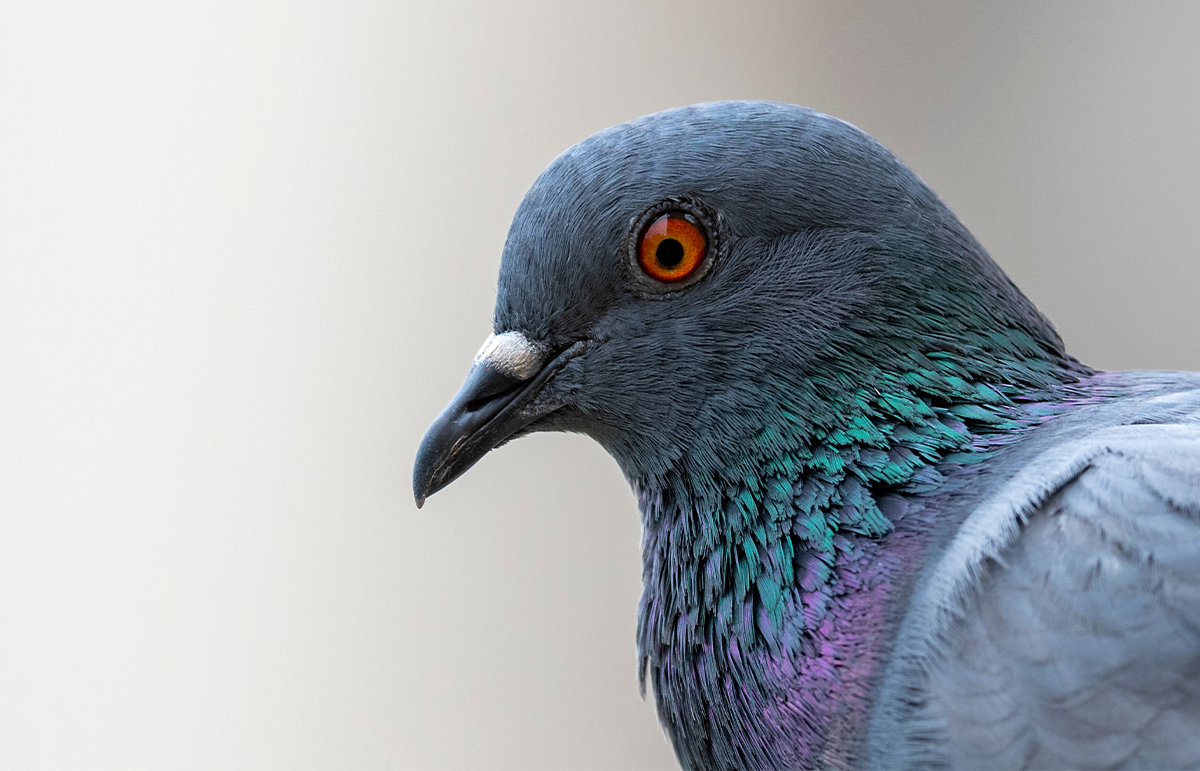
An international team of researchers studying urban birds in Europe has uncovered a mystery—such birds seem to fear women more than men. Their study, published in People and Nature, found that on average birds will let approaching male experimenters get over three feet closer to them before flying away.
This metric, also known as “flight initiation distance,” is commonly studied and can be influenced by a range of factors, including the number of people around, the bird’s alertness, and now, apparently, the sex of the human approaching them. The behavior was consistent among 37 species studied in cities across five different countries. But the researchers have no idea why.
“I fully believe our results—that urban birds react differently based on the sex of the person approaching them—but I can’t explain them right now,” study author Daniel Blumstein of UCLA said in a statement. “We used bleeding-edge comparative analysis techniques that showed our findings were consistent across cities and species, but we simply don’t have a conclusive explanation yet.”
How can birds even tell the difference between men and women?
Read more: “What Pigeons Teach Us About Love”
The researchers ruled out hair length, body size, and height as things that could have spooked the birds. The male-female observer pairs were all similar heights and weights, and they took care to hide their hair if one of them sported a longer style. Despite their efforts, however, the researchers said that birds might still be able to detect subtle differences in appearance, including waist-hip ratio, gait, and possibly hair length.
Another factor could be odor. Although birds tend to rely more on their eyesight, there’s some evidence certain species can sniff out predators. If that’s the case, differences in the chemical signals from males and females could tip them off about the sex of the person approaching.
Regardless of what the birds are keying in on, it doesn’t explain why they’re more startled by women than men. One theory involves a hypothetical evolutionary history between women and birds. It’s possible, the researchers say, that while men stalked larger prey, women were responsible for catching and killing smaller prey like birds. Over several generations, birds learned to fear women more and haven’t changed.
If that explanation seems thin and unsatisfying to you, you’re not alone. The researchers admit it’s not particularly likely, but they haven’t settled on a more compelling alternative. It’s really for the birds, I guess. 
Enjoying Nautilus? Subscribe to our free newsletter.
Lead image: NARENDRA / Adobe Stock