

Math
Are Neural Networks About to Reinvent Physics?
The revolution of machine learning has been greatly exaggerated.
Mathematicians Calculate How Randomness Creeps In
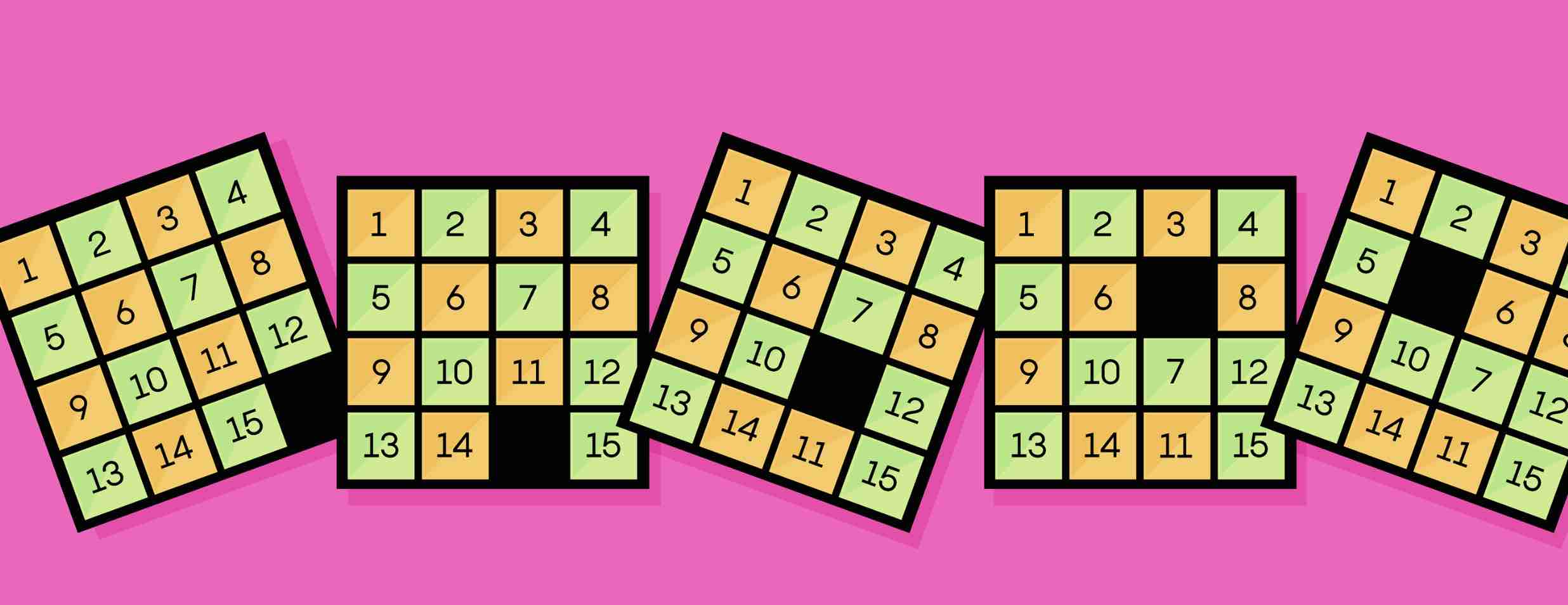
The goal of a 15 puzzle is to put numbered tiles in order. Now mathematicians have solved the opposite problem — how to scramble one.
Mathematicians Begin to Tame Wild ‘Sunflower’ Problem
A major advance toward solving the 60-year-old sunflower conjecture is shedding light on how order begins to appear as random systems grow in size.

The Flawed Reasoning Behind the Replication Crisis
It’s time to change the way uncertainty is quantified.
How Randomness Can Make Math Easier
Randomness would seem to make a mathematical statement harder to prove. In fact, it often does the opposite.

A New Approach to Multiplication Opens the Door to Better Quantum Computers
In practice, quantum computers can’t run many programs that classical computers can, because they’re not allowed to selectively forget information. A new algorithm for multiplication shows a way around that problem.
How Search Algorithms Are Changing the Course of Mathematics
The sum-of-three-cubes problem solved for “stubborn” number 33.
How to Improve Political Forecasts
With a better understanding of probability, we won’t be misled.
Smaller Is Better: Why Finite Number Systems Pack More Punch
Recent progress on the “sum product” problem recalls a celebrated mathematical result that revealed the power of miniature number systems.
The Math That Takes Newton Into the Quantum World
How a math professor learned to stop worrying and love algebraic geometry.