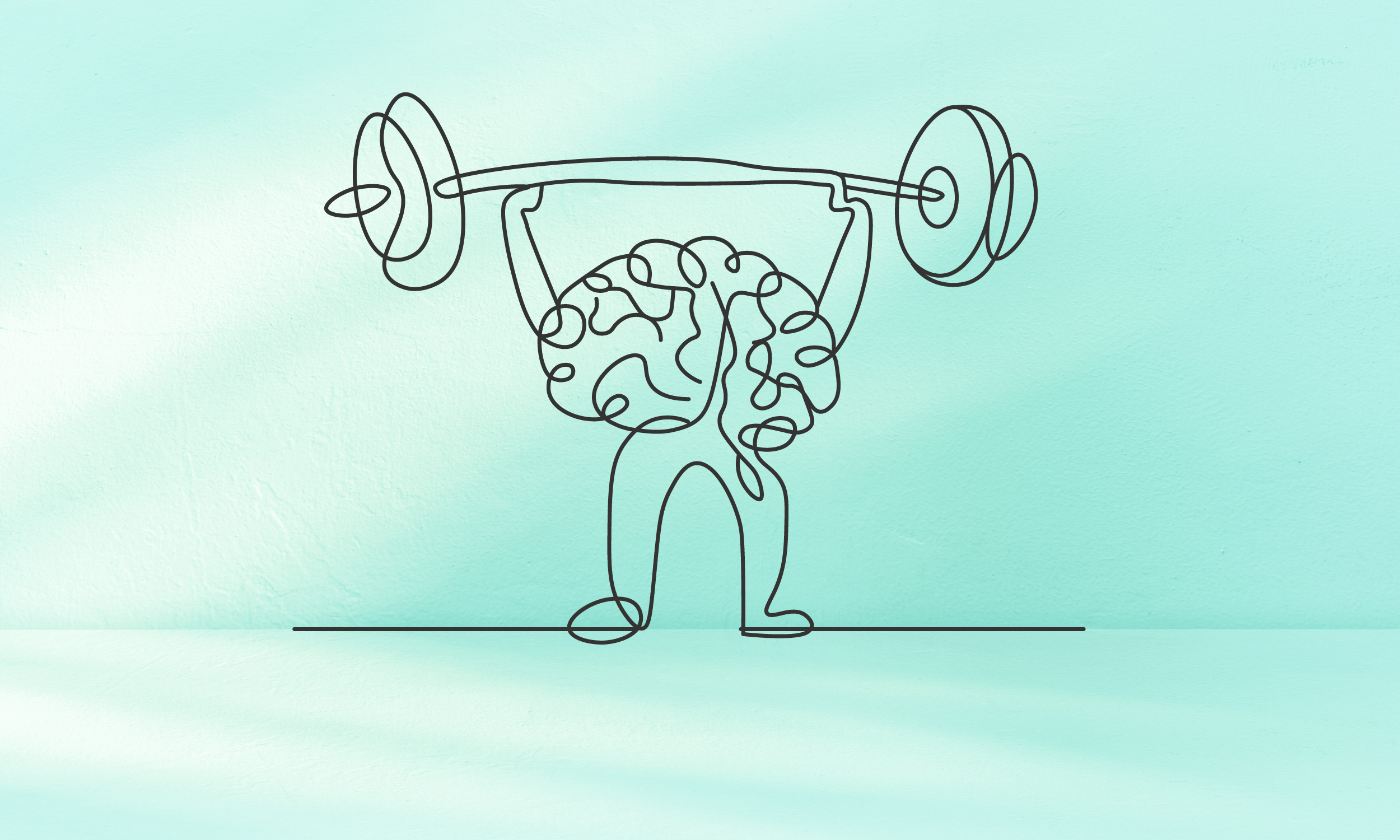
Bad news for couch potatoes: Exercise isn’t just good for the body, it’s good for the brain, too. It elevates your mood, maintains neural health, and improves cognition. Still, the inner workings of the relationship between physical activity and the brain remain a bit of a mystery. Now, a new study published in Brain Research is shedding light on one of the mechanisms involved in the post-workout brain boost.
Researchers from University College London recruited 30 sedentary participants (23 male, seven female), split them into two groups, and had one complete a 12-week cycling program, while the other was instructed to keep their lifestyle exactly the same. The groups also submitted to blood tests, body fat measurements, cognitive exams, and near-infrared spectroscopy to measure blood flow changes in the brain at week zero, week six, and week 12. Their fitness levels were evaluated via VO2max tests as well, which measures the maximum volume of oxygen consumed by the body during exercise.
Read more: “The Importance of Muscle”
They found that as participants became fitter, their post-exercise levels of brain-derived neurotrophic factor (BDNF) increased. BDNF, a neurotrophin related to nerve growth factor, supports the survival, growth, and differentiation of neurons. It’s active in several regions of the brain, too, including the hippocampus, which is involved in memory formation, and the prefrontal cortex, which is thought to control executive functions like decision making. Higher BDNF levels and bigger post-exercise spikes, the researchers found, also led to changes in brain activity in the prefrontal cortex during attention and inhibition tasks, but not during memory tests.
“We’ve known for a while that exercise is good for our brain, but the mechanisms through which this occurs are still being disentangled,” study author Flaminia Ronca said in a statement. “The most exciting finding from our study is that if we become fitter, our brains benefit even more from a single session of exercise, and this can change in only six weeks.”
Importantly, exercise didn’t lead to a higher baseline of BDNF. Instead, the participants reacted to exercise by producing more BDNF at week 12 than they did after exercise at the beginning of the trial. In other words, if you want to enjoy the benefits of this particular perk, you’ll have to keep exercising.
Sorry, couch potatoes. 
Enjoying Nautilus? Subscribe to our free newsletter.
Lead image: Kdp Vibe / Shutterstock