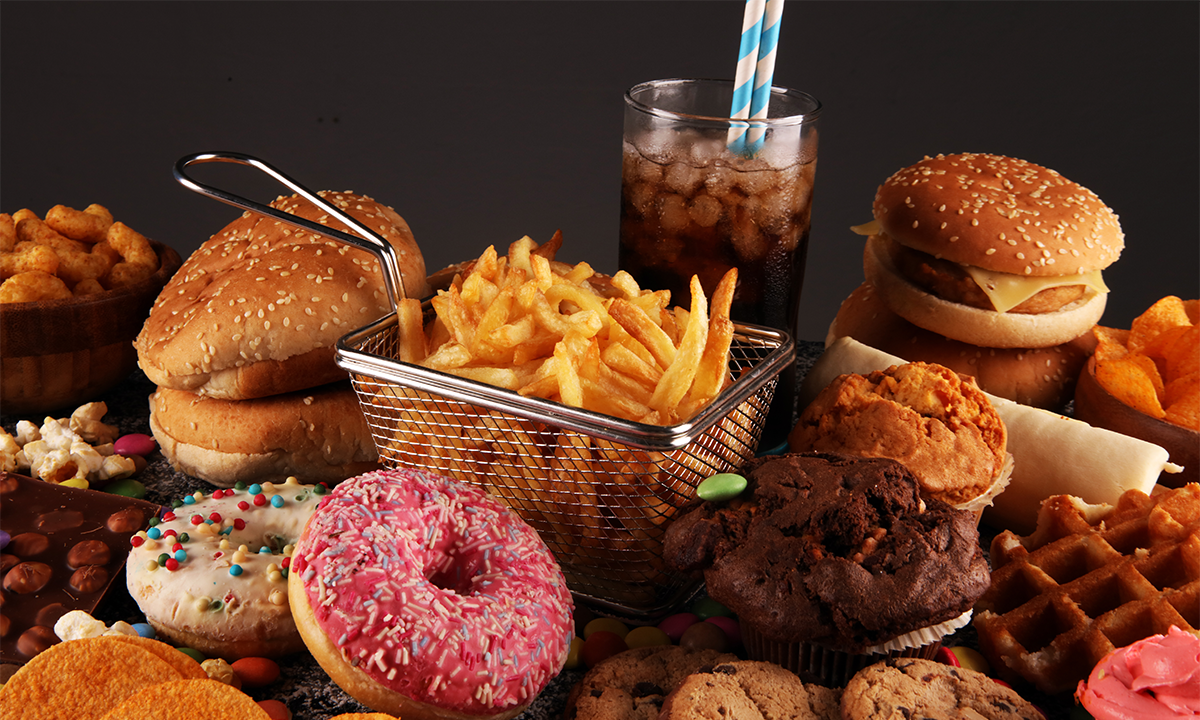
With the bounty of sugary cereals, sweet snacks, and fast foods available, getting children to eat healthy is an ongoing struggle for parents. Now, new research published in Nature Communications suggests that junk-food diets can have a lasting impact on our eating behaviors later in life—and even on our brains.
Researchers from University College Cork in Ireland reared mice on a high-fat, high-sugar diet and monitored their feeding behaviors as they grew into adulthood. While the weights of the mice normalized once they were switched to a control diet as adults, they still ate more than control mice, and opted for the energy-dense, nutrient-poor foods they were raised on when given a choice. The researchers linked these behaviors to changes in the hypothalamus, which plays a key role in regulating appetite.
“Our findings show that what we eat early in life really matters.” study co-author Cristina Cuesta-Martí explained in a statement. “Early dietary exposure may leave hidden, long-term effects on feeding behavior that are not immediately visible through weight alone.”
Read more: “How the Western Diet Has Derailed Our Evolution”
Can these behaviors be reversed?
To find out, researchers tweaked the gut microbiomes of the mice raised on junk food. They introduced the probiotic gut bacteria Bifidobacterium longum, as well as prebiotic fibers, fructo-oligosaccharides (FOS), and galacto-oligosaccharides (GOS) naturally found in onions, asparagus, and bananas.
With the probiotic infusions, they were able to restore normal eating behaviors, although there were some sex differences in the results. The bacteria normalized food preferences in both male and female mice, while FOS and GOS normalized food preference only in male mice.
“Crucially, our findings show that targeting the gut microbiota can mitigate the long-term effects of an unhealthy early-life diet on later feeding behavior,” study co-author Harriet Schellekens said. “Supporting the gut microbiota from birth helps maintain healthier food-related behaviors into later life.”
While these findings currently only apply to mice, your best bet is still instilling healthy eating behaviors in your children when they’re young. Sorry parents. 
Enjoying Nautilus? Subscribe to our free newsletter.
Lead image: beats1 / Shutterstock