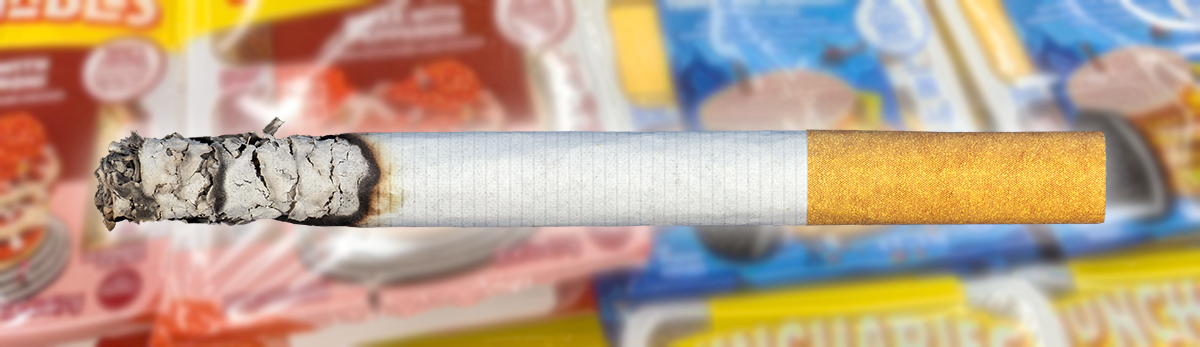
Any kid who grew up in the 1990s can tell you that Lunchables were a runaway hit. The slices of processed meats and cheeses were fun to cobble together into little sandwiches, and the convenient packaging made it easy for parents to toss into a lunchbox.
What you may not know is that they were developed in part by Philip Morris—yes, that Philip Morris. According to new research published in the American Journal of Public Health, the conglomerate heavily relied on their tobacco expertise in creating and marketing the popular kids’ meals. University of California, San Francisco, researcher Laura Schmidt arrived at that conclusion after studying scores of the firm’s internal documents that were made public through lawsuits pursued against the tobacco company.
So how did Big Tobacco get involved with kids’ meals?
Well, Philip Morris, Inc. acquired Kraft and General Foods in the late 1980s, becoming the largest food company in North America. Soon after, they launched an internal working group with a name straight out of a Dilbert comic: the Technical Synergies Committee. Made up of product developers from its tobacco, alcohol, and food subsidiaries, this committee was designed to leverage each group’s unique experience in bringing products to market.
Read more: “To a Cigarette Maker, Your Life Is Worth About $10,000”
According to Schmidt’s analysis of corporate documents, the committee allowed tobacco executives to inform the design and marketing of Lunchables. For example, as consumers became more health-conscious in the 1990s, Lunchables had to adapt, which was well-worn territory for Philip Morris. The company moved first to make cigarettes “healthier” in the 1950s by introducing filtered Marlboros, and reaped the benefits. Per Schmidt, the conglomerate pulled off a similar strategy by pre-empting consumer concerns about the nutritional value of Lunchables, creating a low-fat version.
Using a chemical process developed to decaffeinate coffee and strip the nicotine from tobacco, the Technical Synergies Committee reported they could remove fats from Lunchables meats. Unfortunately, they then had to add fat-mimicking substances back to meats in order to make them as tasty as their full-fat counterparts. Schmidt explains that this is where the tobacco expertise came into play. By relying on research from neuroperception scientists who had honed their skills in making cigarettes more flavorful, they were able to create additives that made low-fat foods tastier.
“They used cigarette science to design these food products,” Schmidt said in a statement. “Science on how the brain processes flavors and what motivates consumers at the deepest levels.”
Philip Morris, Inc. divested their food holdings in 2007, but the debate over so-called “ultra-processed foods” rages on—and so do Lunchables. 
Enjoying Nautilus? Subscribe to our free newsletter.
Lead image: berkahjayamaterial and Jammer Gene / Adobe Stock