How do humans know where the self ends and the world begins?
It’s a feeling that’s central to everyday experience and vital for survival, but it can easily be disturbed. Take the classic rubber-hand illusion. A person’s real hand is hidden from view while a rubber hand is placed in full view. When both hands get tapped at the same time, the person may begin to feel that the rubber hand is their own. But even slight variations in timing can make this uncanny feeling fade.
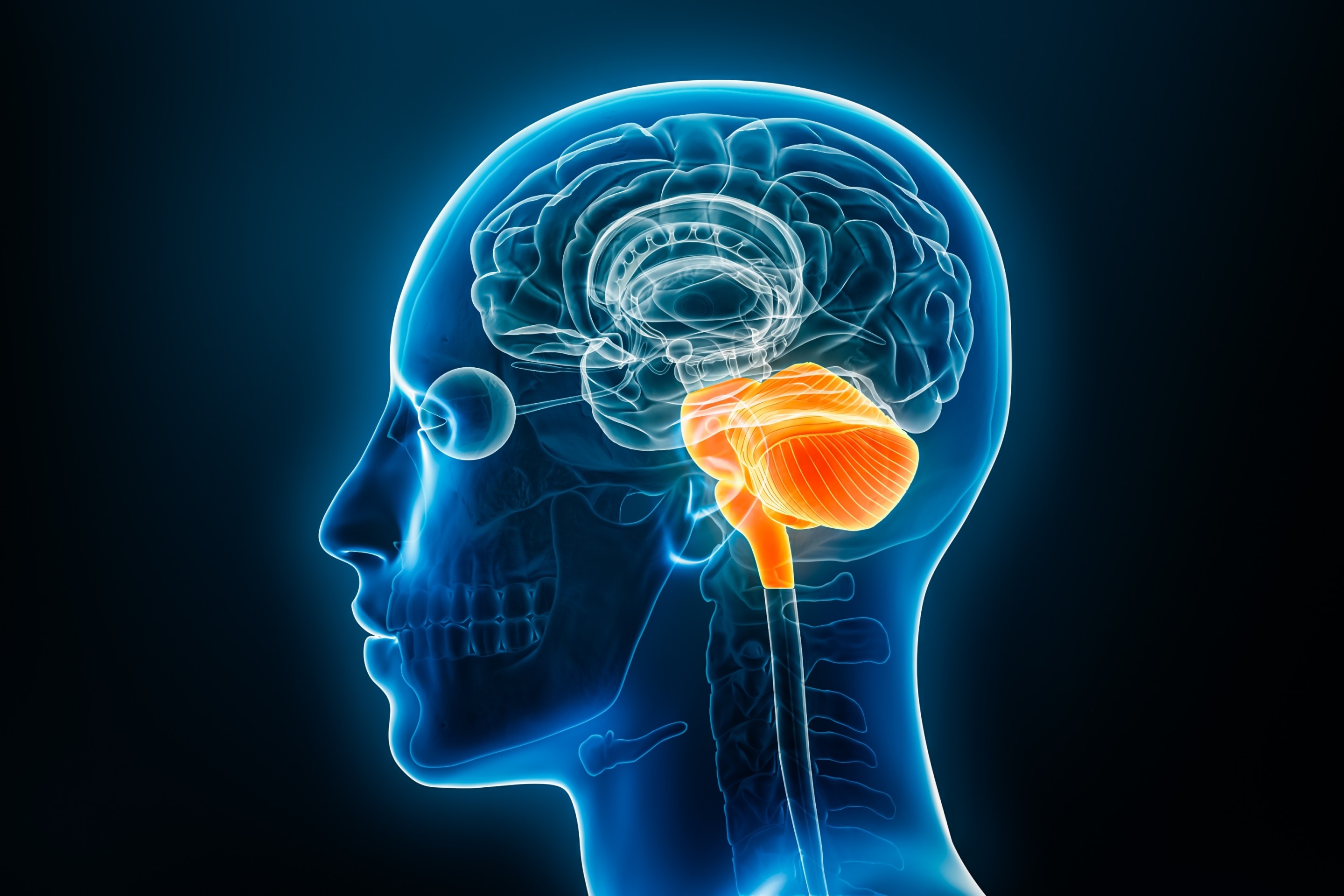
So how does the brain keep track of when different sensory signals come in from the body? It relies on certain rhythmic waves known as alpha waves, as they flow through the parietal cortex, which is responsible for processing touch, body position, and other bodily sensations.
Now a team of scientists from the Karolinska Institutet in Sweden has found that individual differences in the frequencies of these alpha waves can determine how well a person senses their body as distinct from the outside world. If the alpha waves run faster, your brain is better at deciding what’s really part of you. If they run slower, it leaves the distinction between self and other a bit blurrier. The scientists recorded EEG signals on 106 participants while testing them on the rubber-hand illusion, reporting their findings in Nature Communications.
Read more: “Does Anybody Really Know What Time Is?”
“We have identified a fundamental brain process that shapes our continuous experience of being embodied,” explained lead author Mariano D’Angelo, a researcher in the department of neuroscience at the Karolinska Institutet, in a statement. “The findings may provide new insights into psychiatric conditions such as schizophrenia, where the sense of self is disturbed.”
People with schizophrenia tend to have slower alpha waves. The findings could also help scientists create better prosthetics and virtual reality experiences: The more precise the timing of sensory feedback, the more these augmentations will feel real.
To do their experiment, the scientists manipulated the frequencies of taps delivered to the rubber hand and the participant’s real hand, with delays or accelerations of up to 500 milliseconds. Next, they asked the participants to judge whether the fake hand felt like their own. They also tested participants on their ability to judge differences in timing between brief tactile and visual prompts, which had previously been linked to differences in the frequencies of their alpha waves.
What they found is that there was a strong overlap between the two: how well people could discern differences in timing of external cues, and how tolerant they were of timing mismatches when deciding whether the rubber hand felt like their own.
In a second part of the experiment, the scientists were able to show that this wasn’t just a matter of correlation, but that there is a causal link. Using gentle brain stimulation, they temporarily sped up and slowed down the alpha waves in the parietal cortexes of 30 participants. They found that these manipulations influenced how likely they were to feel the rubber hand was their own, as well as how well they were able to judge differences in timing of external light and touch signals.
Finally, they used mathematical modeling based on Bayesian reasoning to show that the changes in alpha frequency didn’t change participants’ beliefs so much as their uncertainty about the source of sensory signals. Faster alpha waves appeared to lead to cleaner, more reliable timing signals, while slower waves led to noisier, fuzzier timing signals.
“Our findings help explain how the brain solves the challenge of integrating signals from the body to create a coherent sense of self,” said Henrik Ehrsson, a neuroscientist with the Karolinska Institutet and co-author of the study.
They say timing is everything. Apparently, that truism may extend to our sense of self. We are, at least in part, the rhythm we keep. 
Enjoying Nautilus? Subscribe to our free newsletter.
Lead image: Stranger Man / Shutterstock