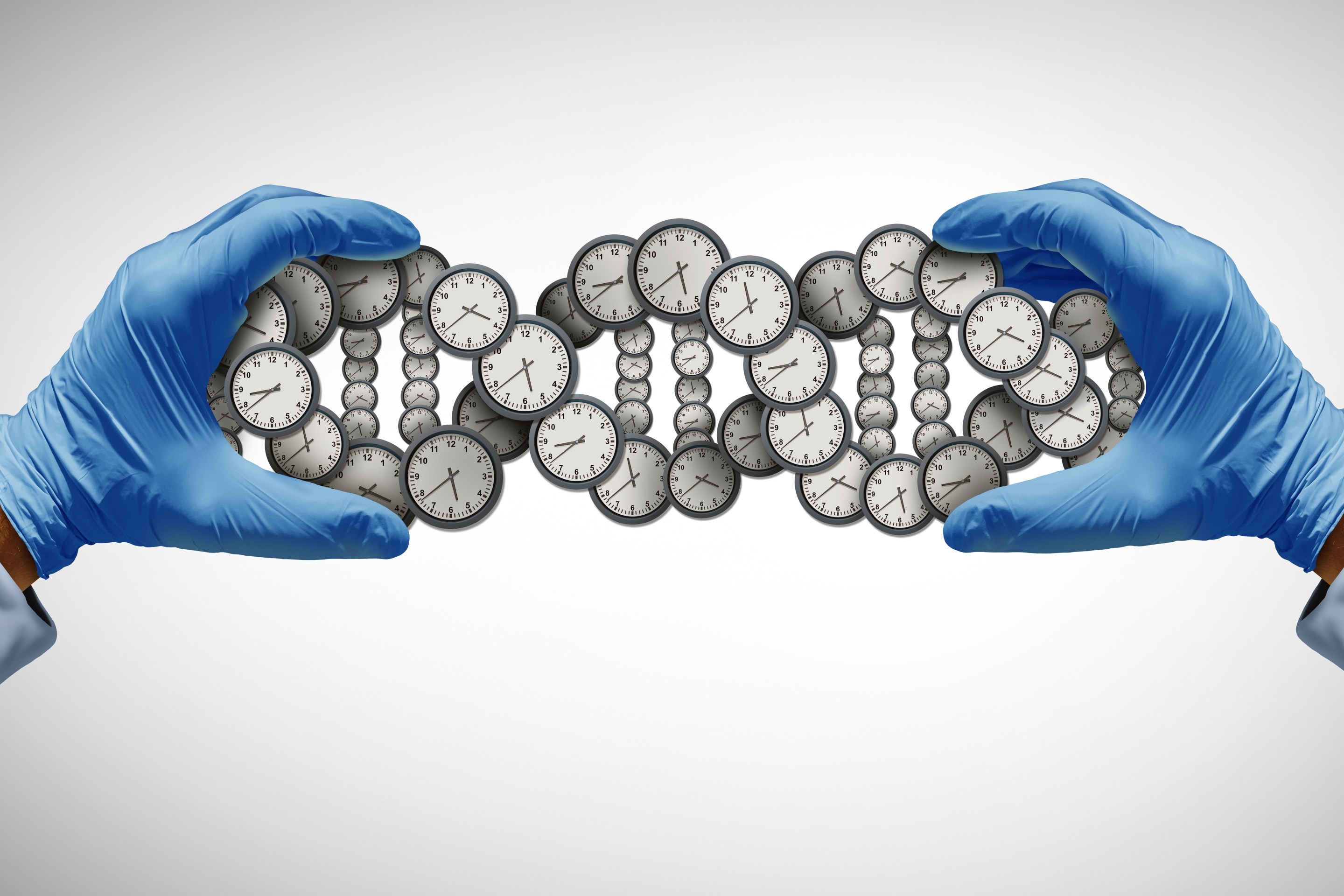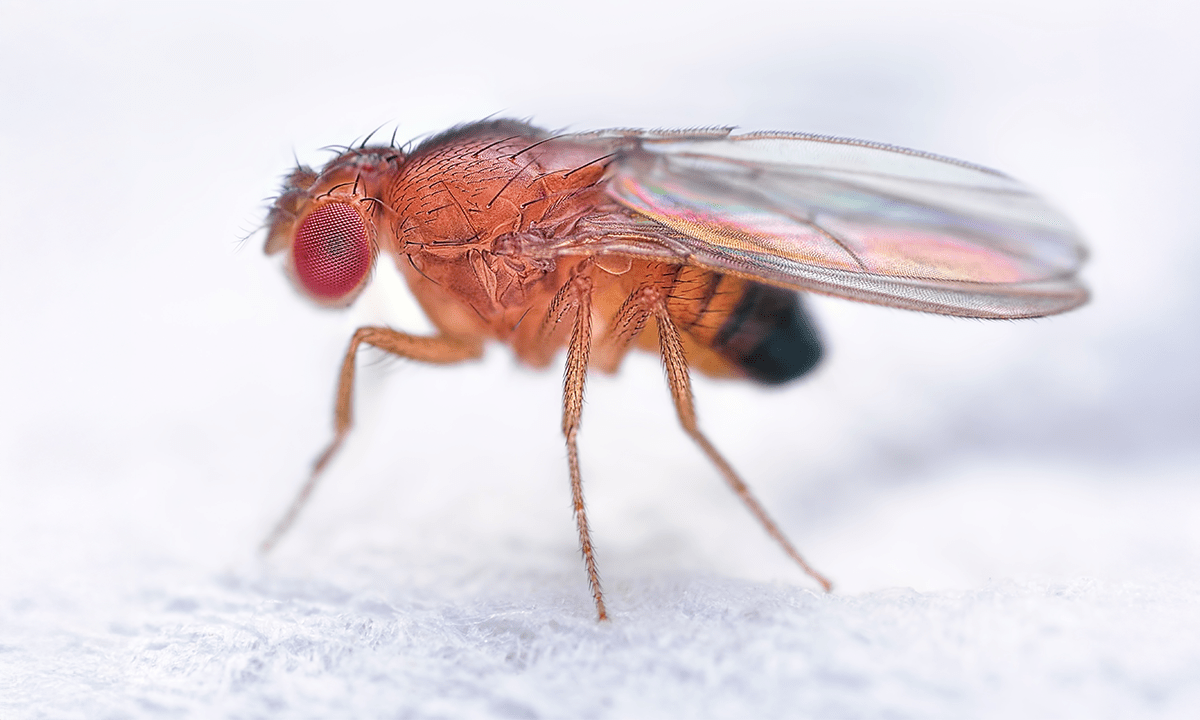
Many organisms can tell what time of year it is without a calendar (even bacteria), which turns out to be pretty useful. Fruit flies, for example, don’t need to continue their development or mate during cold months so they adjust their activity accordingly, taking a bit of a winter time-out. A new study published in Science Advances is revealing the molecular trick fruit flies use to tell the time of year, and it’s related to how they tell the time of day.
As a workhorse model organism for circadian research, fruit flies have an extremely well-studied biological clock. One of the clock genes, timeless, is integral to its molecular circuitry because it gets degraded in the presence of light. According to this latest research, it’s also integral to detecting seasonality due to something called “alternative splicing.”
Read more: “The Animals That Exist Between Life and Death”
Here’s how alternative splicing works. When DNA is transcribed into RNA, it can undergo an additional step before it gets translated into a protein. For example, some of the exons (coding portions of the gene) can be strategically left out of the final mRNA, producing different isoforms of the protein (i.e., a protein from a gene with three exons might get alternatively spliced into an isoform with only exons one and two, or only exons two and three, and so on).
Timeless has a few different isoforms. Amongst others, there’s timeless-long (the “normal” version of the protein) and timeless-short-and-cold. When the weather gets cold, fruit flies shift to producing the latter. Per the researchers, this shift to timeless-short-and-cold is mediated by temperature, as is the shift back to timeless-long. The outputs of the circadian clock—things like their activity and reproductive behavior—change accordingly.
“We’ve known for a long time that animals use environmental cues to prepare for seasonal changes, but we haven’t understood exactly how that information is integrated by the biological clock,” study author Sergio Hidalgo of Washington State University said in a statement. “What we found is that the clock itself can be rearranged into a winter state that helps animals stay there until conditions are favorable enough to switch back to summer mode.”
And that’s how you get a biological calendar from a biological clock. 
Enjoying Nautilus? Subscribe to our free newsletter.
Lead image: Sebastian / Adobe Stock