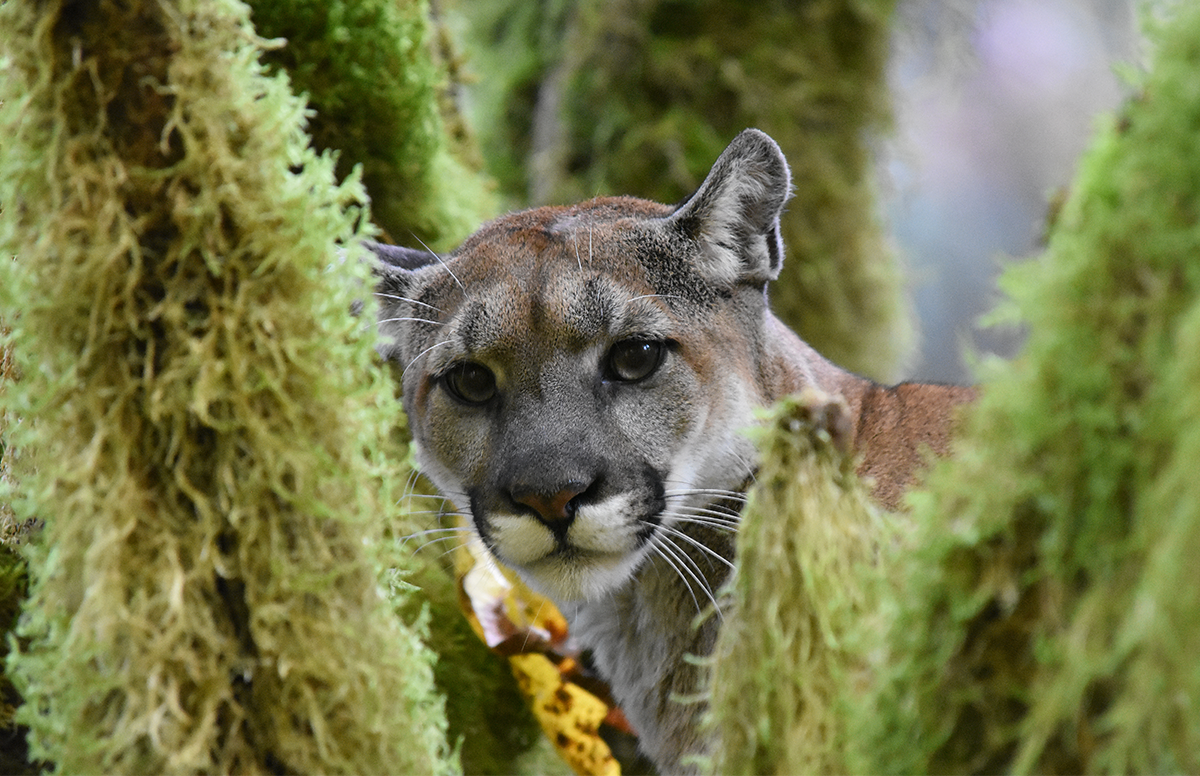
I recently hiked through the Laguna Mountain range in California at dusk. At the trailhead, svelte mountain lions and shiny rattlesnakes greeted us from warning posters. We were hiking with my boyfriend’s 11-year-old son, so we rehearsed what we’d do on the very off-chance that a large cat emerged from the brush ready to pounce. We waved our hands in the air—though the effect was more goofy than intimidating. We shouted to each other in booming voices. We reminded each other that we could throw rocks if necessary, but definitely not crouch or run.
Statistically, you’re more likely to be struck by lightning than to be attacked by a mountain lion on a hike, so we weren’t particularly worried. But after the sun set and the dark crept in, we took a wrong turn, and I caught myself startling at the slightest crackle in the bushes. Big cats mostly hunt at night. I picked up a rock and a stick. A couple of incidents from earlier this year caught in the gears of my mind.
In March, two brothers out on a hike in the Sierra Nevada foothills of California were attacked by a mountain lion. One died, and the other suffered traumatic injuries to his face. It was the first fatal attack by a cougar in California in 20 years. On New Year’s Day, an ultramarathoner on a solo hike in Colorado was mauled and killed by a mountain lion. I couldn’t recall if these attacks happened during the daytime or at night. I wondered if the hikers did what they were supposed to do or if they ran. I wondered if I’d be able to stand my ground in the face of a snarling lion.
We quickly found our way back to the trail and returned to our campsite safely. In fact, I forgot all about mountain lions, until I read about a new paper on human-puma encounters in the journal Current Biology. A team of researchers looked at mountain lion and human activity in the Santa Cruz Mountains, an area that is prime habitat for these cats, but also draws millions of tourists every year. The assumption has long been that the more habituated mountain lions become to people, the more likely they are to attack, and this has led wildlife agencies to kill any carnivore they think has gotten too cozy with humans. But the researchers found that conflict near trails was likely better explained by how many humans were in a particular area than by whether a mountain lion had become more accustomed to people. And killing tolerant lions, the researchers argued, could just open the territory to younger and less predictable cats.
Read more: “When We Were Lunch”
That’s great news for people, and mountain lions, also known as pumas, who rely on wilderness lands often used for hiking and camping, and who are crucial for keeping these ecosystems healthy. Pumas prey on deer, often leaving behind carcasses that not only provide food for scavengers but add nutrients to the soil. Pumas could potentially even reduce the spread of ticks with lyme disease by keeping deer populations in check and changing the movement and feeding patterns of smaller prey, like mice.
The scientists first analyzed six years of data from 36 wild pumas that had been tagged with GPS tracking collars at various locations in the Santa Cruz Mountains and compared their routes against data from a fitness tracking app called Strava, which is popular with hikers, runners, and mountain bikers. What they found is that most pumas actively avoided heavily trafficked trails, especially areas within about 100 feet of trail sections with the highest average hourly usage.
While some pumas seemed to habituate to human activity, becoming more comfortable in areas frequently used by people, others did not. But at the population level, most pumas, regardless of how well habituated they were to humans, avoided areas where conflict had occurred, including attacks on pets or livestock, aggressive or unusual behavior, or rare attacks on humans. The team mapped the locations of 678 human-puma conflict events reported in the Santa Cruz Mountains between 2018 and 2023 and then simulated how likely pumas with different levels of human tolerance would be to use any of those areas, versus how likely humans were to use them.
Basically, mountain lions learn over time where humans tend to show up. The authors of the study suggest this means people can help limit dangerous puma encounters, not just by making themselves look big or using a booming voice. They can design trail policies that ensure predictable patterns of human presence. That means limiting backcountry access—and closing trails at night.
Part of the appeal of camping and hiking in the mountains is ditching the confines of the built human world for a wilder experience. But what is wilder than co-existing harmoniously with America’s largest terrestrial predator? Next time, I might skip the night hike. 
Enjoying Nautilus? Subscribe to our free newsletter.
Lead photo by Mark Elbroch