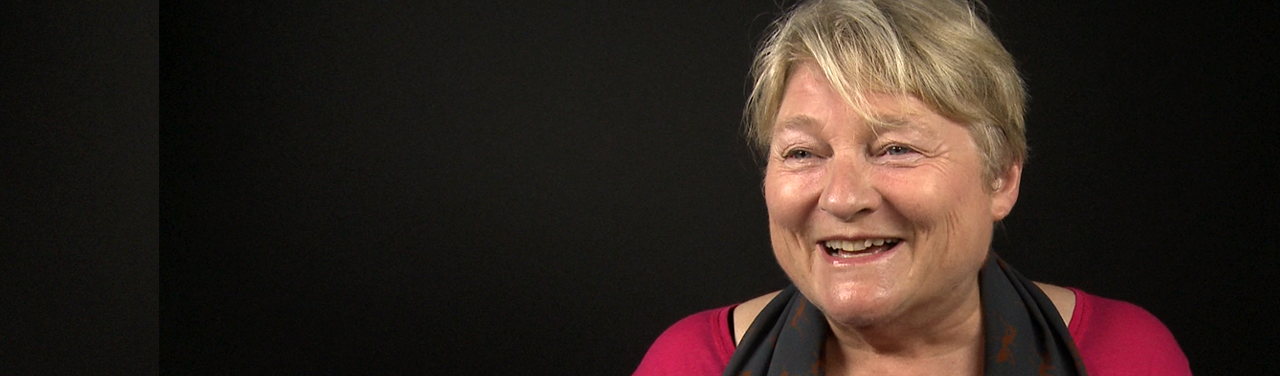
For someone who has spent decades drawing deformed insects, Cornelia Hesse-Honegger is remarkably normal: Warm, effusive, and quick to laugh, Hesse-Honegger combines the holism and intuition of an artist with the curiosity and obsession with detail of a scientist. Next to her abiding passion for environmental issues is an almost personal association with her subject, the insect.
This results in drawings that are so precise and perfectly shaded as to appear, at first, to be immaculately executed photographs. My appreciation for her work only grew when I discovered that each image is the result of a long process of tracing and retracing by hand what she observes through a microscope, eliminating errors with each iteration.
Which raises the question: How can deformations—essentially, errors—be discovered by a process which eliminates errors? For this too, Hesse-Honegger has a provocative and convincing answer.
How did you become interested in scientific illustration?
How did you get interested in mutated insects?
Which insects do you paint?
What method do you follow in your collection and painting?
What adventures did you have during your insect collection?
What was your reaction to the Chernobyl disaster?
Why do you use painting instead of photography in your research?
How is painting more modern than photography?
Is painting less objective than photography?
Why has the scientific community moved away from painting and illustration?
How did scientists react to your scientific paintings?
How has the modern ubiquity of images changed how we see?
How has the role of the artist in society changed?
What school of art do you associate yourself with?
Who’s your favorite painter?