How well do we know the countries we call home? It seems obvious that travel and study would improve a person’s knowledge of geography. But could attitudes about politics also affect your mental map of the world?
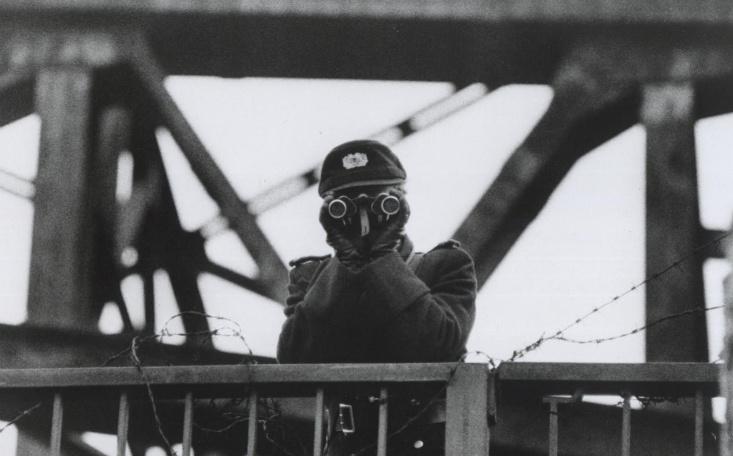
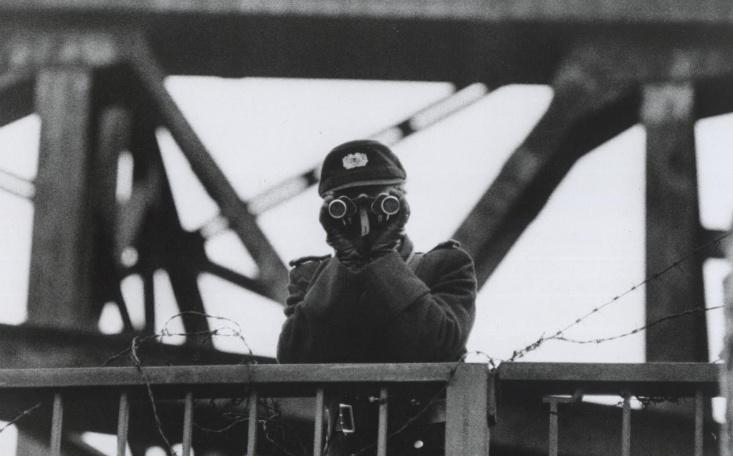
Psychologist Claus-Christian Carbon, of the University of Vienna, asked Germans to estimate the distance between several German cities. They found, even 15 years after German reunification, that people tended to overestimate the distance between cities that were on opposite sides of the former East-West German border. (The subjects also overestimated the distance between cities on the same side of the border, but the overestimation was greater for pairs on opposite sides.) Their home was split, and then reunified, but the attitudes and prejudices remained.
Further analysis revealed that these social attitudes were better predictors of distance estimations than geographical knowledge, and their bias was not affected by travel experience. Perhaps the most striking finding of these studies was that the more people were politically opposed to reunification, the larger their overestimation—the political distance translated into a geographical distance in their minds. In one typical case, the actual distance between Düsseldorf and Leipzig is 391 kilometers (243 miles), but people with a negative attitude toward unification guessed this distance to be 526 km (327 mi), and the people who felt positively toward the unification guessed, on average, 429 km (267 mi). The symbolic Iron Curtain had a perceptual size—and it was over 100 km (62 mi) wider for people opposed to unification. Political distance can make cities in your home country seem more geographically distant.
Why would this be? It turns out that there are many studies that show that our minds work in a fundamentally metaphorical way. The way we use our bodies to manipulate navigate in the world has a strong effect on the way we talk and even the way we think. For example, Canadian psychologists Chen-Bo Zhong and Geoffery Leonardelli ran a study that found that when people were socially excluded, they estimated the temperature of a room to be colder than people who were not. Numerous studies also show that we think of time in terms of physical space—in our culture, we think of the future as being in front of us, and the past behind, and our language and the way we gesture reflects this.
Political distance can make cities in your home country seem more geographically distant.
This general theory is known in cognitive science as “embodied cognition,” and it holds that we think of abstract concepts (such as politics, social relationships, and time) in terms of concrete physical and interactive relationships that are more primitive, such as walking and pushing.
Carbon did a further study, this time asking participants about distances between cities in the United States and Europe. He found that people who opposed to the Iraq War guessed greater distances than those who supported it—sometimes by an increase of 1,350km. Carbon’s 2013 study found that attitudes toward a single person—Barack Obama—predicted distance estimations in Europeans. When we think of another place as different, it feels distant, and our minds translate that into geographical distance.
Because our minds are embodied, metaphorical meaning bleeds into ideas about the concrete. Europe is moving away from North America at a constant speed of about a centimeter per year. But the psychological drift of the continents is much more fluid—and can change rapidly.
Jim Davies is an associate professor at the Institute of Cognitive Science at Carleton University in Ottawa, where he is director of the Science of Imagination Laboratory.