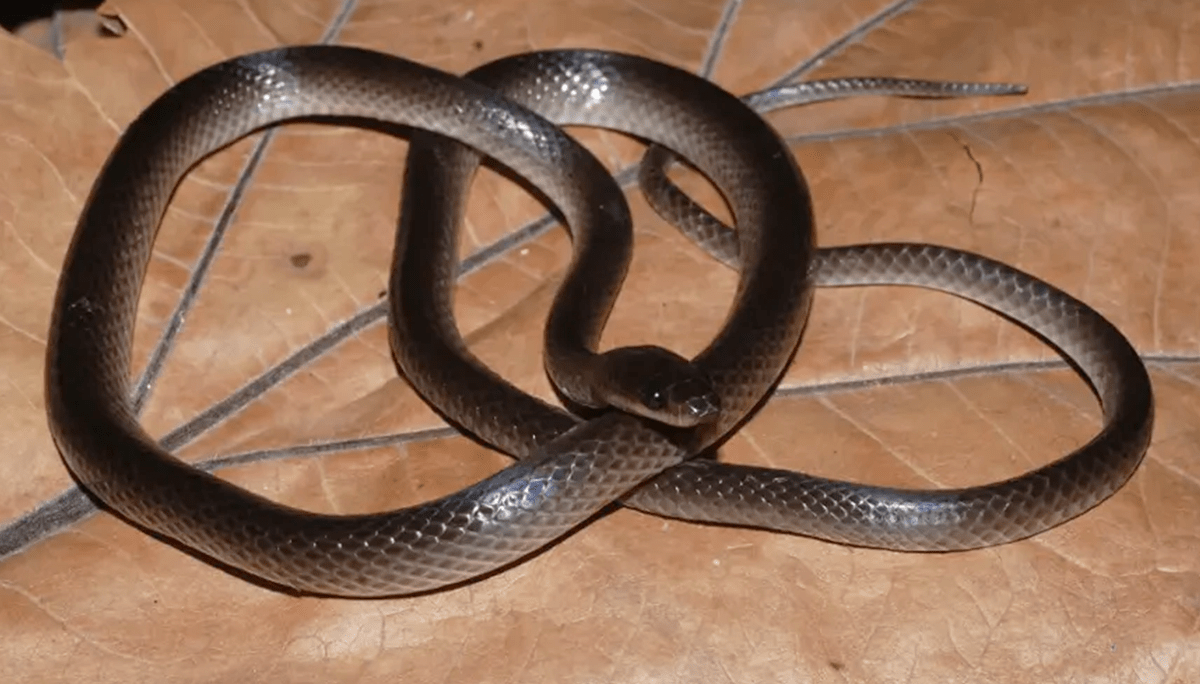
Some regions of the Cordillera del Cóndor mountains in southern Ecuador are so remote that they’re considered a “lost world of amphibian diversity.” In fact, that’s how a species of frog that dates back to 4.5 million years ago went completely undetected by scientists until recently.
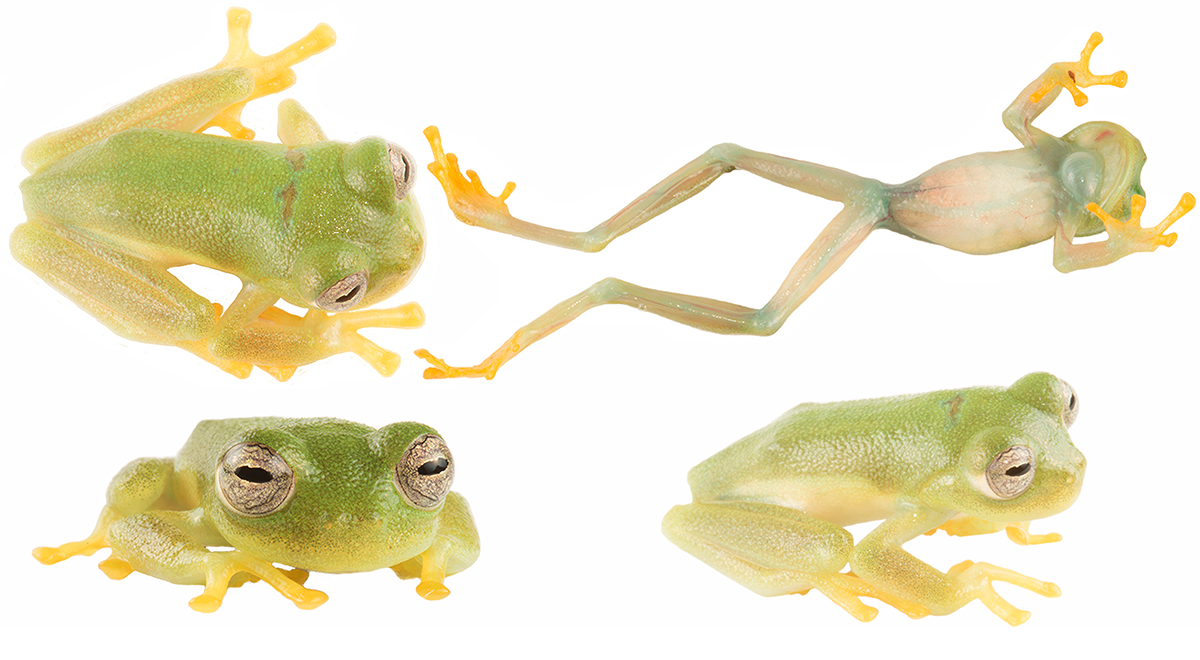
The Dajomes glassfrog (Nymphargus dajomesae) has a green back, greenish skin, and a white stomach, and although it’s named after Neisi Dájomes, an Ecuadorian woman who won the Olympic gold in weightlifting, it’s a tiny creature, less than an inch long from its nose to its bottom.
Specimens of the Dajomes glassfrog were first uncovered by biology student Mylena Msache at Pontificia Universidad Católica del Ecuador in 2017 and 2018 during expeditions to El Quimi, a domestic biological reserve. Along with other undescribed frogs, they were stored at the zoology museum in Ecuador (QCAZ). Initially misidentified as another species (N. cariticommatus), the Dajomes glassfrog was deemed distinct through a reanalysis of its visible features.
Read more: “This Tiny Frog Is Fierce”
“It is especially meaningful that this discovery is led by a young woman scientist and honors an Ecuadorian Olympic champion,” said study author Diego Cisneros in a press release. “This species becomes a symbol of how science and society can recognize and celebrate women shaping the future.”
The Dajomes glassfrog joins 44 other known species in the genus Nymphargus, the most diverse genus of glassfrogs, and stands out thanks to its uniform body color, minimal webbing on its hands, and lots of bumps (“tubercles”) on its back. Its closest relative may be an unnamed species discovered only 28 miles away, which the Dajomes glassfrog might have evolved separately from because of a geographic barrier—a valley through which the Zamor River flows.
Regardless, the amphibians of the Cordillera del Cóndor mountains have just become a little less lost. 
Enjoying Nautilus? Subscribe to our free newsletter.
Lead image: Masache-Sarango, M.V., et al. PLOS One (2026).