No one likes to waste food, not even the stubborn remnants of ketchup at the bottom of the bottle. So what do you do? Turn it upside down, obviously. Unfortunately, this tried-and-true method can take quite a bit of time. Now, new research published in Physics of Fluids can tell you just how long the wait will be.
Physicists Thomas Dutta and Jay Tang of Brown University were motivated to tackle this culinary conundrum based on their own experiences in the kitchen. Tang wanted to know the best way to empty water from a cast iron wok, while Dutta was inspired by his grandmother’s routine of getting the last drop of liquid from every condiment jar.
“In both cases, the relevant physics involves the flow of thin layers of fluid on a surface,” Dutta said in a statement. “This physics is everywhere in our regular research as well, so we decided that this would be a nice training exercise.”
Their regular research, investigating how colonies of bacteria spread on moist surfaces, involves the work of another team-up: Claude-Louis Navier and Sir George Gabriel Stokes. Developed in the 19th century, their Navier-Stokes equations describe the movements of viscous liquids and were instrumental in their most recent research.
Read more: “The World’s Tiniest Wave Tank”
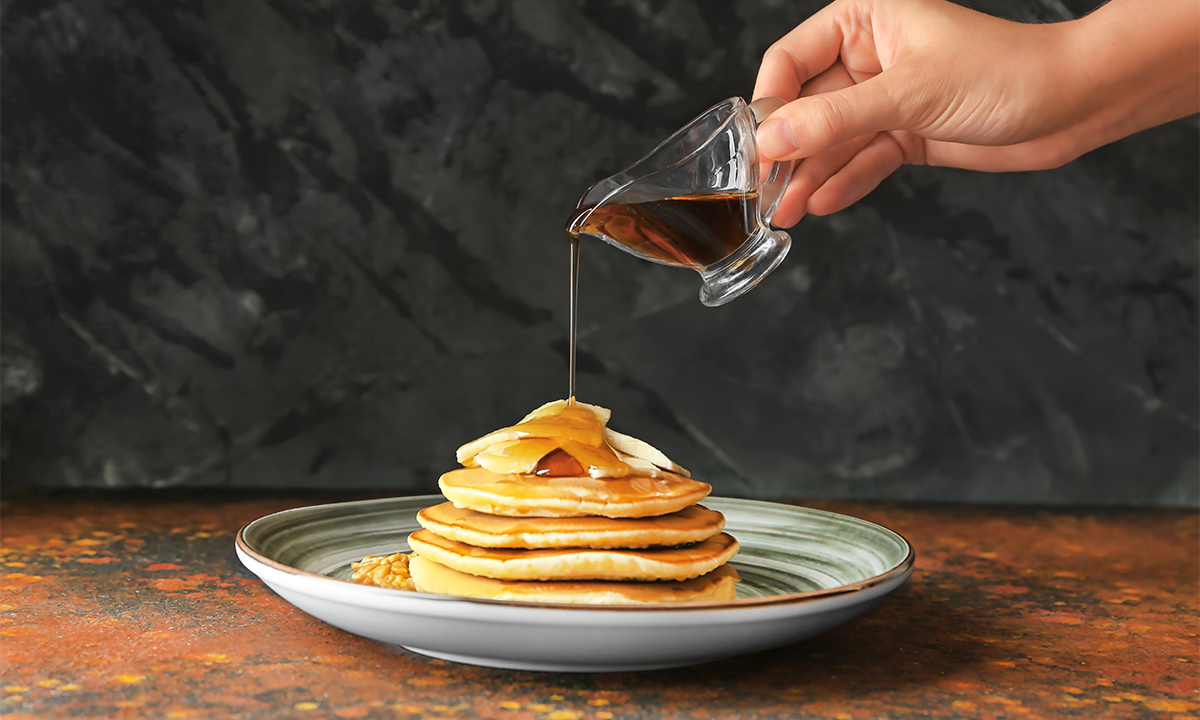
In the lab, the pair dripped a series of common kitchen liquids off of plates tilted at a 45-degree angle and timed how long it took for 90 percent of the substance to drain off. For low viscosity liquids like water and milk it was mere seconds, slightly thicker olive oil took around nine minutes, and cold maple syrup took a few hours.
Then it was on to tackle Tang’s wok problem. “After I dump out the water from washing, there’s always going to be a film of residual water,” Tang explained. “So I usually wait a few minutes to let that film of water collect in the bottom, then just dump it again.”
The question the duo wanted to know the answer to is how long to wait to allow the water to pool again without allowing it to rust the metal as it evaporates. Using the Navier-Stokes equations, Dutta created a computer simulation to arrive at the optimum answer: 15 minutes.
“I was surprised and actually a little disappointed,” Tang explained. “I usually wait only about one or two minutes, but it turns out that I need to be a lot more patient.”
Impatient or not, if you’re going to eat pancakes for breakfast tomorrow, remember to tip the maple syrup bottle upside down tonight. 
Enjoying Nautilus? Subscribe to our free newsletter.
Lead image: Pixel-Shot / Shutterstock