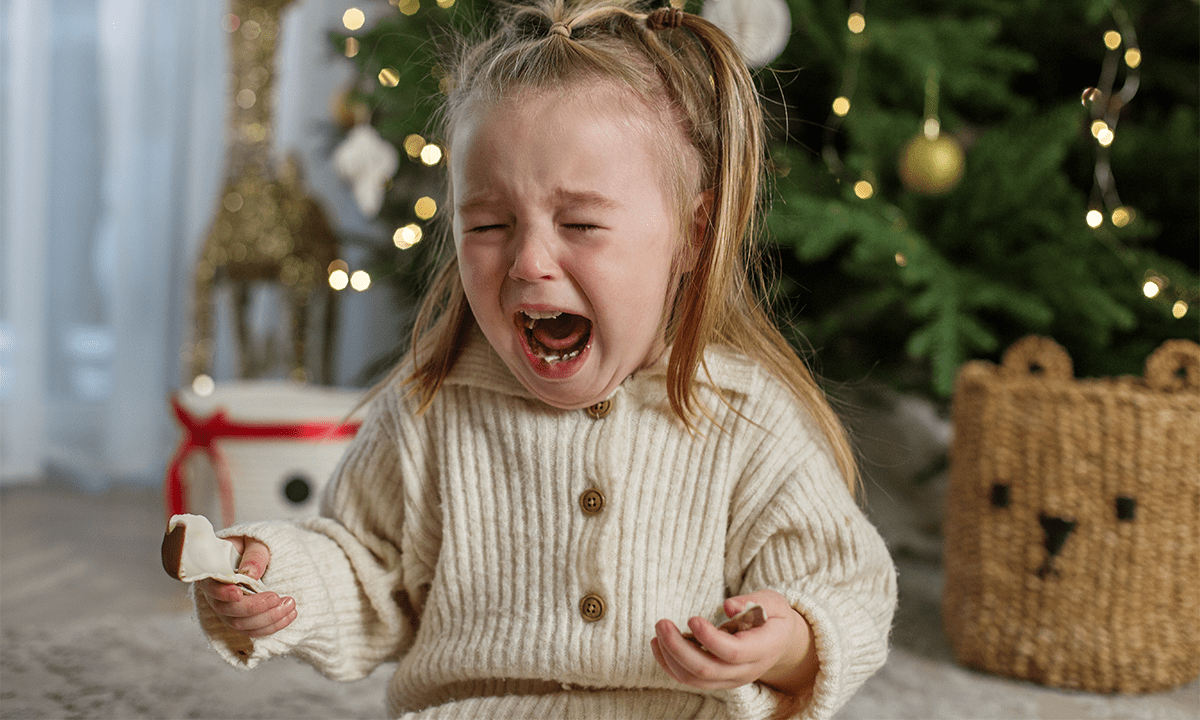
The holidays can knock the stuffing out of almost anyone. For parents with young kids, the pressure can be extra intense: They have to balance the high expectations that go with the season of tinsel against the demands of caring for their little ones, and the stresses of other family commitments and conflicts, such as finding the perfect gift for Great Aunt Kate. It can easily add up to burnout.
Parental burnout can lead to a litany of other problems: mental health issues and sleep disruption, interference with family functioning and childhood development, marital distress and parental neglect, according to the psychological research. So scientists want to understand how it works. To that end, an international team of researchers from Europe and the U.S. recently took a close look at the relationship between parental burnout and the ability to be emotionally authentic, predicting that it would be a two-way street.
Working with almost 300 parents in the United Kingdom over the 2023-2024 Christmas holiday season, the scientists first recorded baseline levels of burnout and genuine emotional expression in the parents, all of whom had at least one child under 10. Then they tracked them intensively over 35 days during the holidays. Several times a day the parents got phone prompts where they were asked about their levels of burnout and genuine emotional expression in the moment. They also followed up with the parents after the holidays, and used a statistical approach to analyze differences in each individual parent’s functioning over time, differences between parents, and whether one state predicted the next.
Read more: “How Big is Your Family”
The scientists’ initial guess was only half right: When parents felt more burnout than usual, they were more likely to report being less emotionally genuine with their kids at the next check-in, suggesting that burnout can make it harder to show what you really feel in the moment. But the reverse didn’t hold true: Genuine emotional expression didn’t predict later levels of burnout. Another key finding: The holidays may wear on mothers more than their partners; during the follow-up period, they reported higher levels of burnout than fathers. The team published their findings in Communications Psychology.
The headline finding came as a surprise as psychologists have found in previous work that genuine expression helps to conserve emotional resources—that is, it takes less mental effort to be authentic than to hide one’s feelings. But the benefits of being real for children and parents may depend on whether the parent is able to express genuine emotion with skill, the authors note.
Both burnout and emotional authenticity were sticky. Parents who began the season more burned out tended to have higher burnout on average throughout the month, and their burnout also lingered more from one moment to the next. But parents varied widely. Those parents with higher baseline burnout had a rougher emotional ride across the season, while those who were more authentic at baseline generally were more stable in this regard. The biggest predictor of how the parents were doing at follow-up was the average level of burnout across the season.
All of which is a good reminder to parents to go easy on themselves. The season of sparkle can push many to perform instead of connect, and that clearly can take a real toll. 
Enjoying Nautilus? Subscribe to our free newsletter.
Lead image: OlhaTsiplyar / Shutterstock