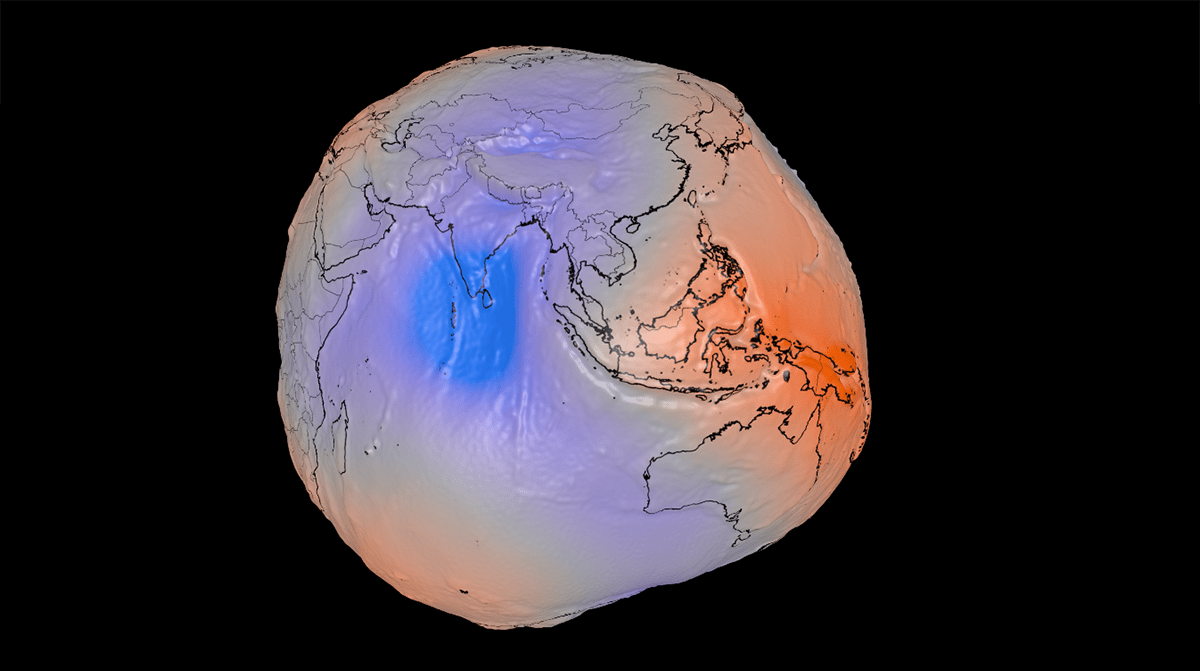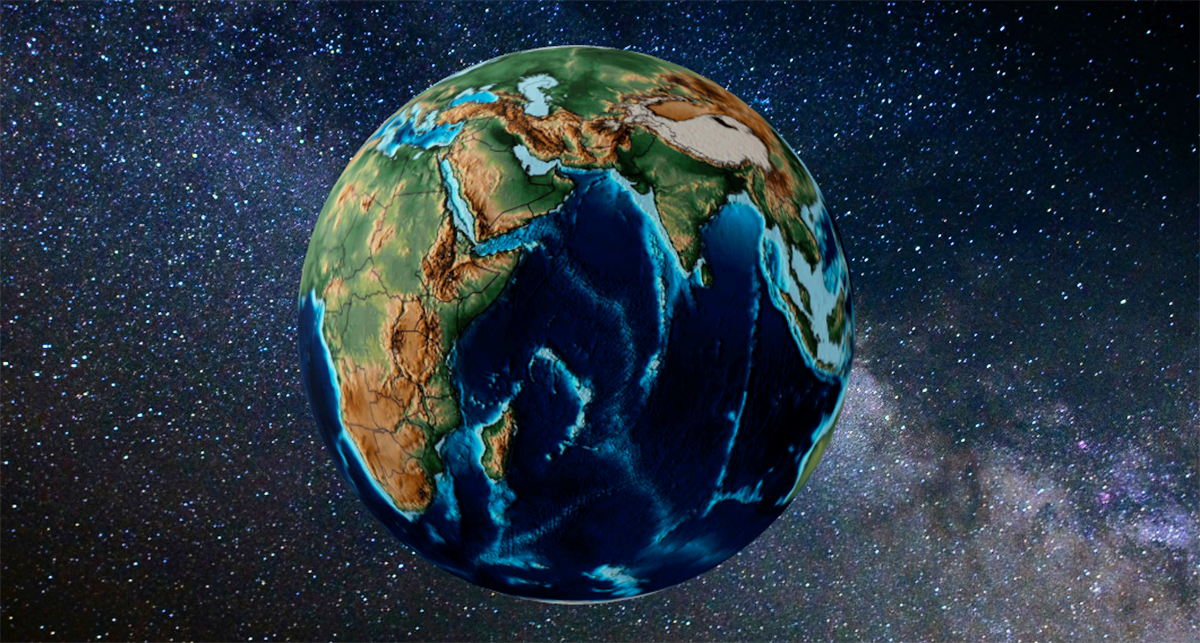
There’s a mystery hidden deep beneath the surface of the Earth. In the 1980s, scientists discovered two vast “blobs” in the lower mantle surrounding the core that had some strange characteristics. These continent-sized masses, one below Africa and another below the Pacific Ocean, slow down sound waves from earthquakes that pass through them, which is why researchers call them low-shear velocity provinces (LLSVPs). Curiously, they don’t make the waves any less powerful.
“Nobody knew what they are, and whether they are only a temporary phenomenon, or if they have been sitting there for millions or perhaps even billions of years,” Arwen Deuss, a seismologist from Utrecht University in the Netherlands who co-authored a 2025 study on LLSVPs said in a statement.
While the origins of the continent-sized masses remain unclear, one hypothesis is that they formed from pieces of the Earth’s crust that slid beneath other tectonic plates into the mantle. Once there, they melted and formed a dense pool of sludge-like molten rock that doesn’t seem to mix with the rest of the mantle. Lending credence to this theory is a “graveyard” of fresher subduction plates in the area surrounding the mystery blobs.
Comparing 3-D computer models of the LLSVPs and the surrounding subduction plate graveyard led Deuss and her colleagues to come up with a theory of their composition that might explain their peculiarities. The unusual masses, they proposed, could be made up of much larger grains than the surrounding plates, which is why they don’t dampen sound waves even as they slow them down. If true, it would mean these strange blobs could be up to half a billion years old.
But that’s not the only theory for the genesis of these giant masses. Another more violent hypothesis places their origins billions and billions of years ago when the Earth was first forming.
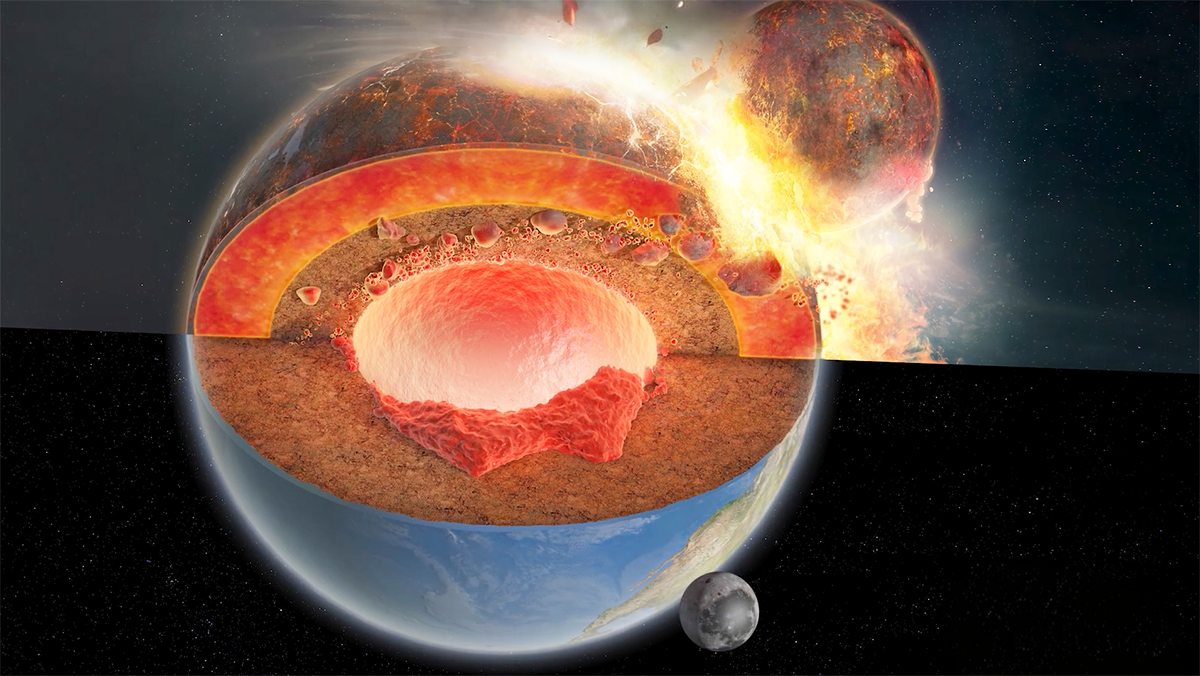
Drawing on theories that the moon was created when early proto-Earth collided with a smaller planet (nicknamed Theia), former Cal Tech geophysicist Qian Yuan proposed the same hypothetical collision was responsible for the LLSVPs. In fact, Qian believes the mysterious masses are actually remnants of Theia that became trapped inside the Earth. If true, it could explain both why those areas have an unusually elevated iron content and why we haven’t found any debris from Theia.
Research on the mysterious structures will continue, but it might be quite some time before we find out whether LLSVPs are primordial remnants of our own planet, or extraterrestrial blobs from its violent past. If only we could take a journey to the center of the Earth to find out for sure. 
Enjoying Nautilus? Subscribe to our free newsletter.
Lead image: caltech / YouTube