It’s hard enough for people to pick out their walking sticks from a pile of them, let alone discriminate between species of walking sticks (Order Phasmatodea). But a recent study proved that with enough people around, even cryptic walking stick insects eventually get recognized. Published in the journal Austral Entomology by biologists at the University of Sydney, the study announced two new species and one recovered species in Australia.
“Taxonomy is often a bit like detective work,” explained Braxton Jones, lead author and postdoc, in a press release. “Even among some of Australia’s most photographed and frequently reported insects, we’re still finding species that have escaped scientific recognition.”
Read more: “Meet the Vegan Draculas of Australia”
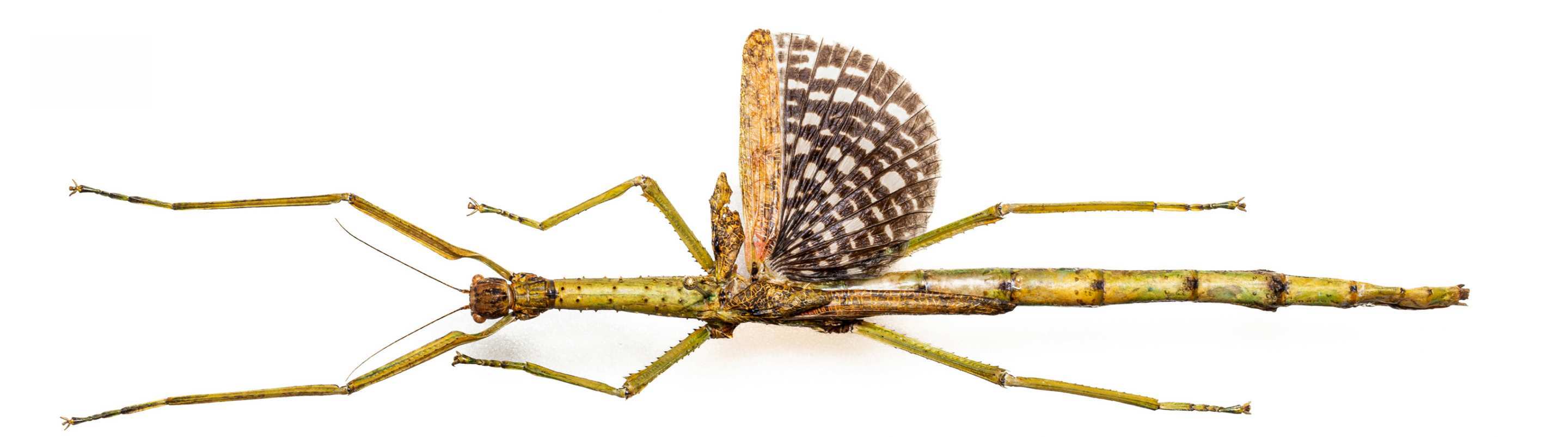
Jones examined 35 specimens of walking sticks, either from museum collections or recently collected in the field. They were all from the genus Anchiale, which are big, heavy-bodied, winged insects that mimic twigs and leaves with their greenish-brown coloration. Of those specimens, 32 underwent DNA analysis while 37 non-Anchiale were assessed for comparison. The researchers also collated citizen science data for Anchiale, which totaled about 1,100 observations, from iNaturalist and the Atlas of Living Australia.
The results revealed two previously unknown species of Anchiole that, despite extensive study of the region, hadn’t been detected previously. One of them, dubbed A. robusta, had been seen many times but misidentified as a known species. The other, from the critically endangered Mabi Rainforest habitat (thus dubbed A. mabiensis), was found to have a unique egg structure. In contrast to the shiny, long eggs from other Australian Anchiole species, A. mabiensis eggs were duller and shorter with distinct rings on the lid that opens during hatching.
In addition to the two new species of stick insects, a species originally named in 1904, then cancelled, was recovered. A. spinicollis, or “the spiny stick insect,” was recognized in the DNA analysis as distinct enough to warrant its own species name.
“These findings demonstrate the importance of protecting threatened ecosystems and documenting Australia’s extraordinary biodiversity before we lose species without us having even discovered them,” said Jones.
In other words, such big “sticks” aren’t likely to be the last Aussie surprise hiding in plain sight. 
Enjoying Nautilus? Subscribe to our free newsletter.
Lead Image: Angus Emmott, James Cook University