A short-lived truce between the Israeli government and Palestinian terrorist organization Hamas ended on Nov. 30 with a resumption of deadly violence and each side blaming the other for a breakdown in negotiations. This latest war in a brutal centuries-long conflict between Israelis and Palestinians over land, statehood, persecution, and colonial power will likely require more than sterling mediation skills to resolve. But an emerging science suggests that indirectly influencing emotions such as hope, anger, and guilt may be a useful strategy for mediators looking to build peace.
We talked with Swiss neuroscientist, psychologist, and practicing mediator Olga Maria Klimecki-Lenz to discover what social science says about how to navigate trenchant international conflicts under deeply hostile conditions.
What makes a negotiator successful in international conflicts like these? What qualities do they need to have?
There’s one generic principle and it’s impartiality: to truly be looking for a solution which benefits all parties. But the research also shows that negotiators can work to influence the emotions of others and of themselves in positive ways. We know emotions are very important in conflicts, with emotions like hatred fueling conflict escalation, and other emotions such as hope, sometimes even anger, contributing to conflict de-escalation.
How can anger contribute to conflict de-escalation, and how might negotiators use this to their advantage?
In contrast to hatred, which is associated with the evaluation that the other person or group is inherently bad and will never change, anger is associated with the evaluation that an unfair action has happened and that one has enough resources or power to change the situation. Now, anger can lead to escalation and violence. But anger can also serve as a motivation for reconciliation, because the ultimate goal of the feeling of anger, when caused by an unfair action, is to overcome the injustice. And injustice can also be overcome by peaceful means. If negotiators want to motivate others or themselves to move from feeling hatred to feeling anger, they can try to shift the focus from the person’s or group’s characteristics, to the concrete actions that have been done by a person or group.
Feeling guilt for past actions is better for conflict de-escalation than feeling shame.
How can negotiators make their counterparts feel hopeful?
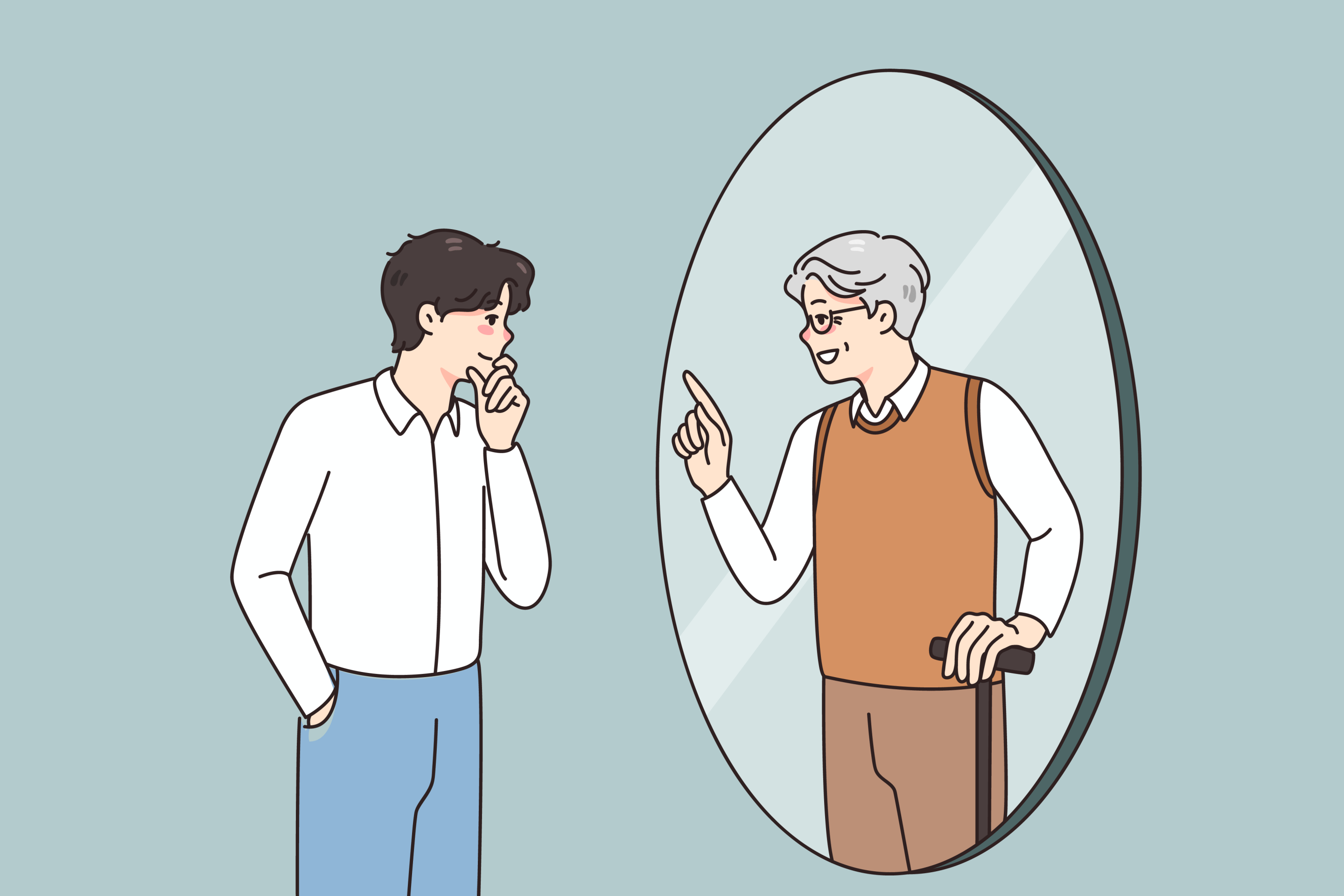
We understand more and more from our own research and from research that our colleagues do, especially in Israel and Palestine, that indirect emotional regulation strategies help. So strategies where we indirectly try to increase hope, or future thinking.
The peace talks at Camp David in 1978 between President Jimmy Carter, Egyptian President Anwar Sadat, and Israeli Prime Minister Menachem Begin dragged on for 12 days with no solution. And then when they were about to break apart, Jimmy Carter asked Begin and Sadat: How do you imagine the future for your grandchildren? What future would you like them to live in? People who were present say that this was a turning point. They found a solution on the same day, and were awarded the Nobel Peace Prize in the same year.
This is something we wanted to test in the laboratory a couple of years ago. We asked a group of people to just think about the future for one minute—future events more than 30 days away. Another group was instructed to think about animals for one minute and to name animals. And then after that intervention, they played a computer game and we measured how much they helped other people who were also playing that game. The outcome was the strongest result of my research so far: Those people who thought about the future for just one minute helped much more than the people who thought about animals.
I think these indirect interventions—where we ask people to think about the future or where we give them generic texts that may bring about hope totally unrelated to the conflict, or where we provide them with ways to increase their own well-being and their own sense of benevolence—might transfer into the conflict situation.
How does culture influence what works in negotiations?
We know that emotions and emotional displays have huge cultural variations. Our colleagues in Israel have, for instance, found that feeling guilt for past actions is better for conflict de-escalation than feeling shame. However, it is not clear whether such findings are also applicable to some East Asian countries, such as Japan, where shame plays a vital role in keeping the community together.
How much of this is science and how much is art?
In social psychology, the main paradigm that was out there since the 1940s is the intergroup contact theory, which is the idea that bringing people together from different groups reduces prejudice and increases trust. But a 2018 meta analysis showed it’s not even clear whether this paradigm works because the studies involved did not account for peoples’ racial prejudices.
As psychologists we have done a rather poor job at conducting very rigorous experiments, and in conducting experiments outside of our home geographies. But we are beginning to do these studies now. 
Lead image: LittlePerfectStock / Shutterstock