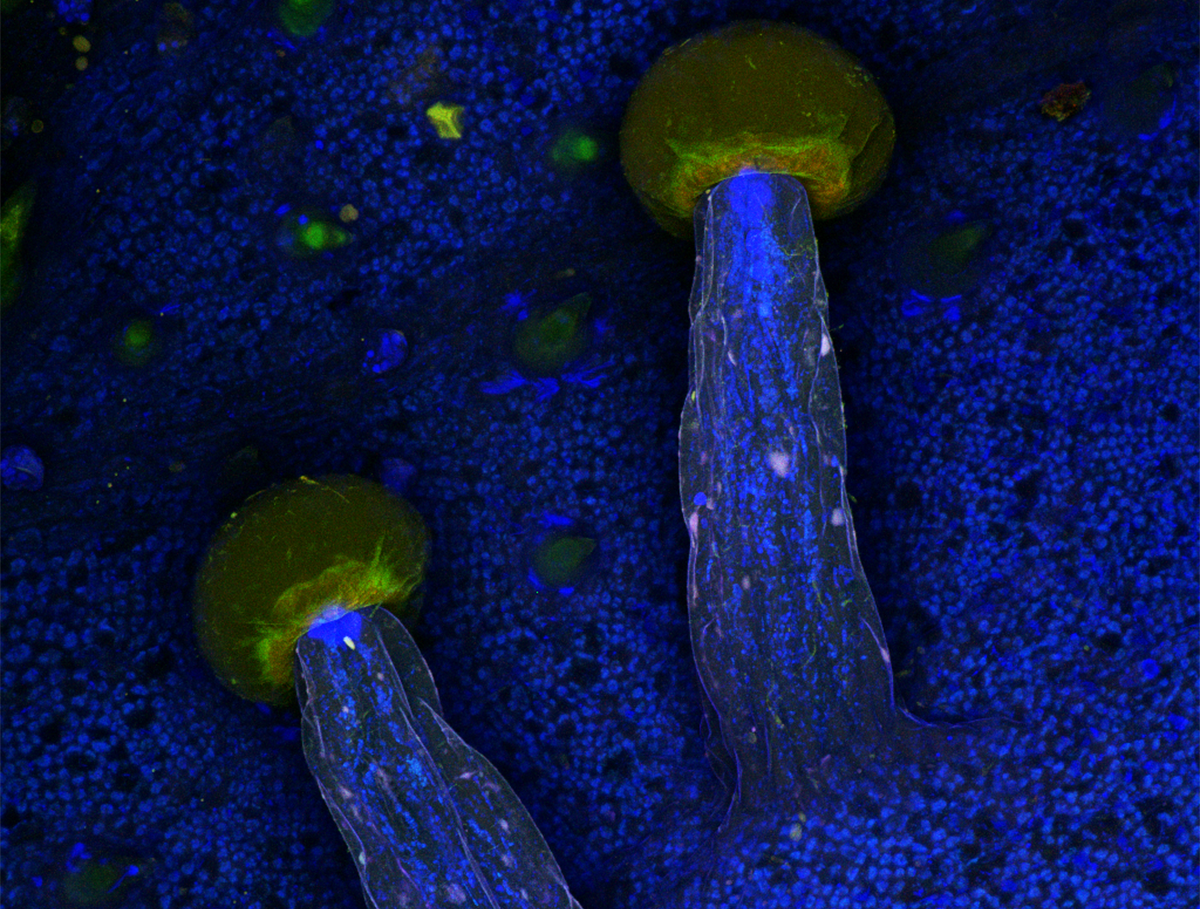
Science is like photomicrography, the photography of objects under a microscope. It peels back the surfaces of everyday life to expose the elements that animate them. Take the simple act of striking a match, captured in this image by Ole Bielfeldt, a 22-year-old photographer from Germany, a winner in this year’s Nikon Small World competition. It exquisitely illustrates what causes a match to catch fire.
The process begins with the friction of the matchhead on the textured striking pad, which creates heat to start a chemical chain reaction. The heat causes red phosphorus on the striking pad to transform into white phosphorus. This stirs up even more heat, igniting molecules in the matchhead called potassium chlorate, which burst into incandescent flame. As the potassium chlorate burns, it releases oxygen, which reacts with fuel in the matchhead—phosphorus sulfide—to keep the flame burning bright, a blur of light.
Bielfeldt’s image also ignites something else, the something sparked by all art, and that’s imagination. In this season of increasing fires, I can’t help but picture the strike of the match as an illumination of our changing climate. Forests all over the world experienced the worst fires on record in 2023. Over 45 million acres burned across Canada, almost seven times more than the annual average and more than double the previous record, set in 1995. Devastating wildfires also tore through forests and towns in Russia, northern and central Greece, Spain and Portugal, as well as Maui, Hawaii and the western United States.
Rising temperatures, extended drought, and a dry atmosphere brought by a changing climate were key drivers of these megafires. Perhaps even more worrisome, the fires themselves accelerate climate change, by releasing vast quantities of greenhouse gases into the atmosphere. As with the ignition of a match, we are setting off a chain reaction here on Earth, increasing the odds of more calamitous wildfires with each passing season. 
Lead photo by Ole Bielfeldt.