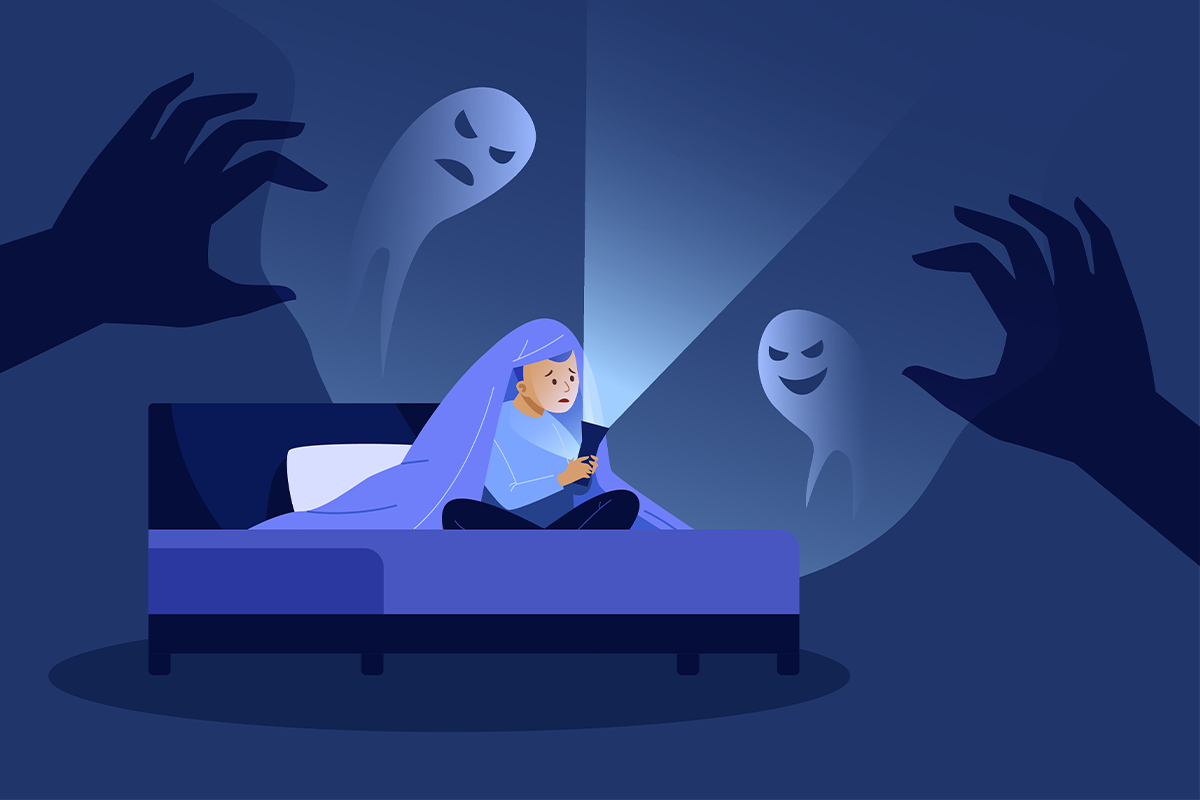
Every kid has nightmares. While they’re usually more of a nuisance, these bad dreams can sometimes persist, disrupting sleep patterns at a critical time of development. If left untreated, chronic nightmares can quickly spiral into more serious problems. Now, research published in Frontiers in Sleep proposes a new model to explain why children get trapped in a cycle of chronic nightmares—and how therapy can break it.
“A nightmare is a bad dream that you wake up from,” study author Lisa Cromer of the University of Tulsa said in a statement. “If you don’t wake up, then the brain is doing its job of resolving the fear of the dream. But if a child does wake up, they’re trying to escape the nightmare. And when a child wakes up, they’re not able to resolve the nightmare, which actually exacerbates the problem. That’s why nightmares are so important to treat.”
The model, called DARC-NESS as a mnemonic (get it?), identifies several factors that can keep children stuck in a nightmare loop. At the core of the framework is nightmare efficacy, or the belief in one’s ability to control, cope with, or reduce nightmares. The other factors—dream content, appraisal, regulation resources, conditioned arousal, sleep hygiene, and sleep quantity and quality—all interact to keep nightmare efficacy low and the cycle churning.
Read more: “How a Dream Engineer Defeats Nightmares”
But these factors don’t just exacerbate nightmares, they can be therapeutic levers to stop the cycle, as well. For example, a child may initially deem a nightmare as an uncontrollable phenomenon that threatens their well-being (appraisal). If they can reframe the nightmare as physically harmless, it can provide an entry point to regain control over the spiral.
“The DARC-NESS model looks at the mechanisms of what is maintaining nightmares, as well as the mechanisms that can break the cycle of nightmares,” Cromer said. “It’s a child’s response to a nightmare that causes the chronic nightmares to happen, which means if we can learn to respond to nightmares differently, then we can interrupt that cycle. It’s empowering to understand that we can take steps to master our dreams.”
With so many different levers, researchers say the DARC-NESS model can offer targeted therapy, focusing on those that children can control and giving them the confidence to intervene and stop the cycle. Basically, it empowers kids to break the wheel by identifying and snapping the weakest spoke.
Nightmares might be part of growing up, but they shouldn’t be such a big part of it. 
Enjoying Nautilus? Subscribe to our free newsletter.
Lead image: ssstocker / Adobe Stock