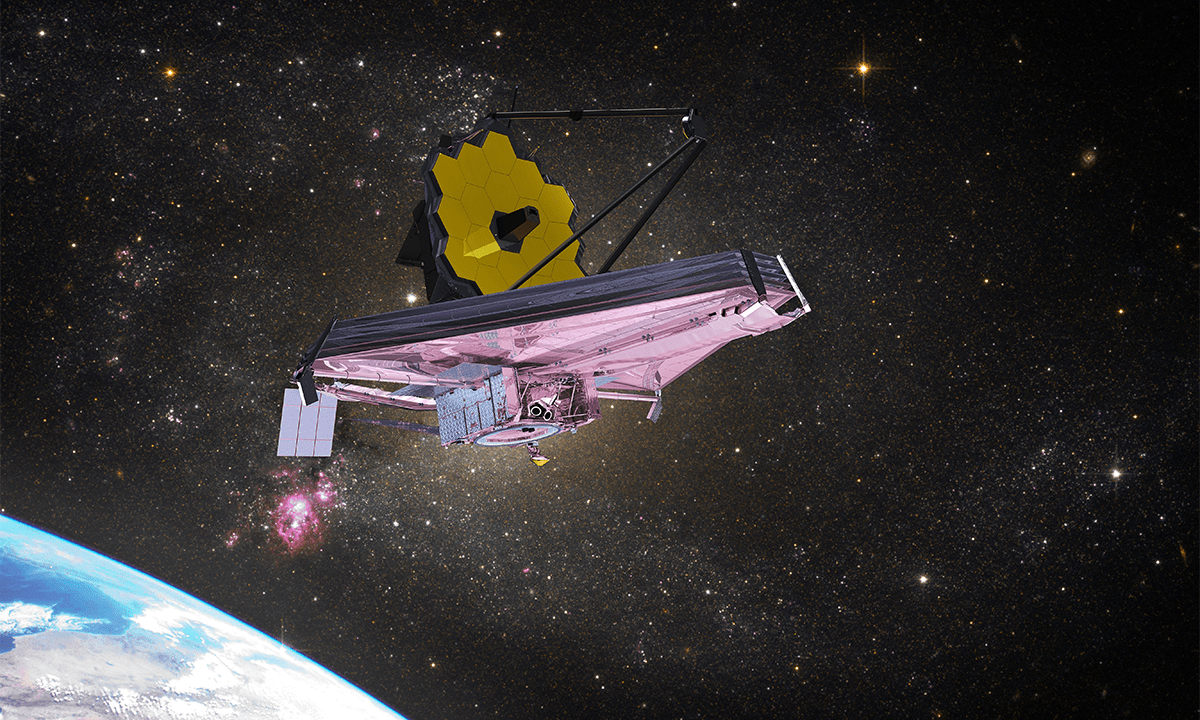
As the James Webb Space Telescope (JWST) continues to peer into the origins of our universe, it’s delivering a steady stream of discoveries back on Earth. One of the latest: the explosive death of a star when most were only beginning to be born.
Last March, a team of astronomers noticed a brilliant eruption of gamma rays coming from a surprising place and time, when our 14-billion-year-old universe was only 730 million years old. The burst of radiation came from a supernova. When the team targeted the area with JWST’s infrared camera almost four months later, they were able to separate the now-faded light of the explosion from the fainter light of the galaxy that hosted the dead star. The supernova, designated SN in GRB 250314A, is the most distant one ever observed, from the edge of the universe and the dawn of time. They published their findings in Astronomy & Astrophysics.
Read more: “My Personal Quest to Study Supernovae on Mars”
“Almost every supernova ever studied has been relatively nearby to us, with just a handful of exceptions to date,” study author Antonio Martin-Carrillo of University College Dublin explained in a statement. “When we confirmed the age of this one, we saw a unique opportunity to probe how the universe was there and what type of stars existed and died back then.”
Somewhat strangely, the electromagnetic radiation emanating from this supernova matched that of other supernovae observed more locally. Because of the lack of heavier elements like metals in the early universe, astronomers assumed stars from that period would give off brighter, bluer explosions, but that doesn’t appear to be the case with SN in GRB 250314A.
The only universal constant is that exploring the early universe continues to yield exciting results. 
Enjoying Nautilus? Subscribe to our free newsletter.
Lead image: 24K-Production / Shutterstock