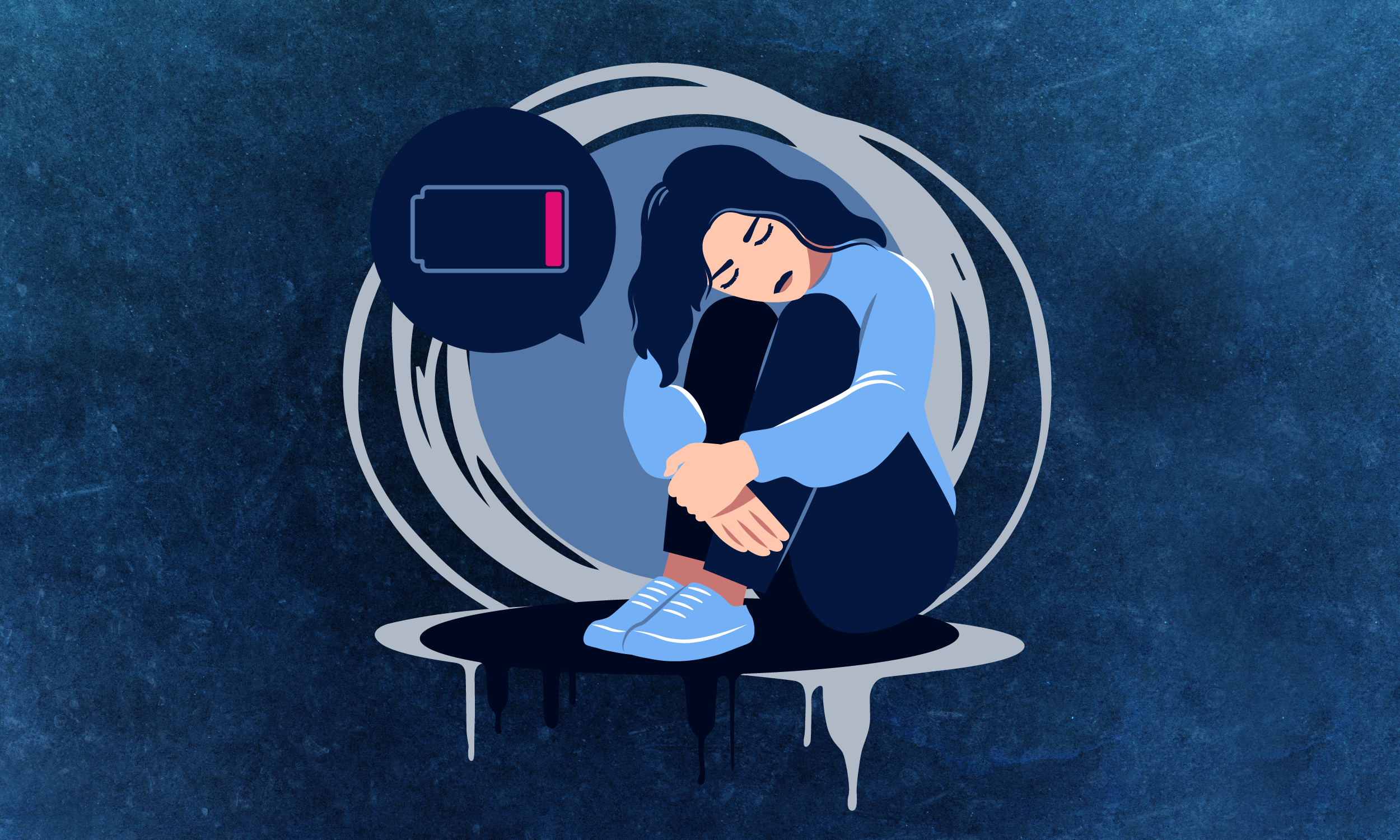
Clinical depression isn’t just a disorder of the mind, it’s also a disease of the body, characterized by somatic symptoms like fatigue. Going beyond mere lethargy, this crippling lack of motivation can be among the most difficult manifestations of depression to treat. But now, new research published in Translational Psychiatry is shedding light on the biochemical roots of depressive fatigue—with surprising results.
To get a better understanding of the causes of major depressive disorder-linked fatigue, a team of researchers from the University of Minnesota and the University of Queensland focused on adenosine triphosphate (ATP)—the chemical currency for energy in all living things—produced in the mitochondria.
To measure ATP levels, the team collected blood samples and brain scans from 18 people aged 18 to 25 who had been diagnosed with major depressive disorder and compared them to healthy controls. Interestingly, they found that young people suffering from major depressive disorder actually produced more ATP in their blood and brain cells at rest than those without the disorder.
Read more: “Does Depression Have an Evolutionary Purpose?”
“Cells may be overworking early in the illness, which could lead to longer-term problems,” study author Roger Varela said in a statement. “This was surprising, because you might expect energy production in cells would be lower for people with depression.”
But when those with major depressive disorder needed to ramp up ATP production, their brain and blood cells struggled to meet increased energy demands. “It suggests that in the early stages of depression, the mitochondria in the brain and body have a reduced capacity to cope with higher energy demand, which may contribute to low mood, reduced motivation, and slower cognitive function,” Varela added.
Put simply, people with major depressive disorder feel exhausted because the energy stores in their blood and brain cells have literally been exhausted. It’s the first time disrupted patterns in ATP production have been discovered in the blood and brain cells of young people with major depressive disorder. The team hopes their findings will not only lead to earlier diagnoses and better treatments, but destigmatization of the disorder as well.
“This shows multiple changes occur in the body, including in the brain and the blood, and that depression impacts energy at a cellular level,” Varela said. “It also proves not all depression is the same; every patient has different biology, and each patient is impacted differently.”
Most importantly it demonstrates yet again that treating depression isn’t as simple as shifting your mindset. 
Enjoying Nautilus? Subscribe to our free newsletter.
Lead image: Elena Kalinicheva and AKIO75 / Shutterstock