There’s a reason that astronauts, fighter pilots, and race-car drivers undergo extensive training to handle the g-forces they’ll experience on the job—such as this ESA astronaut being spun in a giant centrifuge. G-forces essentially add weight to bodies and make for a heckuva bumpy, intense ride.
What about a tiny creature like a fruit fly, though? How do they handle gravitational forces higher than the 1g level we experience on Earth?
According to a recent study led by University of California, Riverside entomologists, fruit flies handle it way better than you’d think.
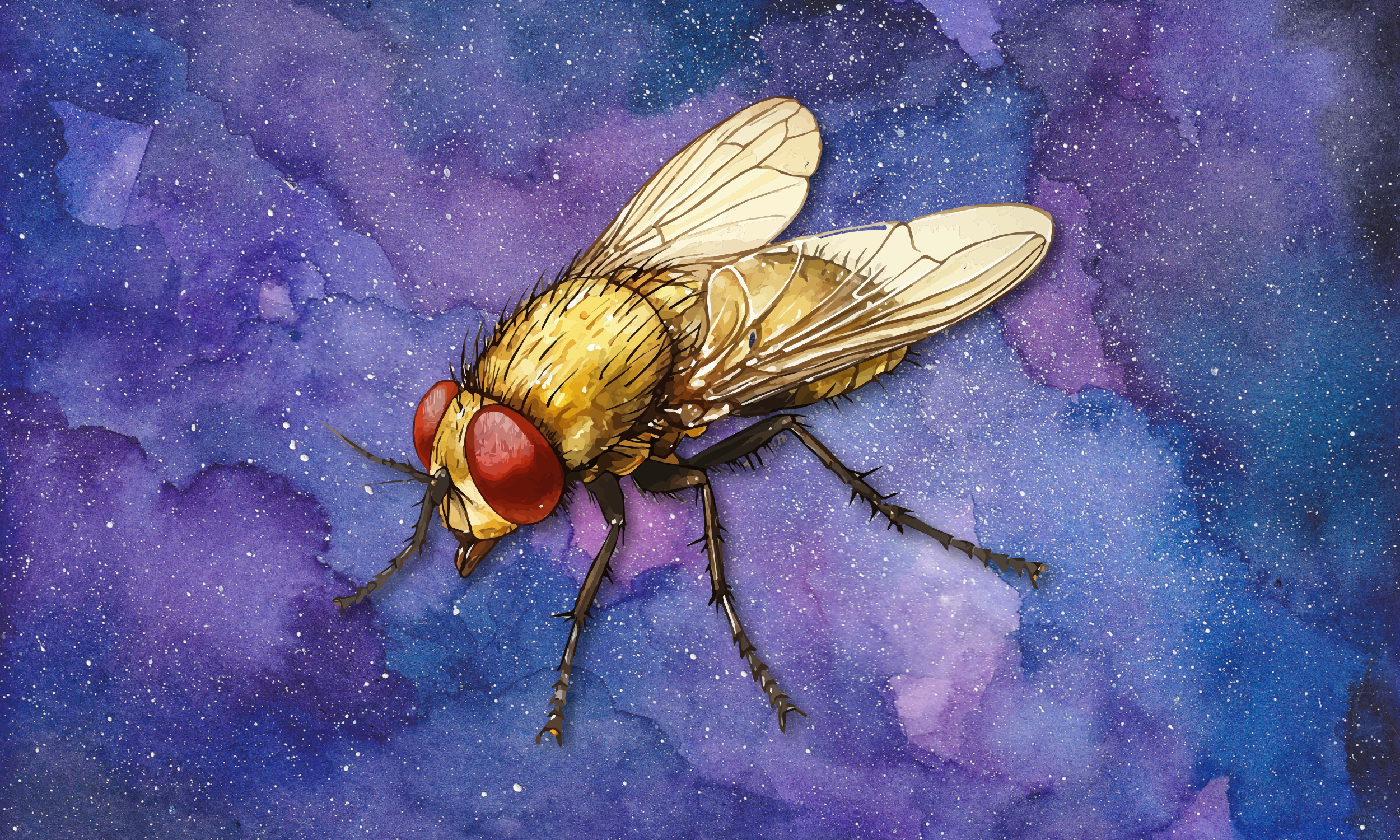
Female fruit flies (Drosophila melanogaster) raised in captivity were subjected to hypergravity conditions inside a custom-built centrifuge. “The centrifuge is like a merry-go-round,” explained lead study author Sushmita Arumugam Amogh in a press release. “The faster you go, the more you feel pulled outward. That’s hypergravity.”
Three-day-old flies were put in the centrifuge for 24 hours. By varying the intensity of gravity from 1g to 4g, 7g, 10g, or 13g, the researchers studied how g-forces affected fruit-fly movements. After concluding its centrifuge session, each fly was let loose inside a capped glass vial where researchers watched its behavior.
Read more: “The Most Detailed Brain Map Ever”
Flies naturally move upward against gravity, climbing walls or other surfaces. And so, the researchers hypothesized that these flies’ ascension would be impaired, since hypergravity makes moving more energy-intensive. Instead, the flies that had been exposed to four times the Earth’s gravity (4g) got hyperactive, climbing more, perhaps eager to find food to meet the higher energy demands. After exposure to 7g or higher, though, the flies climbed less, apparently shifting to a mode of conserving energy.
To figure out how long the effects of gravity lasted, other fruit flies were exposed to microgravity from their egg stages through to adulthood (totaling about 50 days). Furthermore, a group of flies was kept under hypergravity conditions for 10 generations to assess gravity’s consequences for entire life cycles. No evidence of damage to the fruit flies surfaced. In fact, at a modest level of microgravity—4g, which would render a human being likely to pass out as blood rushed down away from their brain—fruit flies proved remarkably resilient. They hatched, fed, grew, climbed, mated, and reproduced.
“Our study is really timely,” said study author Ysabel Milton Giraldo. “The link between gravity, physiology, and energy use will only become increasingly important to understand as space travel is poised to become more common in the future.”
Fruit flies are certainly more than ready to enjoy the ride. 
Enjoying Nautilus? Subscribe to our free newsletter.
Lead image: azendia and Leah / Adobe Stock