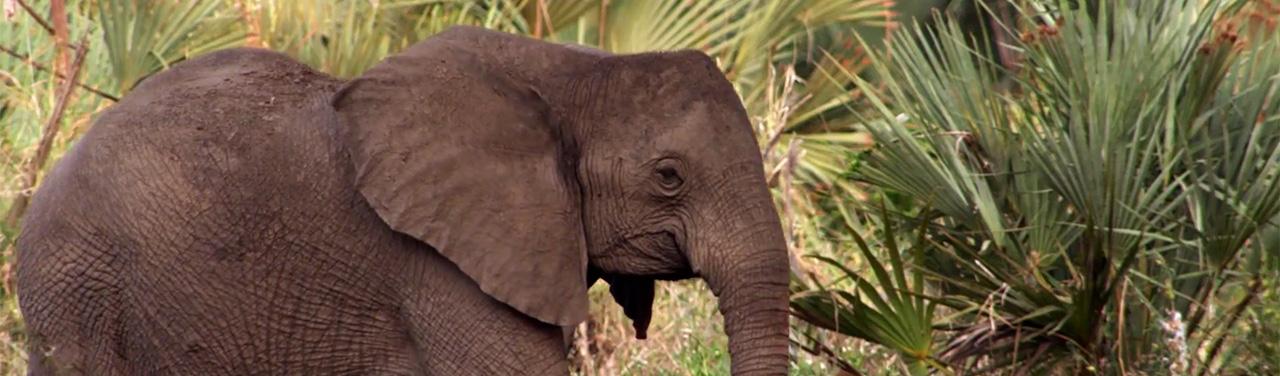
It takes a moment to register what’s missing from the elephants of Gorongosa National Park in Mozambique: Many of the females don’t have tusks.
Usually, both male and female elephants sport two giant, ever-growing teeth that serve both as tools and weapons. But these tusks also make elephants attractive targets to poachers looking to cash in on the black-market demand for ivory.
Ivory hunting was rampant in Gorongosa over the 15 years of Mozambique’s civil war, which ended in 1992. The war has reshaped Gorongosa’s elephant population in surprising ways, in what might be called an example of rapid natural (or unnatural) selection.
While virtually no male elephants are tuskless (they need tusks to fight), about 2 percent of female elephants are naturally tuskless. Among female elephants in Gorongosa who were adults during the civil war, however, half are tuskless—the others were simply killed. But tusklessness is an inheritable trait. That means that, even though poaching levels have fallen, a third of Gorongos’s young female population is tuskless today.
Joyce Poole, a scientist who studies elephants in the park, notes that the same is true of other elephant populations in the area. In the video below, produced by the Howard Hughes Medical Institute, Poole takes us into Gorongosa to take a look.