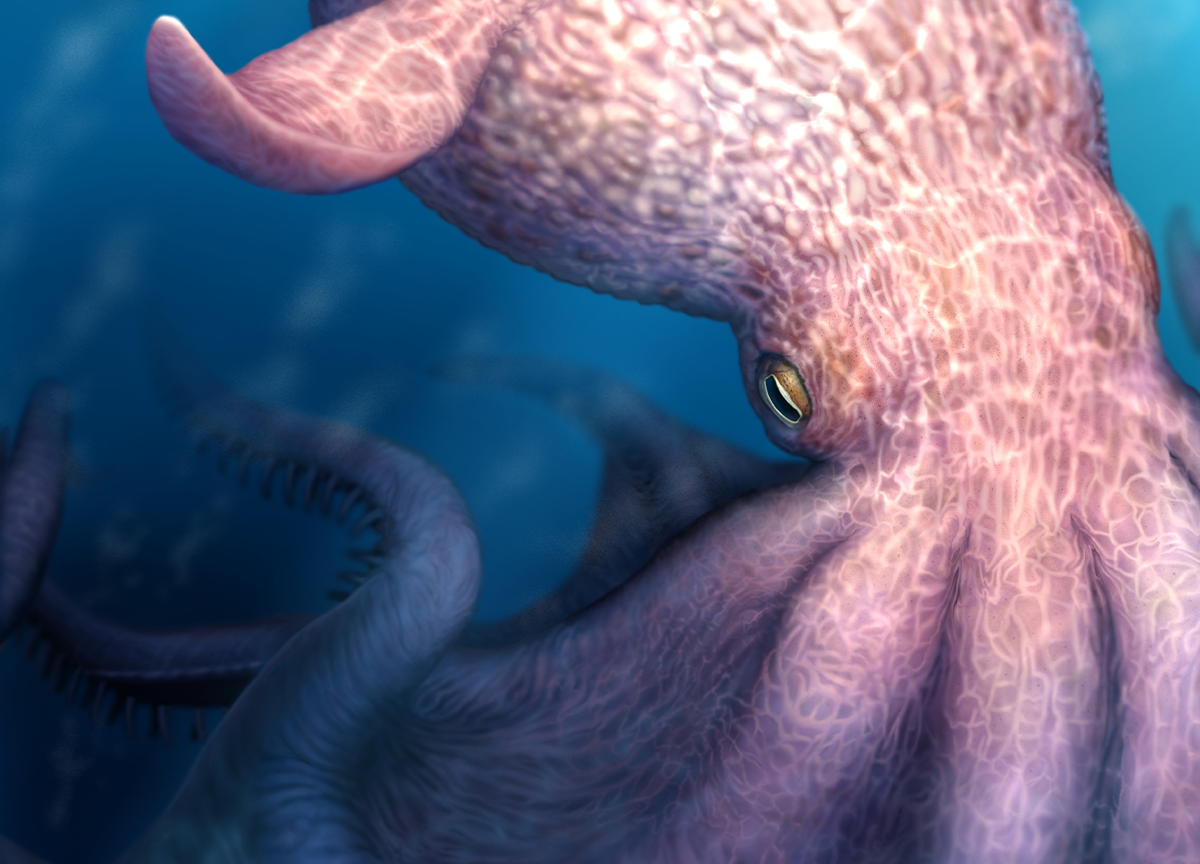
Seafarers of antiquity may have been fearful of massive tentacled leviathans rising from the deep to capsize their ships. New research suggests they were only off by around 100 million years. A study published today in Science suggests that colossal octopuses once stalked the primordial seas.
During the late Cretaceous period, predatory vertebrates like mosasaurs were thought to dominate the marine ecosystems, feeding on smaller, shelled invertebrates. But this latest study indicates that’s not entirely true. Huge octopuses that grew over 60 feet in length were able to join their distant vertebrate cousins at the top of the food chain, in part by adopting similar evolutionary innovations. Marine reptiles and gargantuan octopuses both developed strong jaws, large bodies, and more streamlined swim profiles during this period.
Read more: “Why Monster Stories Captivate Us”
An international team of researchers arrived at this conclusion after examining 27 fossilized jaws from ancient octopus relatives. An analysis of the wear pattern of these massive beaks revealed they were used to chomp through hard shells and bones with powerful biting force. In fact, they may have even been able to prey on other large predators like the mosasaurs they competed with.
The researchers say the wear patterns also point to the intelligence of these behemoths. Many of the beaks displayed asymmetrical degradation, indicating the octopuses favored one side during their feeding frenzies. Similar to handedness in humans, this behavior suggests lateralization in neural structures as well—a key indicator of advanced cognition that’s also present in octopus species living today.
While ancient sailors may have been afraid of giant tentacled sea monsters, they probably never dreamed the monsters might be smart, too. 
Enjoying Nautilus? Subscribe to our free newsletter.
Lead image: Yohei Utsuki: Department of Earth and Planetary Sciences, Hokkaido University