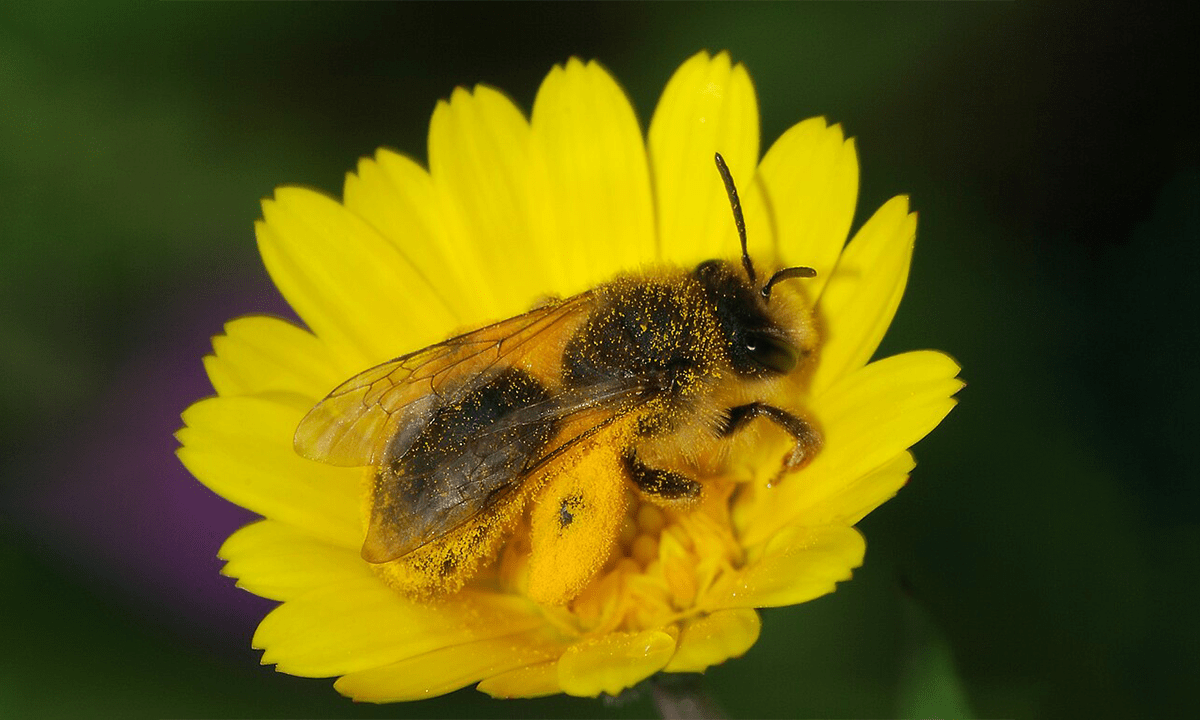
A massive assemblage of bees were found beneath a cemetery in Ithaca, New York, by researchers at Cornell University. The discovery was something of an accident. One spring day in 2022, lab technician Rachel Fordyce crossed through East Lawn Cemetery on her way to work, arriving on the job with several specimens collected in a jar. Her boss, entomologist Bryan Danforth, determined the buzzing insects were Andrena regularis, a species of bee that, like most bees, conduct solitary lives underground.
But what surprised the researchers the most was the sheer size of the population living there. According to their study, recently published in Apidologie, there are an estimated 5.5 million bees living underground at the cemetery, making it the largest and oldest known aggregation of ground-nesting bees in the world.
“I’m sure there are other large bee aggregations that exist around the world that we just haven’t identified, but in terms of what is in the literature, this is one of the largest,” study author Steve Hoge told the Cornell Chronicle.
Read more: “Orchids Thrive Among the Dead”
The bees, which emerge in early spring to feed from apple blossoms, are important pollinators. “This species overwinters as adults, which is relatively rare, and that’s part of the reason why they come up out of the ground so early in the spring, timed to the apple bloom,” Hoge said.
And the cemetery isn’t just home to millions of bees. Deer, geese, foxes, coyotes, and hawks have all been spotted on the grounds of East Lawn Cemetery as well. While we typically associate graveyards with death, they’re actually thriving ecosystems teeming with life. In fact, research has shown that sacred burial sites around the world serve important conservational roles, providing a haven for plants and animals alike. Urban cemeteries in particular are crucial refuges for native species and can also function as “cooling islands,” offering respite from high temperatures caused by global warming.
To quote Paul Damiano, president of Brooklyn’s Green Hill Cemetery Association, cemeteries are where “the dead protect the living”—and sometimes that includes millions and millions of bees. 
Enjoying Nautilus? Subscribe to our free newsletter.
Lead image: Alvesgaspar / Wikimedia Commons