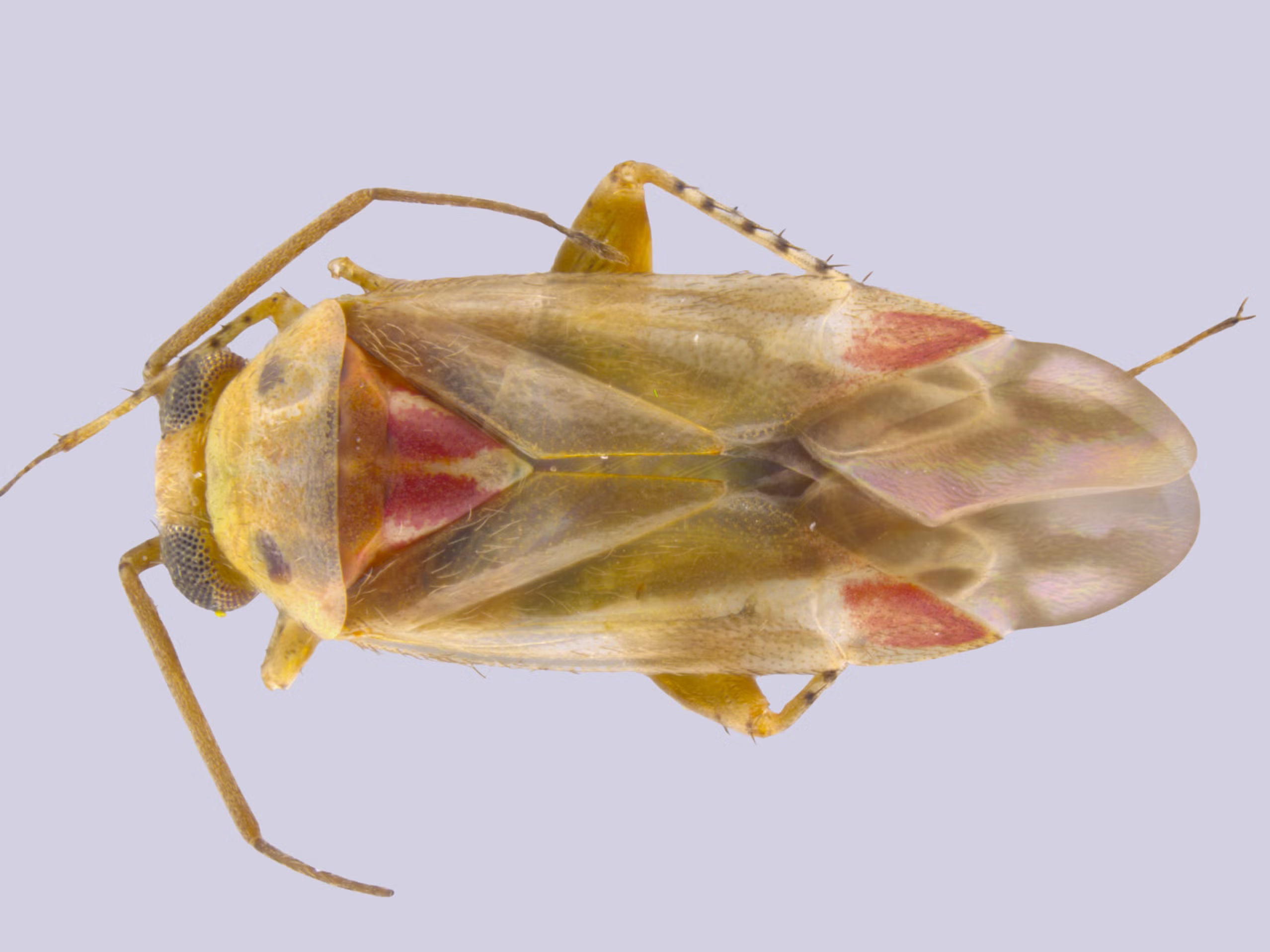
Whoever discovers a new group of animals gets the privilege of naming it. The name might honor famous scientists, like the pterosaur Darwinopterus, or more recently, a music icon like Slash from Guns n’ Roses. Last week, in fact, Taylor Swift got recognized in her first honorary genus name, Swiftiephylus, for a bug.
Sara Schroeder, a doctoral student at the University of California, Riverside, chose the name due to her adoration of Tay Tay. Also, as she explained in a press release, “Taylor Swift’s iconic look is her blonde hair and red lips. These insects are pale yellow with accents of red throughout.” Their coloration is thought to help Swiftiephylus bugs camouflage in the reddish-orange flowers of their preferred plants, the “she-oaks” of Australia.
Read more: “Pop Music Is Getting Darker”
The new insect is a true bug—i.e., a member of the Order Hemiptera that has piercing, sucking mouthparts. Leaving aside any comparison to Swift’s mouthparts, the bug, like Swift, isn’t a known pest to humans or any other animals. It feeds on plants by sucking nutrient-rich sap from their stems, leaves, and fruits. The Australian she-oak is a one-stop shop for everything the bug needs from the time it hatches through adulthood.
Schroeder discovered the new genus in her study of 593 specimens housed at the American Museum of Natural History and the Australian Museum. She described it in a recent paper published in Insect Systematics & Evolution and also delineated four distinct species. There’s the original Swiftiephylus taylorae, along with S. amator (“love”), S. intrepidus (“fearless”), and S. poetorum (“poets”), aka beloved, fearless, poetic Taylor Swift.
“It felt authentic to me as a lifelong Swiftie to honor Taylor in this way, as well as bring attention to the diversity of insects that has yet to be discovered,” Schroeder explained.
As for Swift, she can add the Swiftiephylus to her growing list of taxonomic honorifics, which also includes two species (but not genus) names: the millipede Nannaria swiftae (2022) and the spider Castianeira swiftay (2023). 
Enjoying Nautilus? Subscribe to our free newsletter.
Lead Image: Sarah Schroeder, University of California, Riverside