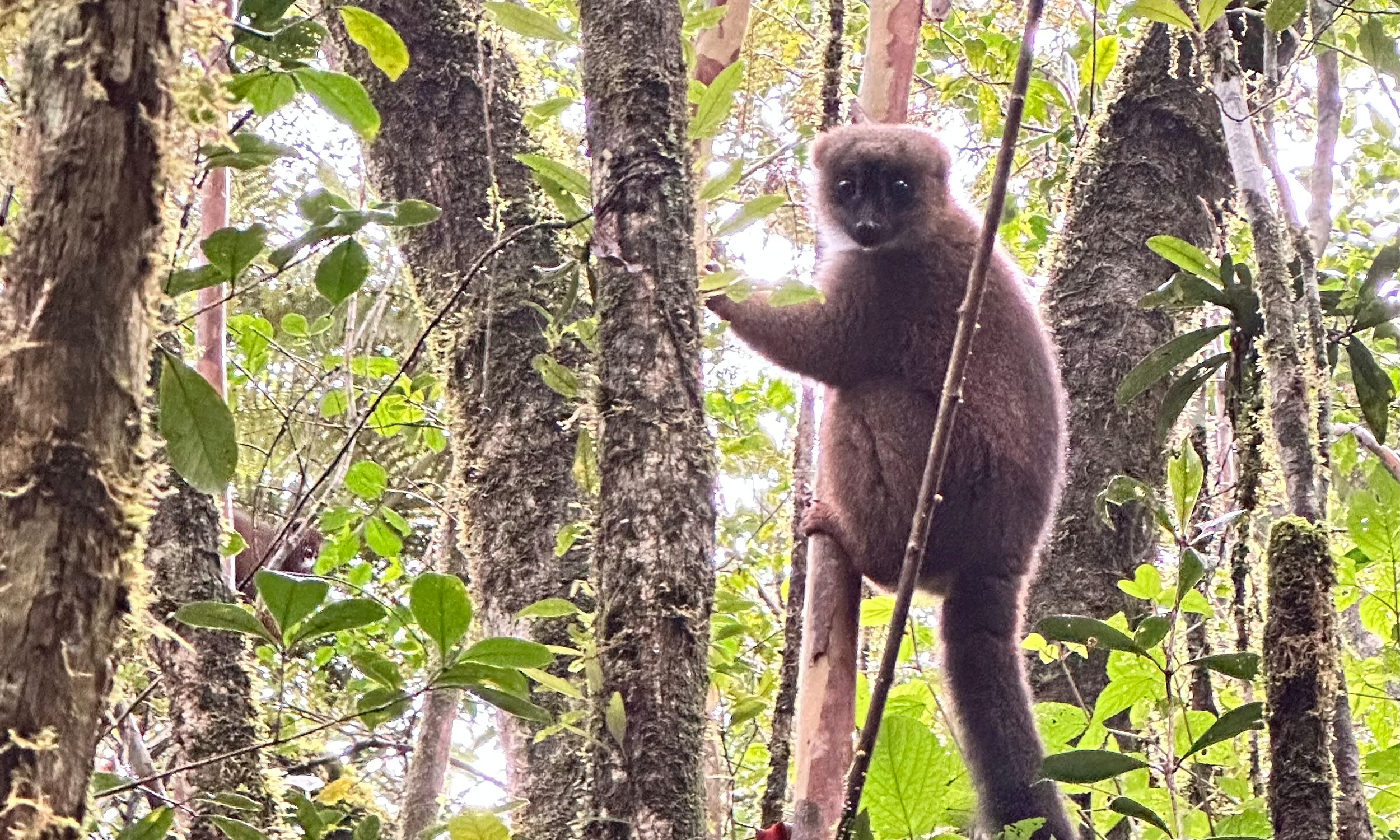
If you want to spot lemurs in Madagascar, try an area where strawberry guava trees are fruiting. In particular, consider the mountainous rainforests of Ranomafana National Park, a UNESCO World Heritage site, where lemurs love to feast on the guava fruits. But a recent study published in Biological Conservation shows that strawberry guava, while providing a juicy food supply for lemurs and people, is damaging ecosystems in the park.
Native to Brazil, strawberry guava (Psidium cattleyanum) was introduced to Madagascar by 19th-century colonists, who favored the hard, durable wood for construction. Over time, the plant showed its invasive tendencies, spreading and forming dense understory thickets, especially in open areas where the rainforest canopy was damaged by storms or human interventions.
Researchers from the United States and Malagasy compared areas invaded by strawberry guava with adjacent uninvaded areas. They focused on vegetation structure, soil composition, and arthropod abundance and diversity. The data showed that strawberry guava was altering the native forests of Ranomafana National Park at multiple levels.
Where guava grows, soils are less nutrient-rich, lacking organic matter and key minerals like nitrogen and ammonia. Understory vegetation is up to 3.5 times as dense, crowding out other plant species. Not to mention, forest floor insect fauna is less biodiverse and skewed away from decomposer insects. And, while native tree seeds take root under strawberry guava thickets, their development appears to be arrested at the seedling stage, such that they never become full-grown canopy trees.
“Our study shows that when strawberry guava becomes established, that natural regeneration process can stall, arresting native species recovery at an early stage and disrupting the soil, insect, and plant communities that support the rest of the forest,” explained senior author and Rice University biologist Amy Dunham in a press release.
Read more: “On the Trail of a New Understanding of Invasive Species”
Recognizing the negative impacts of invasive strawberry guava on the ecosystem establishes the groundwork to restore its native plant flora. But it’s easier said than done, according to the researchers, for both cultural and structural reasons. “Strawberry guava is extremely difficult to eradicate, useful to the Malagasy people, and positively associated with lemurs,” added Dunham.
Strawberry guava is a prolific seed producer that can also resprout from roots and stems. So, a concerted program of herbicides, cutting, and burning would be required to eradicate the strawberry guava.
While that won’t make the lemurs of Madagascar happy in the short run, it will improve the long-term health of their Malagasy ecosystems. 
Enjoying Nautilus? Subscribe to our free newsletter.
Lead image: Amy Dunham / Rice University