When wind blows across the ocean’s surface, it forms a wave. A single wave can travel thousands of miles before breaking on land; for example, some waves generated off the coast of New Zealand roll all the way to the West Coast of North America, taking up to two weeks to reach their final destination. And while small waves can move as slowly as 5 miles per hour, tsunamis in the middle of the Pacific Ocean reach speeds of 600 miles per hour.
As they move across the planet, waves transport nutrients, plankton, and other building blocks of marine life. They also carry larger animals, including baby sea turtles, who use waves to orient themselves perpendicular to the shore as they push out to sea after hatching on beaches. People, too, use waves to navigate. Some Pacific Islanders are reviving a traditional practice called wave piloting, in which navigators chart a course in part by feeling the waves beneath their boat.
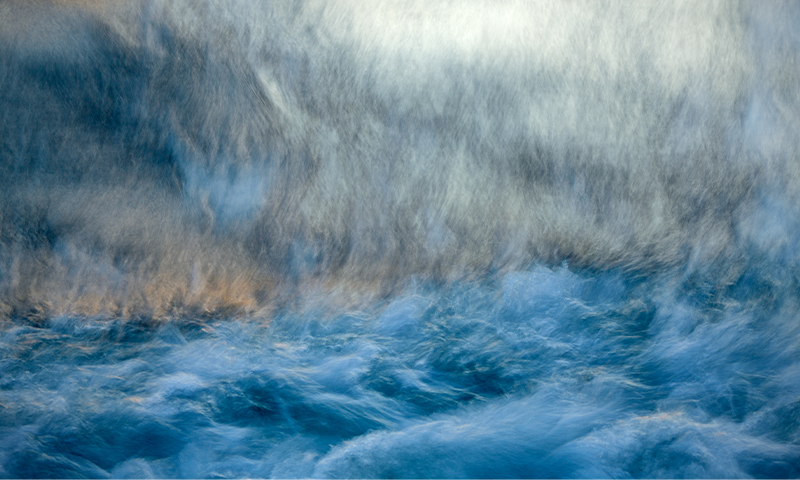
Waves also impact life on land, tossing sediment onto shore that eventually becomes beaches and dunes where shorebirds and other wildlife find refuge. In Germany, where photographer Sandra Bartocha made this long-exposure image at sunrise, waves deposit up to 13 feet of sand per year in some locations and erode up to 8 feet or more per year in others. Whether waves give or take, their impact on the world’s oceans is, shall we say, unwavering.
Bartocha’s image won the Art of Nature award in the California Academy of Sciences’ BigPicture Photography Competition, now in its 12th year. 
This story originally appeared in bioGraphic, an independent magazine about nature and regeneration powered by the California Academy of Sciences.
Sandra Bartocha is a German freelance photographer and author specializing in natural landscapes, forests, and plants as well as abstract work.