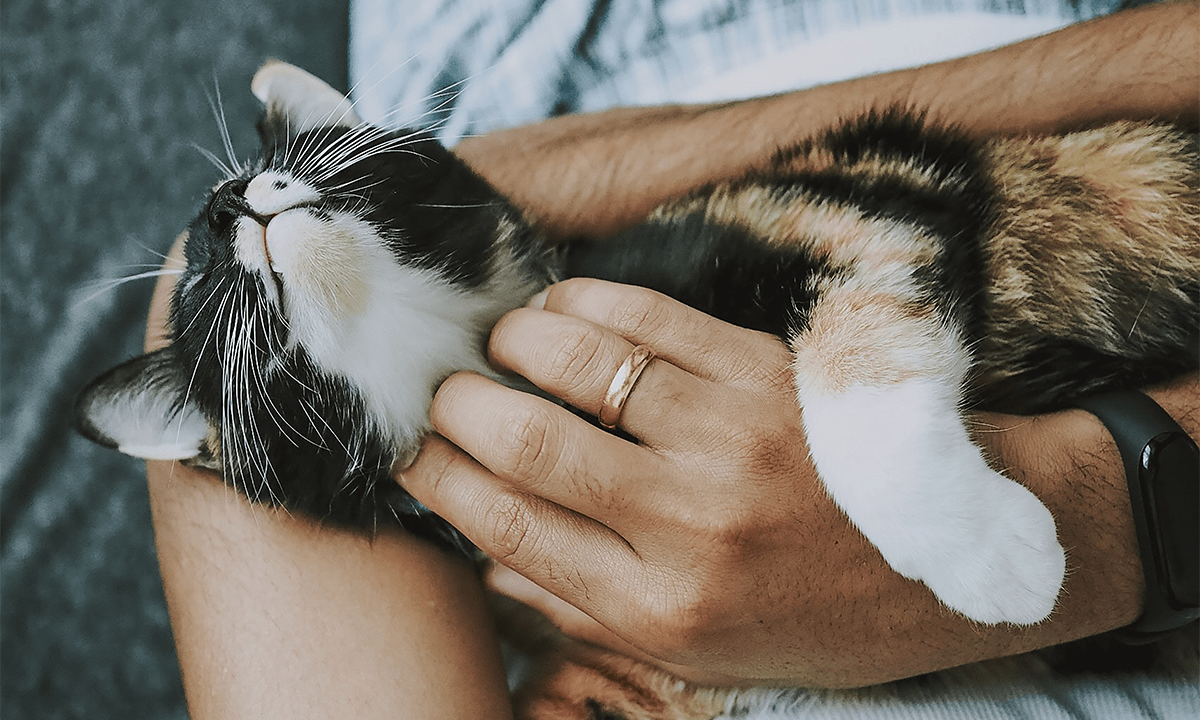
You can learn a lot about a cat by its purr—less so its meow.
The former is more closely associated with a feline’s distinct identity, researchers based in Italy and Germany suggested. They reached this conclusion by performing statistical analysis of cat calls with methods initially designed for automatic speech recognition in humans.
Unique vocal signals seem to have helped drive the evolution of crucial social processes, such as forming groups and recognizing relatives, among many animal species. While scientists have done plenty of studies on distinct vocal patterns across larger groups of animals, it’s unclear whether different individuals in the same species produce their own special sounds.
Domestic cats offer a prime candidate to investigate this question—they live in close social groups, and have developed a rich library of sounds. Overall, scientists have documented up to 21 distinct vocalization types produced by domestic cats. After spending millennia with human caregivers, they seem to have modified their meows specifically to catch the attention of their owners.
Read more: “How to Tell a Leopard from Its Roar”
To hear what cats had to say, the research team studied hundreds of sounds from 21 cats that were recorded in homes and animal shelters in Berlin, Germany. They recorded cats while they sought human attention to capture meows and while they received pets and scritches to capture purrs. Ultimately, the scientists were able to statistically match up to around 64 percent of meows and 86 percent of purrs to the correct cat, suggesting that purrs work more effectively as cat ID cards. The team reported its feline findings in Scientific Reports.
“People pay most attention to meowing because cats mainly use these vocalizations toward us," said paper co-author Danilo Russo, an ecologist at the University of Naples Federico II in Italy, in a statement. "But once we examined the acoustic structure closely, the even, rhythmic purr turned out to be the better cue for identifying individual cats."
Russo and his colleagues also compared the domestic cat noises to archived recordings of wild cats, including jungle cats, African wildcats, and cougars. They found that the domestic cats “have much more variable meows,” the authors wrote in the paper.
“Living with humans—who differ greatly in their routines, expectations, and responses—likely favored cats that could flexibly adjust their meows,” said paper co-author Mirjam Knörnschild, a bioacoustician at the Museum of Natural History in Berlin. “Our results support the idea that meows have evolved into a highly adaptable tool for negotiating life in a human-dominated world.”
They emphasized that the clearer individual signatures found in purrs don’t necessarily aid in communication, and they might simply result from anatomical differences. Purrs are thought to involve specific muscle contractions, among other mechanisms. But unique purrs could help cats recognize their buddies when conditions in their environment make it tough to use other cues, like smell and vision.
Meows, meanwhile, may no longer aid in cat-to-cat communications because humans seem to have contributed to “weakening consistent identity signals” within these sounds. In fact, wild cats rarely meow, highlighting the extent that we’ve molded the behavior of our beloved feline friends. 
Enjoying Nautilus? Subscribe to our free newsletter.
Lead image: Fuzzy Rescue / Pixabay