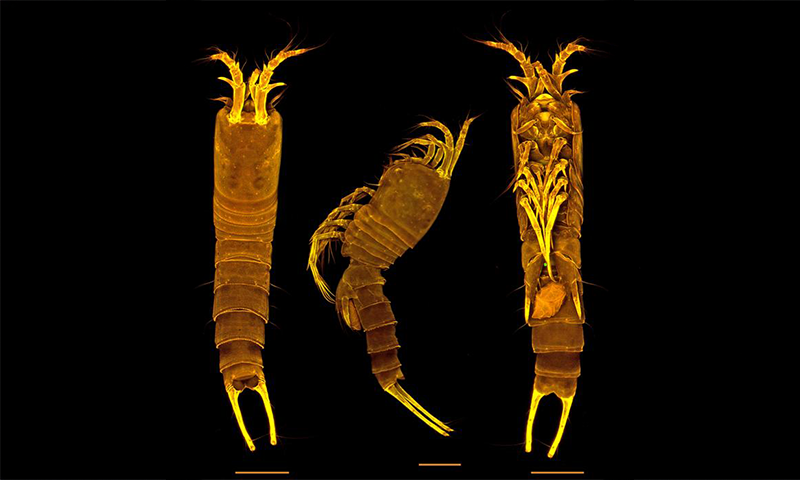
Beneath the densely populated island of Bermuda lies a network of limestone caves that harbors a surprising diversity of life. Now, researchers sampling one Bermudian cave have increased that list of diverse creatures by one species, discovering and describing an aquatic crustacean that is new to science.
Named Tetragoniceps bermudensis after its island home, the copepod is the first of the Tetragoniceps genus to be found in Bermuda and the first cave-dwelling species of the genus discovered anywhere in the world.
Researchers from the Bermuda Institute of Ocean Science and the Senckenberg am Meer German Centre for Marine Biodiversity Research originally captured a single female egg-bearing copepod in a sample from Bermuda’s Roadside Cave in 2016. In 2024, they and other scientists carefully studied the animal and determined it to be a new species. They reported their findings this week in ZooKeys.
Because they only found one Tetragoniceps bermudensis individual, the researchers could not estimate the relative abundance or distribution of the species in the caves they study. But finding an isolated animal, “suggests a correspondingly limited area and a probable endemic status,” they write. Bermuda’s other cave-dwelling animals tend to be endemic or constricted to a narrow range of distribution. The discovery highlights the fragility of the ecosystem where the new copepod was found: caves with a subterranean connection to the sea, known as anchialine systems.
“Although Roadside Cave is in a relatively undisturbed area, persistent threats include urban development, vandalism, dumping, littering and pollution, and sediment disturbance due to unlawful access by humans and domesticated animals,” the authors write. They recommend formal protection of the cave itself to defend against these threats and to safeguard Bermuda’s anchialine fauna, including the newly discovered copepod. 
Lead Image from Mussini, G., et al. ZooKeys.