No matter how bad your breakup, you can take heart knowing it wasn’t nearly as rocky as the break up of Gondwana. The supercontinent’s split, which began around 180-160 million years ago, was marked by violent volcanic activity, particularly in hot spots in the newly formed Indian Ocean. Now a new study published today in Science blames the fallout from that breakup for a massive oceanic extinction event.
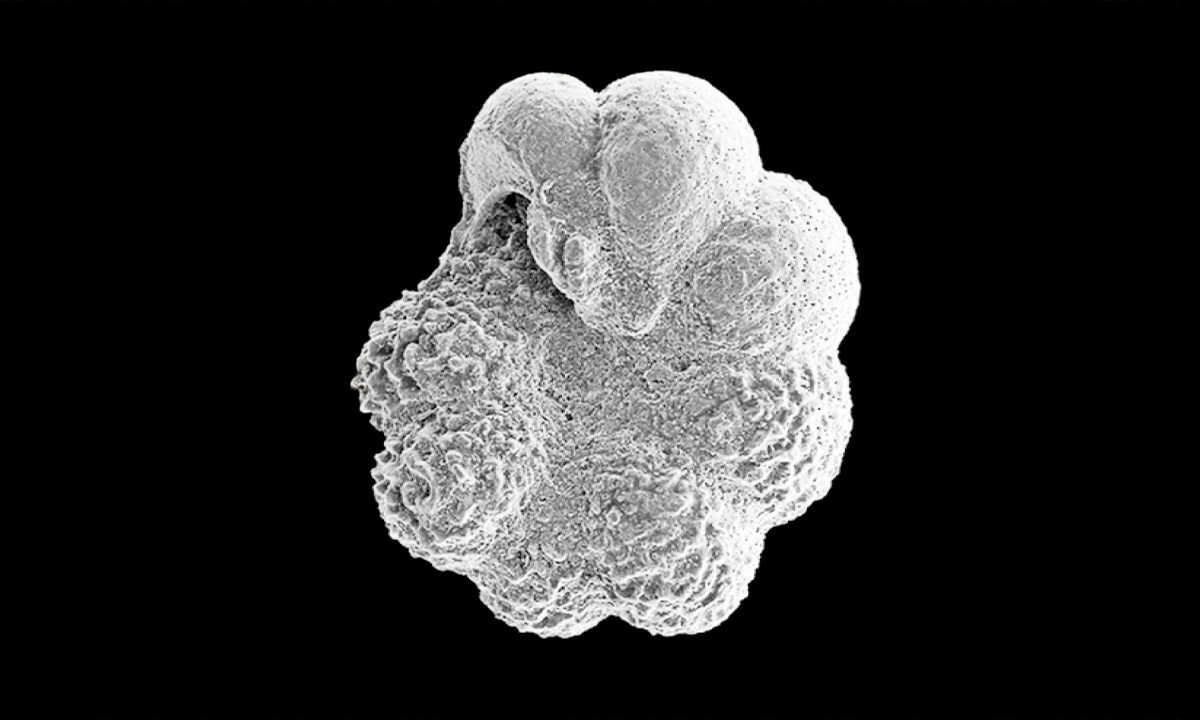
During the early Cretaceous period 113 million years ago, planktic foraminifera—microscopic organisms with tiny calcium carbonate shells that live in shallow ocean waters—suffered their second largest extinction event. Unlike the extinction event they suffered at the end of the Cretaceous (the one that eliminated the dinosaurs), this one was much more gradual. In fact, the fossil record shows planktic foraminifera building smaller, thinner shells before they vanished.
Why, though?
Ocean acidification was considered a likely culprit. When foraminifera are living in favorable, non-acidic conditions, they build their shells more quickly. Declining ocean pH levels can throw a wrench into that process, slowing shell formation and changing the isotopic signature of calcium in their shells.
The only problem with the ocean acidification explanation is that benthic foraminifera, which live in deeper ocean waters, didn’t seem to be affected. To solve this prehistoric mystery, a team of earth scientists from Northwestern University compared the chemical composition of the two groups’ shells. After painstakingly separating the shells from planktic and benthic foraminifera (each is smaller than a grain of sand), the team analyzed the calcium isotopes contained in both. The planktic foraminifera shells revealed slower calcification, a tell-tale sign of ocean acidification.
Read more: “These Tiny Beautiful Fossils Tell the Future”
According to the team, volcanoes on the Kerguelen Plateau located in the brand new Indian Ocean spewed out carbon dioxide, acidifying the ocean and eventually causing the mass extinction of the planktic foraminifera.
But what about their benthic brethren? Their shells showed a shift in isotopic calcium levels too, but much less than the planktic foraminifera.
The team argues that the reason for the difference was the location of the volcanoes. Underwater volcanoes belch out carbon dioxide into the water, which would have acidified deeper waters more intensely, but the Kerguelen Plateau volcanoes were above water.
“Because the CO2 entered the atmosphere first, it hit the surface waters and created ocean acidification before it could reach the deeper ocean,” study author Jonathan Chen said in a statement. “That wiped out the planktic foraminifera, so they couldn’t make their calcite shells anymore. The excess alkalinity circulated through the water column, making it available for benthic foraminifera living on the seafloor. That saved the benthics from being affected too badly.”
Another prehistoric mystery solved. 
Enjoying Nautilus? Subscribe to our free newsletter.
Lead image: Huber and Leckie (2011)/Smithsonian National Museum of Natural History