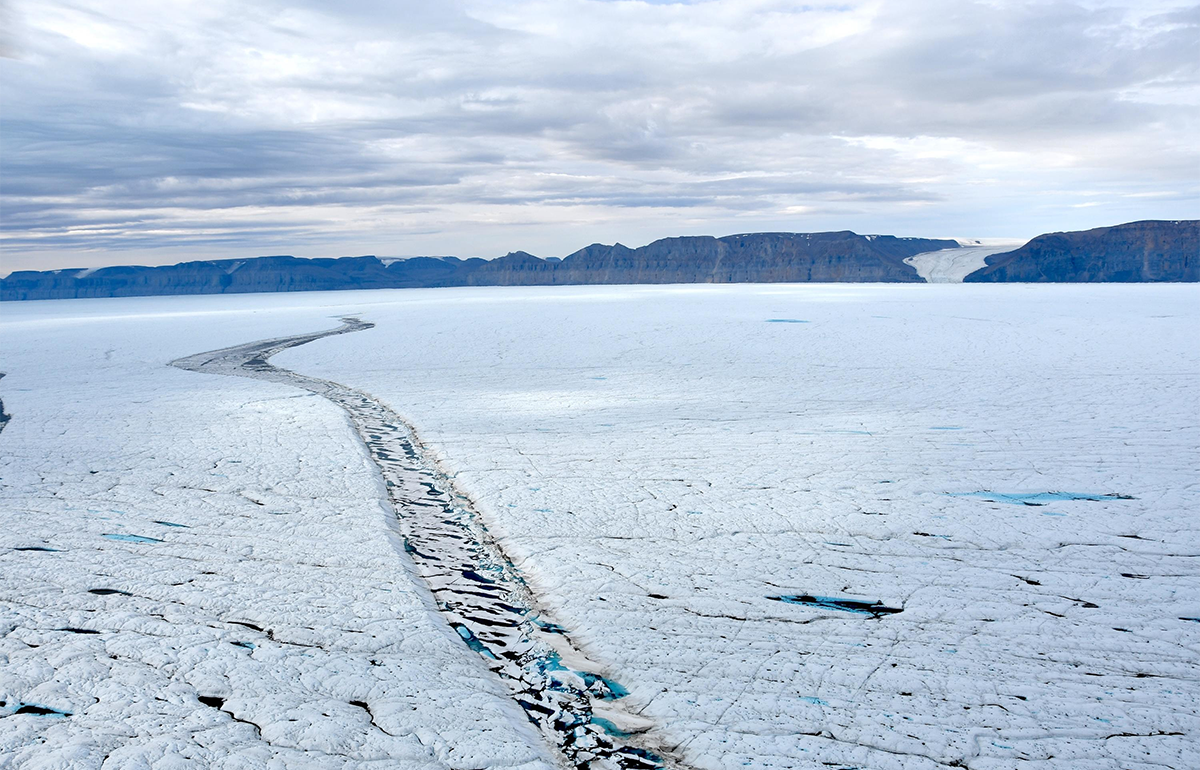
Moss can make it practically anywhere, from the blustery coasts of Antarctica to high up on Mount Everest—and even in lava fields on the flanks of active volcanoes. That’s because bryophytes, the plant group comprising mosses as well as liverworts and hornworts, were among the first plants to make the transition to terrestrial living some 500 million years ago. On land, they encountered threats like ultraviolet radiation, shifting temperatures, and dry conditions, yet they held on strong and even survived multiple mass extinction events.
Now, moss can add space to the long list of extreme environs they can endure. Astronauts affixed moss spores to the outside of the International Space Station for nine months, and more than 80 percent of them survived. This suggests that moss can tough out the vacuum of space for extended periods, according to a new paper in iScience.
Scientists had previously subjected mosses to lab conditions mimicking those on Mars, but the authors say their findings offer direct evidence of how the low-lying plants fare when exposed to an unforgiving extraterrestrial environment.
“This provides striking evidence that the life that has evolved on Earth possesses, at the cellular level, intrinsic mechanisms to endure the conditions of space,” said paper author Tomomichi Fujita, a plant evolutionary and developmental biologist at Hokkaido University in Japan, in a statement.
Read more: “The Moss That Could Terraform Mars”
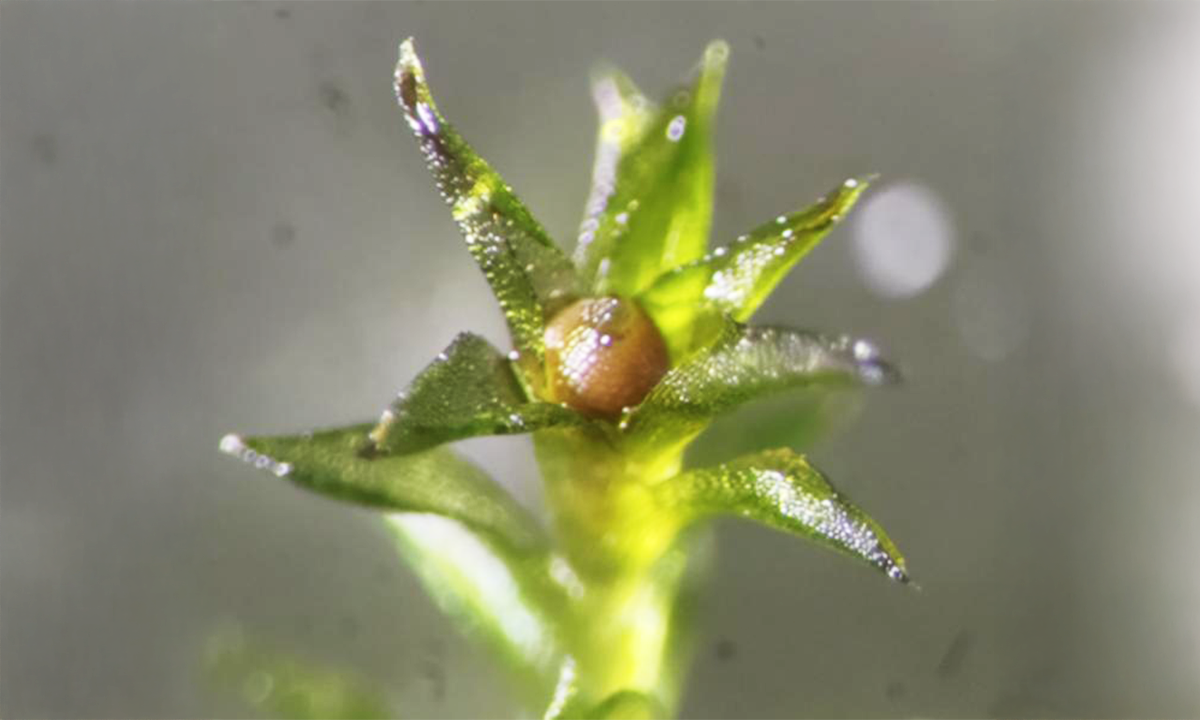
Fujita and his colleagues first challenged the moss species Physcomitrium patens with space-like conditions in a lab, including extreme temperature swings, extreme UV radiation, and vacuum conditions. By assessing the impacts on three different structures from the moss—juvenile moss, specialized stem cells, and spores contained within reproductive structures called sporangium—they determined that the shielded spores had the best chance of making it among the stars. For example, the spores showed around 1,000 times more tolerance to UV radiation than did the stem cells.
The scientists chalked this up to the sporangium, which protects them from perils including UV exposure and extreme temperatures on Earth—a feature that has perhaps enabled them to ride out multiple mass extinction events.
Then, it was time for the ultimate test: In March 2022, the team handed off hundreds of spores to astronauts headed toward the International Space Station on the Cygnus NG-17 spacecraft. Once the crew made it to the ISS, they secured the spores on the station’s exterior. Spores were divided into groups and exposed to one of three different conditions: exposed to visible light uncovered but protected from UV radiation by a filter, blocked from any light (including UV) in a control group, or exposed to all the visible light and UV radiation hitting the ISS. After 283 days in the extraterrestrial elements, the spores returned to Earth.
“We expected almost zero survival, but the result was the opposite: Most of the spores survived,” Fujita said in the statement. “We were genuinely astonished by the extraordinary durability of these tiny plant cells.”
Testing revealed that more than 80 percent of the spores survived the experiment, and had germination rates of up to 97 percent for those not exposed to UV radiation in space. Meanwhile, the spores that weren’t shielded from UV radiation had a germination rate of 86 percent.The paper noted that a form of chlorophyll showed signs of damage in the spores exposed to space light but not in the spores kept in the dark.
With the data gleaned from the lab and space experiments, the team estimated that these moss spores could survive up to roughly 15 years in space. Now, this moss joins the ranks of other rugged Earthlings who have endured the space elements, including tardigrades and fungi.
The researchers say they hope that moss can aid extended human missions to other planets by providing oxygen and boosting soil fertility for crop growth on long cosmic journeys or on extraterrestrial outposts.
But scientists still have much to learn about growing Earth-plants in space, Agata Zupanska, a biologist at the SETI Institute, toldThe Guardian. The ISS doesn’t entirely reflect “the complexities of true deep space conditions,” she said. “The value of space plants is realized only if they can actively grow and thrive away from Earth.While spore resilience is important, it represents only an initial step toward the broader goals of growing plants in extraterrestrial environments.” 
Enjoying Nautilus? Subscribe to our free newsletter.
Lead image: Tomomichi Fujita