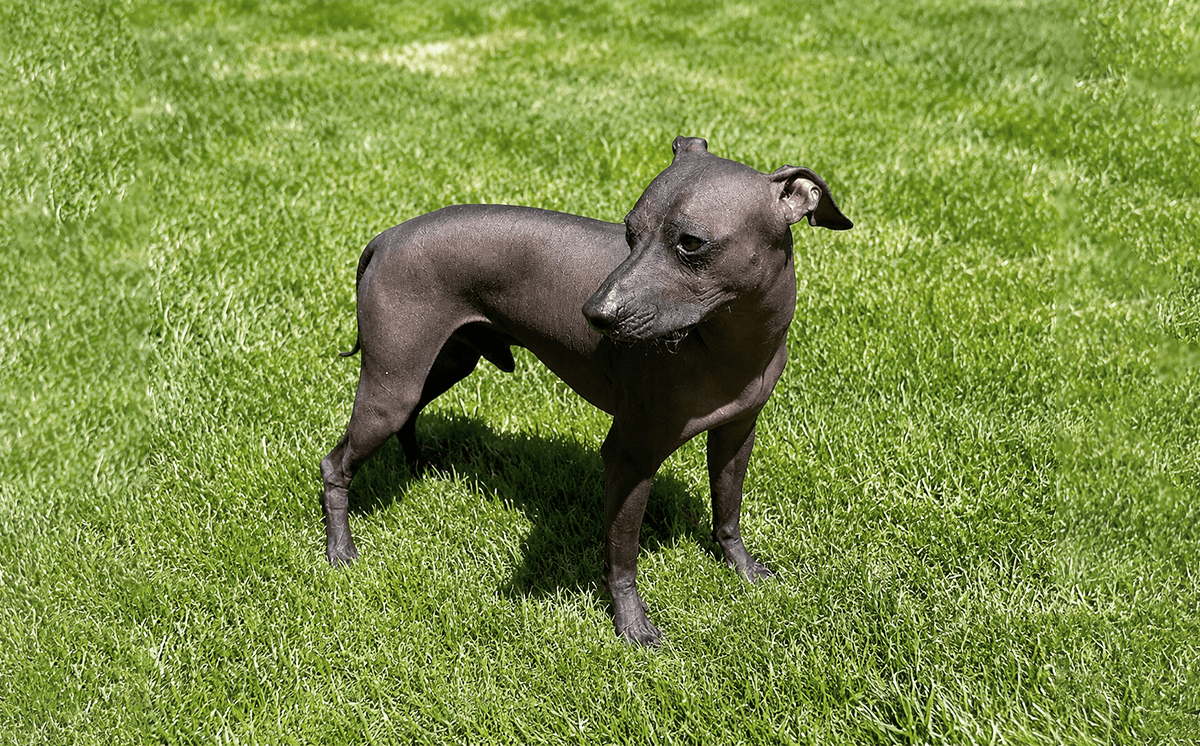
Hairless dogs get a bad rap. The Chinese crested, for example, has the dubious honor of being a perennial favorite in ugly dog competitions. The Peruvian hairless dog was regarded by Spanish colonizers as “satanic.” That breed was so demonized, in fact, that it was only saved thanks to an effort in the 1990s by Peru to make it the country’s official national dog breed.
The Peruvian hairless stands as the canine symbol of the South American nation for good reason. The more than 3,000-year-old breed has deep roots in ancient Andean culture. Artifacts seemingly depicting the dogs’ triangular ears, curled tails, and long, sharp teeth have emerged at numerous archeological sites. Now, researchers publishing in the Journal of Anthropological Archaeology report finding the first mummified remains of the dogs to be discovered at this site—along with hints to their role in the lives of Andean Indigenous people.
Studying a site that was part of the Wari Empire, a culture that existed for 500 years on the coast of Peru beginning in 600 B.C., archaeologists from Dartmouth University discovered the remains of several mummified dogs of all ages buried alongside the interred bodies of approximately 60 high-status females and a handful of men. Some of the dogs had been painted with cinnabar, a pigment used in funerary rituals to adorn the dead.
Read more: “Only Street Dogs Are Real Dogs”
Curiously, many of these canines were missing their molars, but not because they’d been lost or removed. For the researchers, this was a big clue. “What I noticed is that some of the dog skeletons were missing teeth, and not that they lost them during their lifespan; some teeth, especially first premolars and sometimes last molars, had just never erupted,” study author Weronika Tomczyk from Dartmouth University explained in a statement. “And then I found in the literature that the same gene which is responsible for hairlessness in dogs is responsible for a reduced number of teeth, indicating that these were Peruvian hairless dogs.”
An analysis of isotopes found in the dogs’ remaining teeth offered more clues about what kinds of food they ate. Somewhat unsurprisingly, most of the dogs fed on maize, a staple crop that made up the bulk of the Wari diet. However, comparing the diets of mummified puppies with those of adult dogs revealed some interesting distinctions. The puppies’ diets were similar to Wari children, but adult dogs’ diets were more varied.
To the researchers, this suggests Peruvian hairless puppies may have been intentionally fed, potentially indicating they were bred as well. “We do not know if the dogs were intentionally fed maize or if perhaps, they were just eating leftovers or trash,” Tomczyk said. “Yet, the distinct dietary patterns of hairless puppies provide insights into what may have been organized breeding.”
Still, researchers aren’t sure what the dogs’ primary role was in Wari life. They emphasize that they could have been pets to some and pests to others (just like dogs living today). Previous research, along with folklore, suggests Mexican hairless dogs were used for medicinal purposes during the reign of the Aztec Empire, with their warm skin easing aches and pains. In fact, some people still use Mexican hairless dogs as a friendly substitute for warm water bottles.
Not a bad gig for an “ugly” dog. 
Enjoying Nautilus? Subscribe to our free newsletter.
Lead image: Astrostudy / Wikimedia Commons