1 Uncertainty Is Unsettling—and That’s a Gift
I didn’t intend to write a book about uncertainty. Some years ago, I set off to research a volume on the kinds of thinking needed in a speed-driven, fragmented age. Epistemic uncertainty, which arises when we recognize the limits of our knowledge, was the subject of my first chapter. I assumed that being unsure was merely a preface to good thinking, something to eradicate as swiftly as possible en route to an answer. But I soon discovered a new wave of captivating multi-disciplinary research that upends our many mistaken beliefs about being unsure.
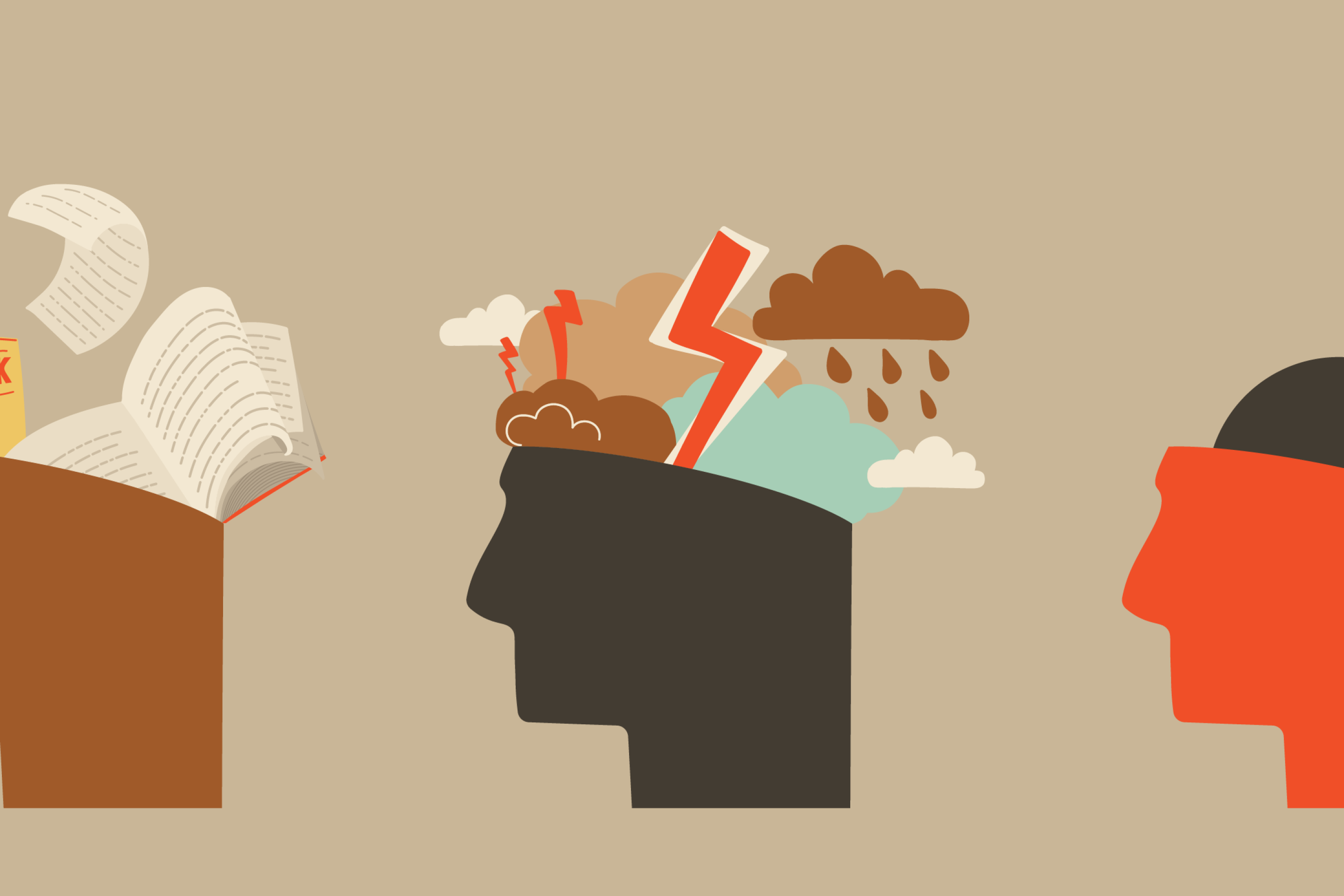
For example, uncertainty makes us uneasy, an association that often leads us to want to avoid it. For survival’s sake, humans naturally need and want answers. That’s why we experience a stress response when we confront anything new, murky, or unexpected. On the first day on a new job, our heart might beat faster and our palms may sweat. But if we take a closer look, we begin to see that the stress hormones and chemicals unleashed amidst uncertainty also prompt remarkably positive effects, especially on the brain.
When you realize that you don’t know, your focus tends to widen, your working memory improves, and your brain becomes more receptive to new data, research by Jacqueline Gottlieb and others show. Uncertainty is mostly good stress and a form of wakefulness. The brain is telling itself, “There’s something to be learned here,” neuroscientist Joseph Kable of the University of Pennsylvania told me. Embracing the provocative nature of uncertainty helps us remain open during those critical times when life invites us to learn. This is just one of the unsung wonders of being unsure.
2 The Long Neglect of Not-Knowing
In pursuit of the mysteries of uncertainty, I observed surgeries in Canada, a window onto the role of unsureness in high-stakes decision-making. I canvassed with activists in Los Angeles who found that openness to a political opponent’s perspective lowered both their own and their adversary’s bias. I dug into new findings on the upsides of ambivalence in leaders and the benefits of reverie, a time when we allow our minds to ask what-if questions.
And I kept noticing that until recently, many of these research topics were largely considered unworthy of study, sometimes so much so that, as in the case of daydreaming, tackling them could hurt one’s scientific career. When the default mode network linked to mind wandering was accidentally discovered in participants resting in a scanner, some in the field argued that this enigmatic system did not merit further study. “No task!” they said. “This is not science!”
For survival’s sake, humans naturally need and want answers.
A scientist’s choice of research topic is complex. But perhaps long-held cultural biases against uncertainty have played a part in the scientific neglect of not-knowing. For centuries, modern societies especially in the West have largely defined “knowing” as outcome-oriented, efficiency-driven, and fully under human control. Philosopher John Dewey called this the grand “Quest for Certainty.” But intolerance of not-knowing narrows both our view of the world and what we deem worthy of investigation.
For example, sleep and rest were long thought to be cognitive wastelands and so were research backwaters. But these times of “nothingness” turn out to involve highly active cognitive processing. People who pause quietly for as little as six minutes after learning new vocabulary, stories, or a virtual maze can remember roughly one-fifth more than those who turn straight to a new task. Now after reading a scientific article or carrying out a reporting interview I endeavor to pause and let my mind digest the experience. Even the subsequent struggle to retrieve knowledge that fades when we space out learning or sleep on a problem strengthens concepts, contexts, and new future pathways back to remembering.
Long ago, the Roman statesman Cicero used the word incertus, meaning “not-evident” or “undiscerned” as a term for uncertainty in a treatise. He could have been talking about the gifts of uncertainty themselves.
3 Uncertainty May Save Humanity
While writing this book, I witnessed a deepening slide into certainty-seeking in many areas of modern life. Yet I also began to witness a nascent positive shift in humanity’s approach to not-knowing in medicine, politics, business, the arts, and technology. Uncertainty primes us to learn, signals that the time has come to loosen our assumptions, fuels curiosity—and may save us from AI’s potentially existential risks.
From the start, AI was based on a narrow rational definition of intelligence: To be smart is to achieve one’s goals. Humans specify an objective—stack a package, find the tumor—and the system learns to pull it off, however it can. Anything unexpected, such as noise in its sensors, is treated as something to be ignored or eliminated. In effect, the field of AI has been trying to put “the world—figuratively and literally—on auto-pilot,” says author and computer science researcher Brian Christian. The result is increasingly powerful, potentially unstoppable models and robots that tend to become misaligned with human needs.
The jury is out on whether AI’s risks are overstated or imminent. But to avert potential disaster, dozens of top laboratories are radically redesigning AI so that it can be unsure of its aims, and therefore teachable and transparent. For example, an unsure cop robot will admit that it’s only 70 percent likely that the man running down the street is the suspect, rather than telling a human partner to shoot. People who work with uncertain robots do better at completing tasks together and see their machine partners as smarter and more collaborative. At a Virginia Tech lab, I test-drove one of the world’s first “I-Don’t-Know” robots, a simple robot arm that could adapt to my needs.
Some scientists building unsure AI even told me that making humble, honest systems was inspiring them to cultivate these skills in themselves. Given technology’s deep influence on our lives and minds, someday our devices may hold up a mirror to our better selves, inspiring us to harness the power of uncertainty and admit to it, too. And perhaps even sooner we can begin to role model the wisdom of uncertainty for one another. After all, by realizing that at any given moment we might not know, we can begin to free ourselves from the destruction wrought by a closed mind. “Uncertainty,” roboticist Anca Dragan told me, “teaches you a little bit of what to aspire to.” 
Lead art: StunningArt / Shutterstock.