Psychedelics get humans high. On this point, there is no question. For centuries, Indigenous shamans, the mystically inclined, and the neuro-curious have been ingesting the trippy stuff to incur strange visions and otherworldly flights. But why psychedelics evolved is less clear and remains the subject of strenuous debate.
Tiny amounts of DMT are naturally produced in the brains of humans and other mammals, which has led some neuroscientists and ethnobotanists to argue that hallucination may have some direct evolutionary or therapeutic benefit to humans, that the DMT is there to serve a special visionary or consciousness-related function, and that psychedelic plants may have co-evolved for human spiritual use.
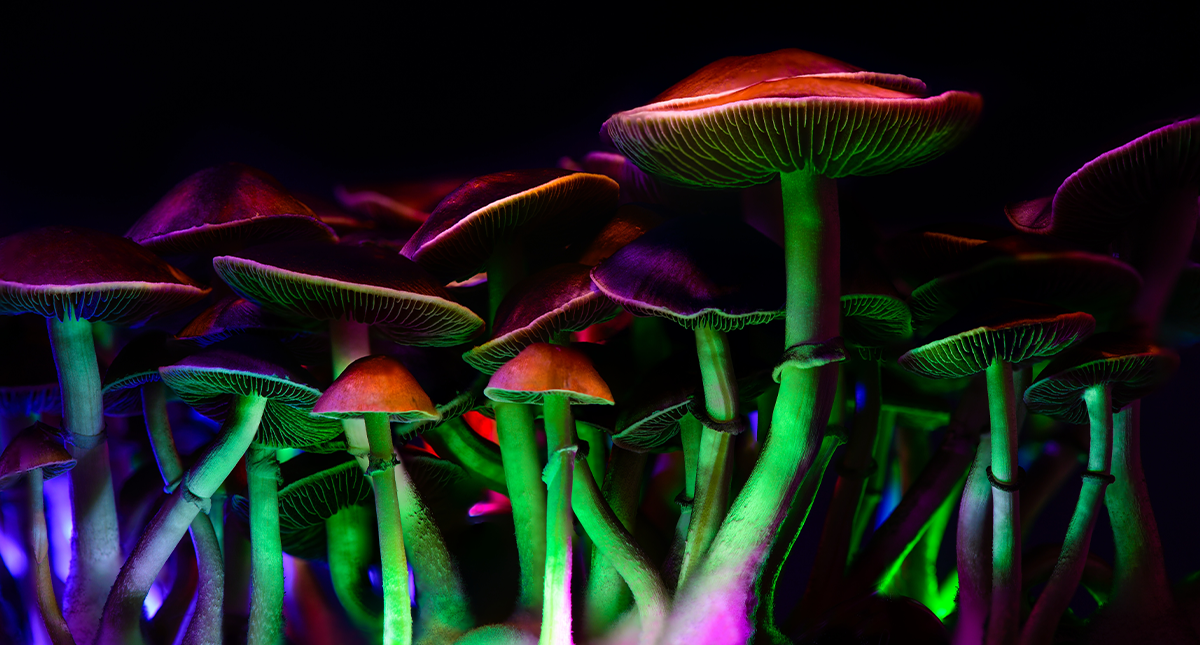
But the authors of a new study published in Proceedings of the National Academy of Sciences argue that human hallucination is more likely just a side effect, and that psychedelics probably evolved as ecological tools, allowing various animals and plants to defend against predators and herbivores or to help manage symbiotic relationships. After all, hallucinogens like psilocybin, mescaline, and DMT are extremely common in the animal kingdom, appearing independently in numerous unrelated organisms such as mushrooms, cacti, toads, and sponges.
“Understanding why evolution produced these molecules doesn’t diminish their therapeutic value,” wrote study author Yibo Wang, a chemist at the Chinese Academy of Sciences, in an email. “Instead, it provides a deeper biological framework for discovering better medicines while promoting conservation and sustainable production.”
Read more: “The Psychedelic Scientist”
Wang and his team propose that humans hallucinate when we ingest psychedelics because we share ancient brain chemistry with the creatures who were the original targets of the compounds, such as slugs, insects, and sea urchins. The receptors these compounds mess with—serotonin, opioid, and GABA receptors—are also found all over the animal kingdom. So the chemicals that scramble human perception may also deter snails from eating certain plants, the researchers suggest.
One known example of deterrence is the Sonoran desert toad, which pairs hallucinogenic tryptamines with heart-affecting steroids in their skin secretions to put off snakes, coyotes, owls, and hawks. The scientists also point out that examples of symbiosis by chemical manipulation exist in the plant kingdom: Caffeine is found in the nectar of many citrus flowers, for example, in doses sufficient to help the bees remember that flower better later.
Wang and his colleagues argue that the DMT found in the brains of humans and other mammals is likely there to help with stress response and cell protection rather than to support hallucination. “Psychedelic effects require much higher concentrations and exogenous administration, so they’re unlikely to represent DMT’s primary evolutionary function,” said Wang.
To test their hypothesis, they suggest experiments across genetic manipulation, field ecology, comparative neurobiology, and synthetic biology. One such experiment would involve knocking out genes that code for psilocybin compounds in certain fungi and comparing natural slug feeding in the knockout versus the wild mushrooms. “Advances in fungal genetics mean it’s now technically feasible, and we believe it should become one of the highest-priority experiments in the field,” said Wang.
If they’re correct, then therapeutic psychedelic research should focus on compounds that engage specific receptors already shown to have mental health benefits, rather than cast a wider net to look at all hallucinogenic compounds, said Wang and his colleagues. If psychedelic plants didn’t evolve in nature for human benefit, perhaps scientists could also shift their research focus from wild plants to synthetic production in a lab. Rising demand for some psychedelics like peyote is depleting slow-growing wild populations. Ethical sourcing and benefit-sharing with Indigenous communities could also help, the scientists write.
So are sea urchins hallucinating when they ingest psilocybin? “The hallucinogenic experience itself is probably a feature of relatively complex nervous systems,” said Wang.
He doesn’t rule it out, though. Sea urchin or shaman, the chemistry doesn’t care. Besides, even if tripping is just an evolutionary side effect, a lucky accident of human neurobiology, it will continue to leave its mark on our psyches and culture—and on our science. 
Enjoying Nautilus? Subscribe to our free newsletter.
Lead image: Martina / Adobe Stock