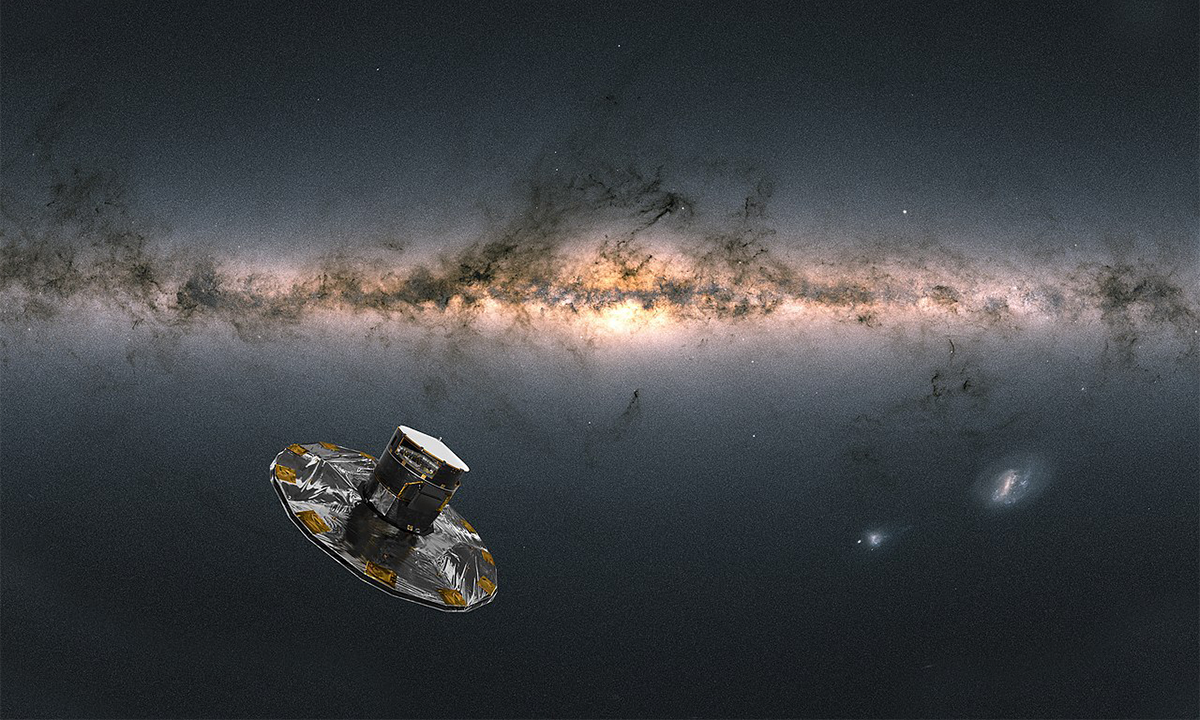
There are planets out there wandering through space, ejected from their solar systems with no orbit to call home. Known as “rogue planets,” these cosmic nomads are thought to be fairly common, but without an accurate measure of their mass, there’s no way to know if they’re actually planets or something else. Now, according to new research published in Science, astronomers have managed to weigh a rogue planet for the first time.
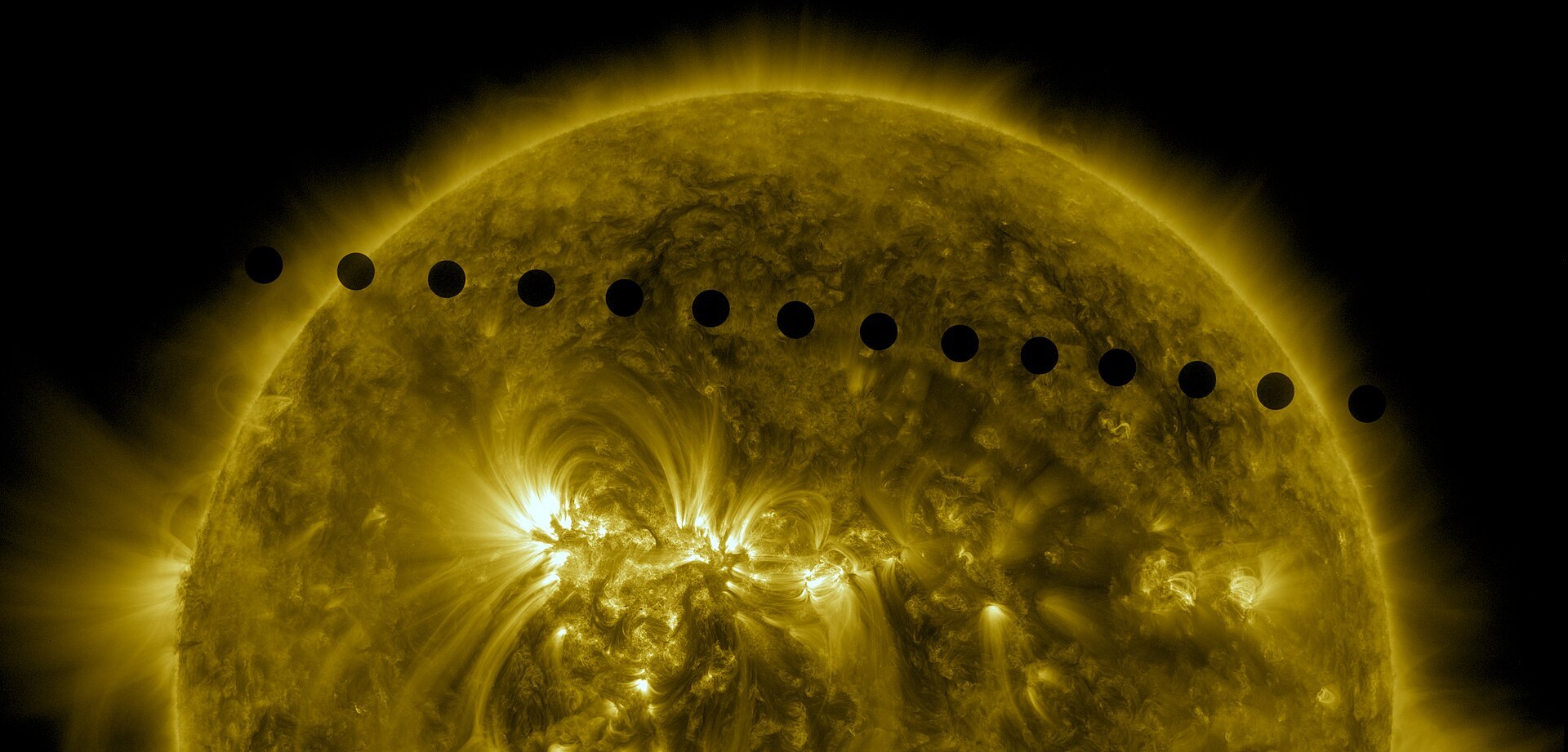
The only way to detect planets is when they transit in front of a star, bending its light with their gravity in a microlens effect that produces a flicker to those observing it through a telescope. Unfortunately, a transit by itself doesn’t provide enough information to determine the mass of the flicker-causing culprit.
The solution? Adding another telescope stationed far, far away from the first.
An international team of astronomers led by Dong Subo of Peking University in Beijing witnessed a microlensing event from a series of ground-based telescopes that just happened to be captured by the Gaia spacecraft, located more than 930,000 miles from Earth. Comparing data from ground- and space-based telescopes allowed the team to determine the mass of the transiting object, similar to how human depth perception functions using two eyes.
Read more: “We Discovered a Rogues’ Gallery of Monster-Sized Gas Giants”
“We are able to use the same principle to extract the distance information of this rogue planet candidate, finding the mass and distance separately,” Dong explained in a statement. “The difference is that the spacing between the eyes of we humans is a few centimeters, whereas Gaia is about 1.5 million kilometers away from Earth.”
The team determined the rogue planet’s mass clocked in at roughly the same as Saturn’s, placing it firmly in the “planet” category. “We know for sure it's a planet,” Dong said.
Now that this novel method of detecting bona fide rogue planets has borne cosmic fruit, the next step is to use it to find more—and there could be plenty out there. Or as Dong put it, “Our discovery offers further evidence that the galaxy may be teeming with rogue planets that were likely ejected from their original homes.” 
Enjoying Nautilus? Subscribe to our free newsletter.
Lead image: Spacecraft: ESA/ATG medialab; Milky Way: ESA/Gaia/DPAC; CC BY-SA 3.0 IGO.