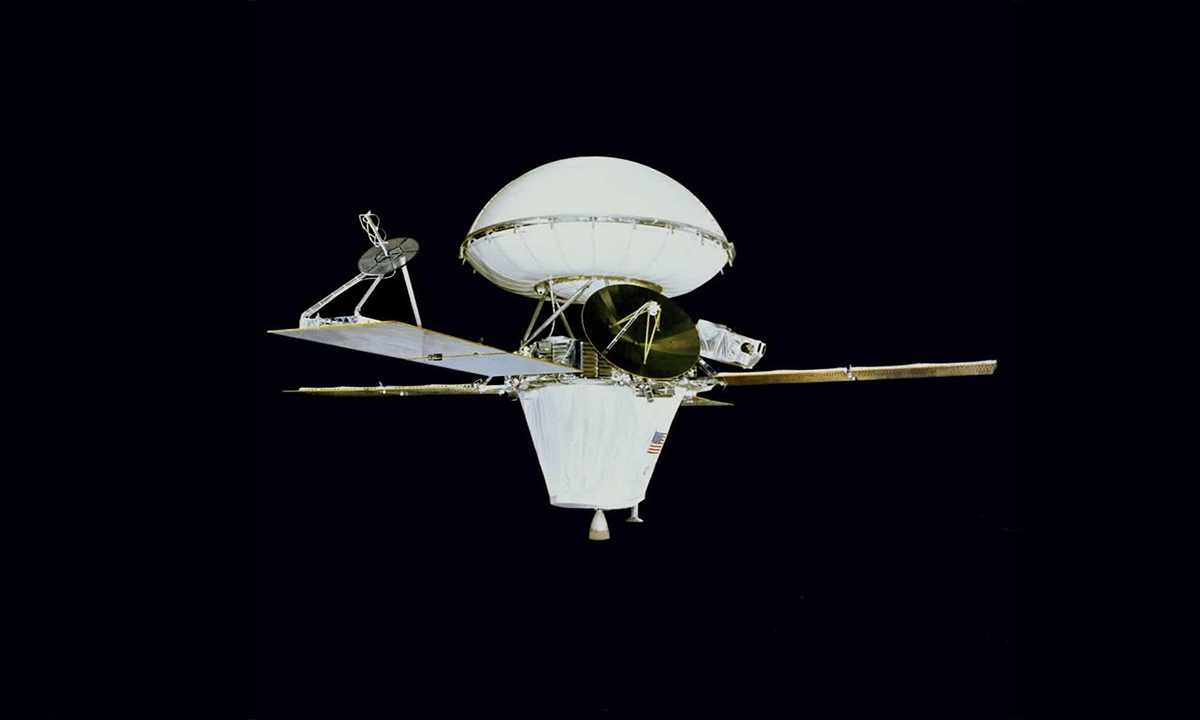
This was a very notable week in space exploration, 50 years ago: NASA’s Viking 1 became the first spacecraft to successfully land on Mars, having blasted off from Cape Canaveral 11 months prior.
The landmark moment wasn’t without last-minute drama either—touchdown on the surface was delayed by a couple of weeks because the original landing site was rockier than expected and deemed too unsafe.
Having initially been built to operate for 90 days, the spacecraft ended up exploring the Martian surface for more than six years, sending back more than 4,500 pictures together with the Viking 2 lander that arrived several weeks later.
Read more: “How the Cold War Created Astrobiology”
Here are some of the best shots from the first few days and weeks Viking 1 spent on Mars, as it snapped a multitude of scenes to document the red planet—and search for signs of life.
The First Color Image
It’s dated July 21, 1976 (a day after landing). The reddish surface materials are thought to be limonite (hydrated ferric oxide). The reddish cast in the sky is caused by the scattering and reflection of the sediment in the lower atmosphere.
Sunset on Mars
One of the first Martian sunsets captured by Viking 1, on Aug. 21, 1976. It’s from the Chryse Planitia region, facing southwest, with the angle of sunlight revealing depressions and bare bedrock that hadn’t been spotted in earlier images.
The First Photograph Taken on the Surface of Mars
Viking 1 wasted no time after landing on July 20, 1976 to put its cameras to work. This is about 5 feet from the lander’s second camera, which shows the rocks, sand, and dust on the surface.
Flying the Flag
The United States flag is in the foreground, with the Martian landscape behind. The flag is on the windscreen for the Radioisotope Thermoelectric Generator, which was supplying power to the spacecraft. This photo was taken July 26, 1976.
The First Panoramic Shot of Mars
Time for a wide-angle shot: The first panorama photo captured on the surface of Mars, taken on landing day, July 20, 1976. The shot shows late afternoon on Mars, and you can see the change of brightness toward the right as the sun sets on another day.
Sand Dunes and Large Rocks
Another panorama, taken on July 23, 1976, revealing more of the sand dunes and large rocks on Mars. The horizon is about 2 miles away, and you can see what may be the edge of a crater on the horizon in the center, indicated by two low hills. 
Enjoying Nautilus? Subscribe to our free newsletter.
Lead image: NASA