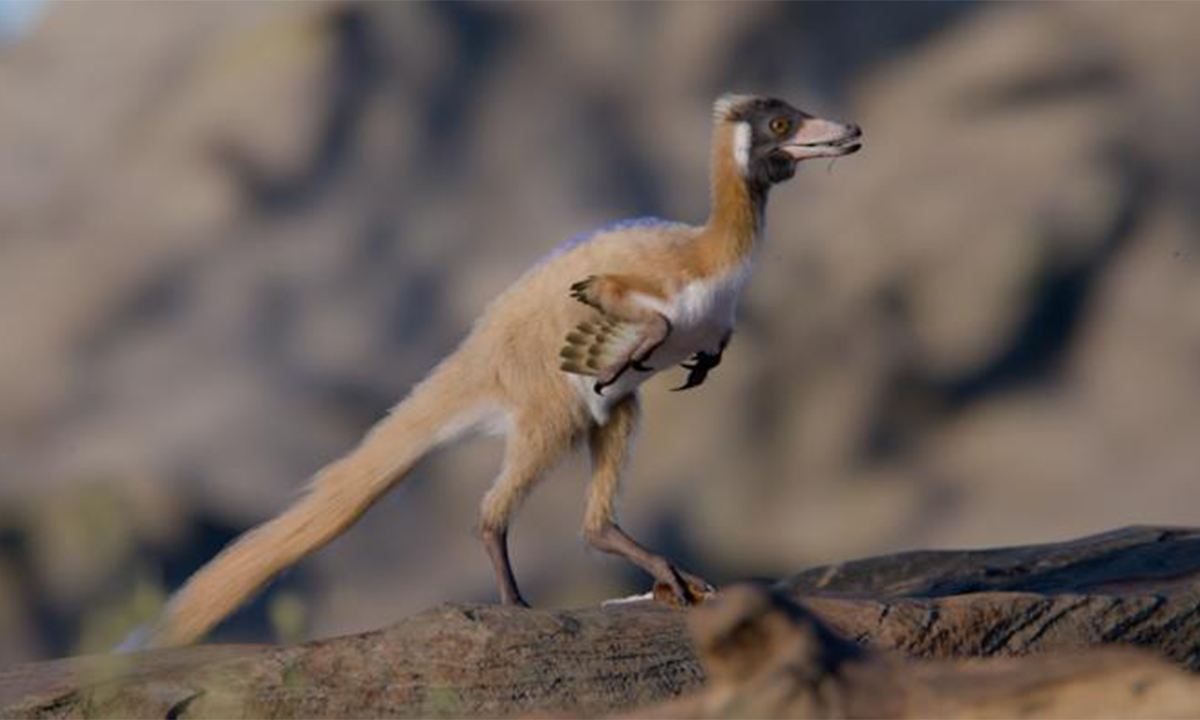
Alvarezsaurs were strange, small dinosaurs adapted to feed on ants and termites. Their stubby arms, powered by big chest muscles, ended in single thumb claws, suggesting a digging lifestyle. Tubular snouts housed long jaws peppered with tiny teeth, likely flanking a long, anteater-like tongue.
Alvarezsaurs have, therefore, been a poster child for evolutionary miniaturization based on the hypothesis that as they got smaller, they adapted to become ant specialists, a notion challenged by a recent Nature study.
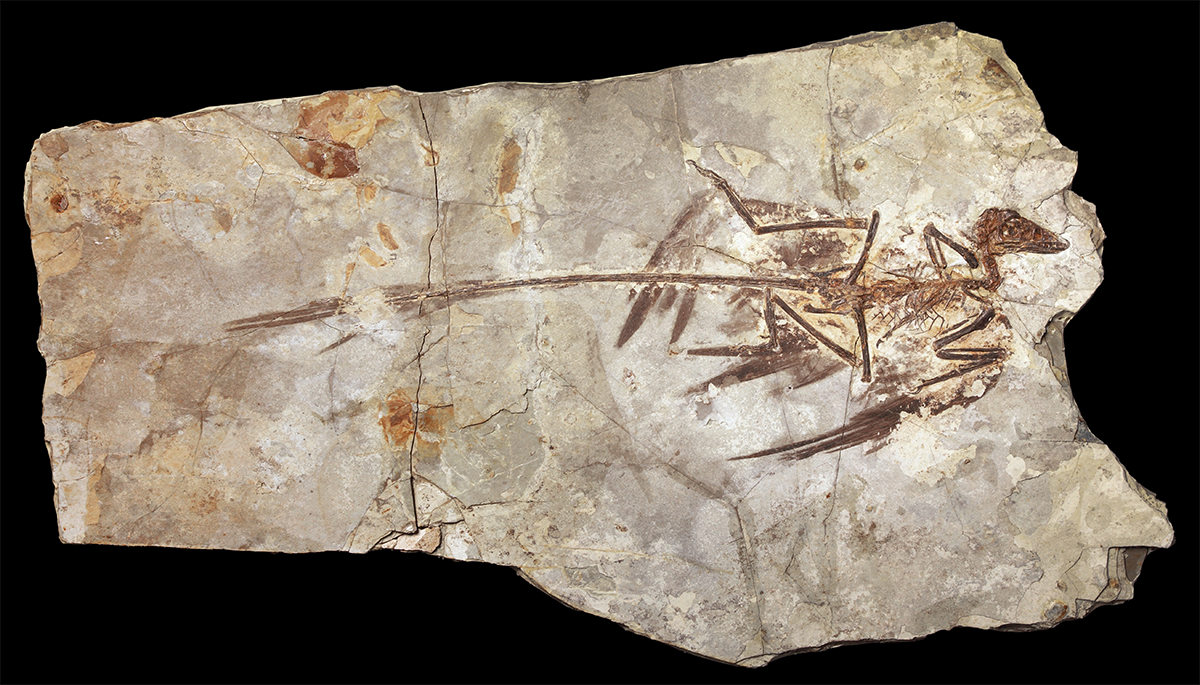
Paleontologists from the United States and Argentina spent years piecing together delicate fossil bones into a complete skeleton of a species dubbed Alnashetri cerropoliciensis. The 90-million-year-old fossil, discovered in northern Patagonia more than a decade ago, yielded new insights into how alvarezsaurs evolved.
Read more: “Evolution and Guinea Pig Toes”
“Going from fragmentary skeletons that are hard to interpret, to having a near complete and articulated animal is like finding a paleontological Rosetta Stone,” explained study author Peter Makovicky, lead author on the paper and paleontologist at the University of Minnesota, in a press release.
The reconstructed skeleton belonged to an adult animal that weighed less than two pounds, or the weight of a carton of milk, and was distinct with its longer arms and larger teeth. Basically, it was small-bodied but lacked the adaptations for digging and feeding on insects of later alvarezsaurs. Indeed, the mix of characteristics described for the new A. cerropoliciensis shook up scientific understanding of alvarezsaur evolution.
Their bird-like bodies apparently didn’t coevolve, as assumed, with the short, strong limbs and other digging adaptations. The teeth and jaws of A. cerropoliciensis aren’t indicative of an ant and termite feeder. The study authors’ modeling of all known species into a phylogenetic tree revealed increases and decreases in body sizes of alvarezsaurs both before and after they developed stout forelimbs and tiny teeth.
“We find no support for evolutionary miniaturization but, rather, find support for repeated evolution within a narrow body size range,” wrote the researchers.
Because their fossils occur in both South America and Asia, alvarezsaur diversification before this study was interpreted as including a series of back-and-forth dispersals between these continents. But the phylogenetic tree pointed to alvarezsaur origins when the continents were still connected as Pangaea.
In other words, alvarezsaurs were dainty whether they were feasting on ants or not. 
Enjoying Nautilus? Subscribe to our free newsletter.
Lead image: Gabriel Díaz Yantén, Universidad Nacional de Río Negro.