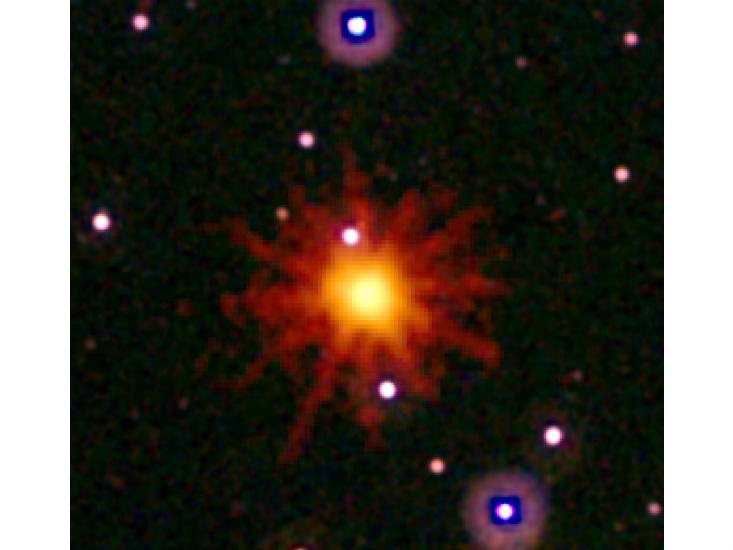
On March 28, 2011, the orbiting Swift observatory spotted an extraordinary gamma-ray burst, a bright source of energetic light from a distant galaxy. Gamma-ray bursts (GRBs) are some of the brightest and most energetic events in the cosmos. Their measurable strong emission in most cases vanishes after about 30 seconds, but this particular event—known as GRB 110328A for the date on which it occurred—took more than two months to fade away.
The excessively long duration of GRB 110328A worked to astronomers’ advantage, since they had time to train multiple telescopes on it and determine what happened. The consensus is that an unlucky star drifted too close to its galaxy’s central black hole, where it was torn apart by the black hole’s gravitational forces. The fact that this burst was so unusual—“this is truly different from any explosive event we have seen before,” said one researcher—makes it seem like we spied a black swan, a cosmically rare event. But a closer look shows that while this burst was certainly not typical, it’s possible that it is not quite as rare as it seems.
“Astronomical odds” usually implies something really unlikely, and not in the Terry Pratchett “it’s a million-to-one chance, but it might just work” sense. However, it’s a great big universe, so something that’s extremely unlikely to happen in our cosmic neighborhood at the present time might still happen somewhere in the cosmos at some point in history. The problem astronomers face is working backwards: If they see an event or object for the first time, how can they know if it’s actually unique, or repeated but rare, or (possibly) common but very hard to observe? How can they distinguish if something was common in the early universe, but extremely uncommon now?
As a category, GRBs are great examples of astronomical rarity. Observatories like Swift and the Fermi Gamma-ray Observatory identify hundreds of GRBs every year, but they are all far from the Milky Way—meaning they are rare in modern times. Hundreds per year may sound like a frequent occurrence to us, but the observable universe contains hundreds of billions of galaxies, so GRBs are rare on the galactic scale. For example, the most recent possible GRB event in the Milky Way happened approximately 1,000 years ago.
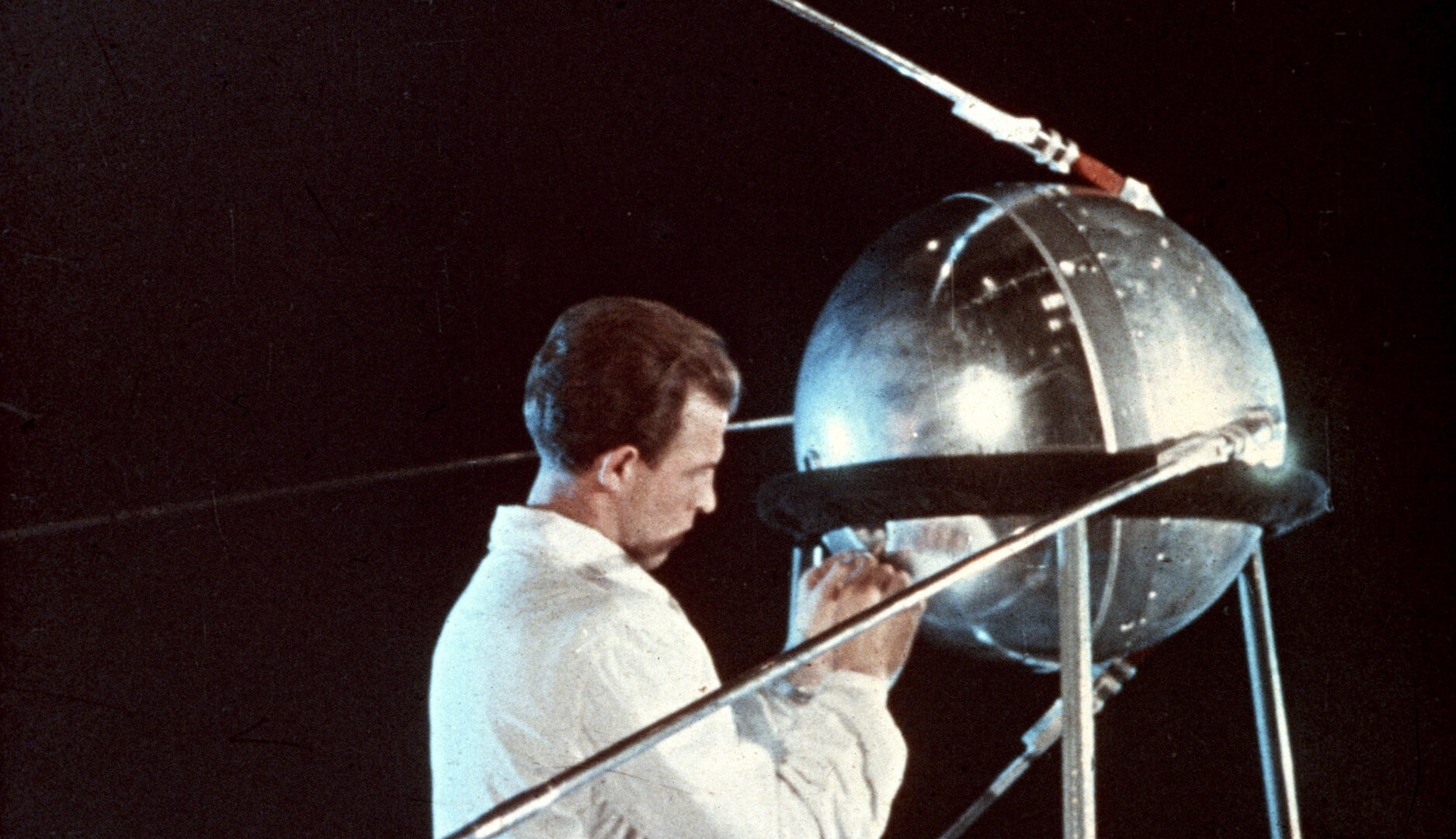
That relative rarity slowed our understanding. GRBs were first observed in 1967 by spy satellites looking for secret nuclear tests, but their nature continued to mystify researchers for decades. Until the late 1990s, it was still possible for reasonable astronomers to think GRBs could be events inside the galaxy. Even now, the name “gamma-ray burst” is a generic term for what we observe, not what caused the burst.
Follow-up observations in visible and other types of light revealed that most GRBs are supernovas, explosions of massive stars. Most of the remainder are the short-duration GRBs, which last less than 2 seconds and are likely due to collisions between neutron stars (the extremely dense remnants of stars most massive than the Sun), though that hypothesis isn’t entirely settled yet.
The extremely long-duration GRB 110328A can’t be a supernova—observations in other types of light ruled that possibility out—nor is it a short-duration GRB. While astronomers have identified gamma-ray flares (less energetic gamma-ray emissions from a variety of sources) that could be from black holes eating stars and even a large planet, these were transient events, not months-long affairs. So it seems to be something unusual. However, GRB 110328A can’t be unique in a cosmic sense: If black holes ever eat stars, then at least some of them should result in GRBs like it. So researchers must play the game of figuring out what makes GRB 110328A special, and estimate how often a star is on the menu for black holes. (Despite the common conception of black holes “sucking in” everything that gets close, stars near the central black hole of the Milky Way trace stable orbits, indicating that other galaxies probably have similar stars. Only material that falls past a black hole’s “event horizon” is doomed to the cosmic drain.)
One thing that seems to make GRB 110328A such a rare sighting is that GRBs release their light unevenly, focusing it in two straight, opposing streams (see video simulation below). That’s different from stars, which emit light in all directions equally, and partly explains why GRBs are so bright when they are visible. Furthermore, massive bodies located between a GRB and us can magnify light through gravitational lensing. Clouds of dust and gas can obscure events.
All these things must be taken into account when examining uncommon events like GRB 110328A. The rarity of an observation may or may not reflect on its absolute rarity in the universe. As astronomical instruments improve, we always find new things to see—and we must determine anew how our place in the universe affects our perceptions.
Matthew Francis is a physicist, science writer, public speaker, educator, and frequent wearer of jaunty hats. He’s currently writing a book on cosmology, with the working title, Back Roads, Dark Skies: A Cosmological Journey.