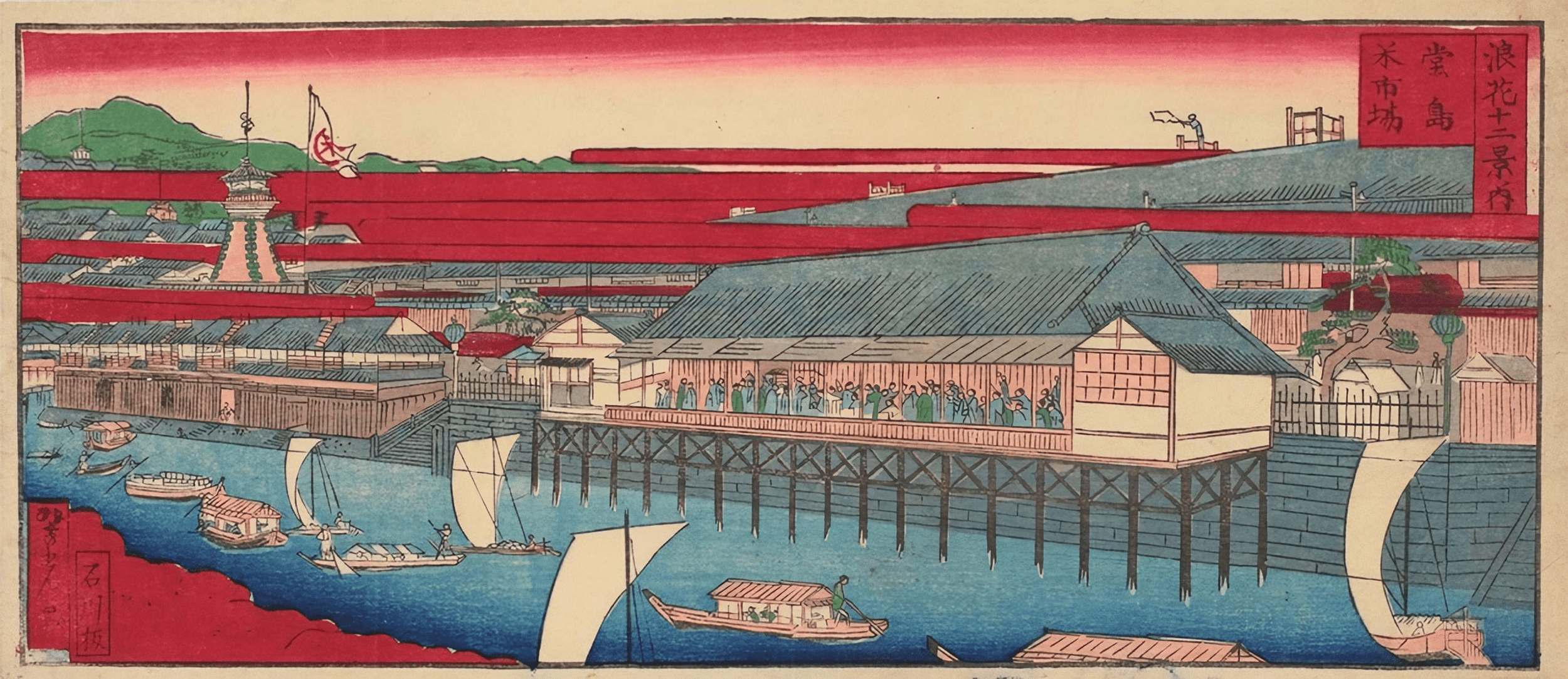
During Japan’s isolationist Edo period (1603-1868), international trade slowed to a trickle. But within the country, it boomed, and so did commercial hubs like Osaka. This city, located on a vast bay carved into the largest of Japan’s four main islands, became a flourishing cultural center and home to a vibrant class of commoners. A new study published in Anthropological Science is now revealing what these commoners ate by looking at their teeth.
Teeth can tell a lot about ancient dietary practices. Distinct wear patterns, for example, offer a window into what composed the bulk of the diet. An isotopic analysis is even more refined, pointing toward broad food categories, like corn versus rice and how much meat they consumed. But a team of Japanese researchers wanted to zoom in a little further, so they analyzed dental plaque in particular.
Read more: “The Plight of Japan’s Ama Divers”
Sequencing proteins from the tartar surrounding the teeth of eight commoners buried in the Umeda Cemetery in Osaka, researchers were able to determine precisely which animals and plants they consumed. They identified 38 dietary proteins from 17 taxa, including nine kinds of fish, like tonguefish and red sea bream—a luxury item of the time. They also found proteins from the salmon family, which don’t live in Osaka Bay, indicating that at least some of their food arrived from faraway, likely via long shipping routes.
Of course, fish didn’t make up the entirety of their diets, the team found proteins from four-legged terrestrial mammals as well. According to the researchers, while there was a formal taboo on eating this kind of meat, it was tolerated for medicinal purposes. And the presence of protein from cottonseeds (widely cultivated around Osaka) means cottonseed oil was likely used for everyday cooking tasks.
It’s a small sample size (just eight individuals), but the researchers say the analysis shows the commoners in Osaka were eating pretty well. That may be why the city earned its historic nickname: “the Kitchen of the realm.” 
Enjoying Nautilus? Subscribe to our free newsletter.
Lead Image: Yoshimitsu Sasaki / Wikimedia Commons