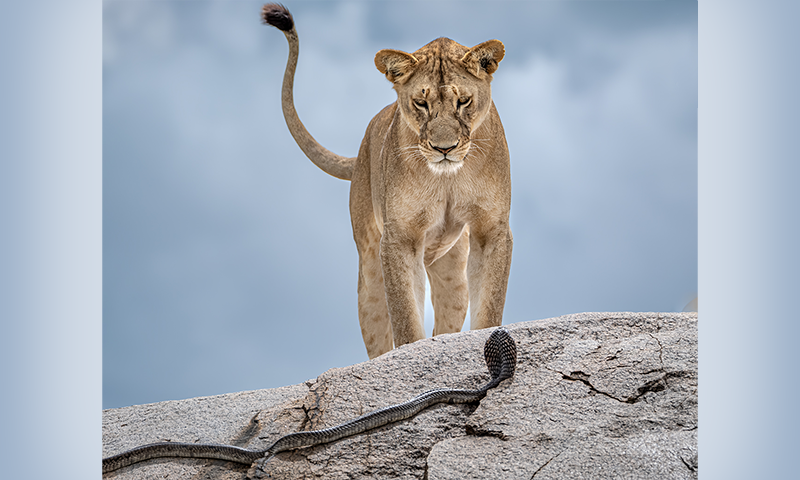
Ever the apex predator, a stately lion stalks up a rock slab, eyes fixated on one of the few animals that could potentially threaten its life: A cobra. The snake pictured is likely a black-necked spitting cobra or an Egyptian cobra, but all cobras, which belong to the Naja genus, possess cytotoxic and neurotoxic venom that can be fatal to humans and large mammals. In this case, the reptile may well have been the instigator of the stand-off.
Italian photographer Gabriella Comi came across this scene in Serengeti National Park, an iconic swath of Tanzania that is home to a robust pride of more than 3,000 lions. Comi and her guide were navigating the region’s scorching terrain when they spotted the cobra sneaking up on two sleeping lions. The eldest lion, shown here, was quick to rise and stare down the venomous intruder, creating a striking image. Comi’s perspective earned her commendation from the 2025 Wildlife Photographer of the Year competition.
Lions sleep anywhere from 15 to 20 hours daily.
Lions are potentially more vulnerable to attack during the daytime because this is when they nap: They sleep anywhere from 15 to 20 hours daily, often sheltering under the cool shade of bushes frequented by cold-blooded animals. As crepuscular mammals that become most active during the evenings and at night, lions require multiple hours of rest to digest their prey and possess eyes well-adapted for low-light conditions.
Still, the big cats are known to shift their activity to minimize threats and maximize prey availability. One 2019 study showed that if a pride of lions regularly runs into humans during the day, the lions will adjust their sleeping schedules and rest locations to avoid unwanted encounters. In a high-traffic, biodiverse place such as Serengeti National Park—which sees 350,000 visitors annually—the local lions are likely accustomed to run-ins with humans and other threats.
Cobras rarely kill lions because, generally, such encounters are infrequent. But a swift pounce from the lion could also crush the snake’s neck or head. It’s unclear in this rendezvous if one animal won or the predators parted ways, but the danger to both animals is apparent in their taut and alert poses.