Imagine exploring the depths of a pitch black cave. A sulfurous stream trickles beneath your feet, the air reeks of rotten eggs. With each step you take, the ceiling gets lower and the narrowing walls are covered in what seems to be a pale, living slime. As you slowly push into the darkness, you feel clouds of tiny flies swarming your face. Sensing movement, you swing a flashlight over to the wall. Standing before you is a ghostly web sprawling as far as the eye can see and teeming with thousands and thousands of spiders.
It might sound like the opening of a particularly skin-crawling horror story, but to a team of researchers venturing into Sulfur Cave, it was very real, and likely thrilling. They recently published their findings in the journal Subterranean Biology.
The massive Sulfur Cave, which begins in Greece and stretches deep into Albania, is home to a unique ecosystem. Completely cut off from the sunlight, the primary energy source for this ecosystem is a sulfuric hot spring. Chemoautotrophic bacteria convert the sulfur into energy, forming slimy microbial biofilms on the cave walls that, in turn, feed swarms of midges. One step up the food chain are the spiders feasting on midges in a massive shared web, a curious living arrangement that caught researchers’ attention.
Read more: “In the Land of the Eyeless Dragons”
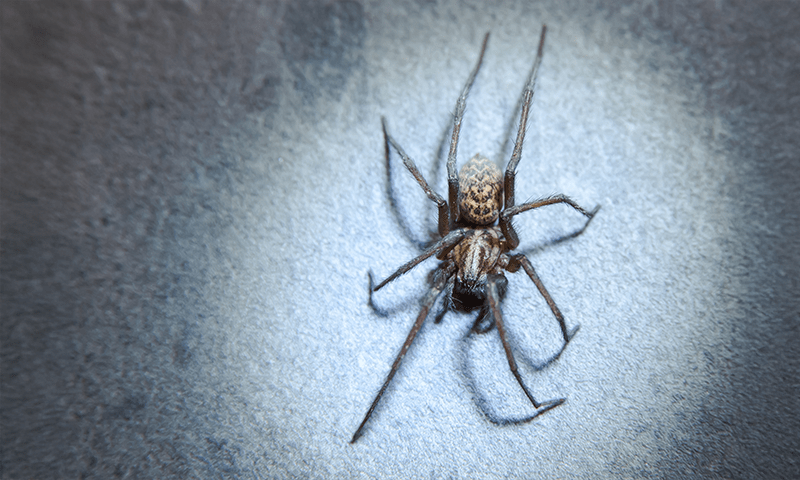
Usually solitary, two species of spiders have formed a kind of supercolony along one wall in Sulfur Cave—the barn funnel weaver (Tegenaria domestica) and the sheet weaver (Prinerigone vagans). Scientists estimate the colony contains some 111,000 individual spiders from both species in a web spanning about 1,140 square feet, making it one of the largest spider webs ever discovered. (That’s roughly the footprint of a spacious three-bedroom apartment, if, in this case, you don’t mind 111,000 roommates.) It’s also the first documented case of colonial behavior in these species.
But why would not one but two solitary species choose to live together in relative harmony? According to the research team, the sheer abundance of resources and the lack of sunlight could have something to do with it. The larger funnel weaver spiders typically use their eyesight to locate prey. Blessed with a bounty of midges and unable to detect the smaller, usually stationary sheet weavers in the dark, they seem to leave them to go about their own fly-eating business.
It’s a remarkable arrangement and a living, crawling testament to the diversity of animal relationships and solutions to life flourishing in strange environments. 
Enjoying Nautilus? Subscribe to our free newsletter.
Lead image: Evgenii Predybailo / Shutterstock