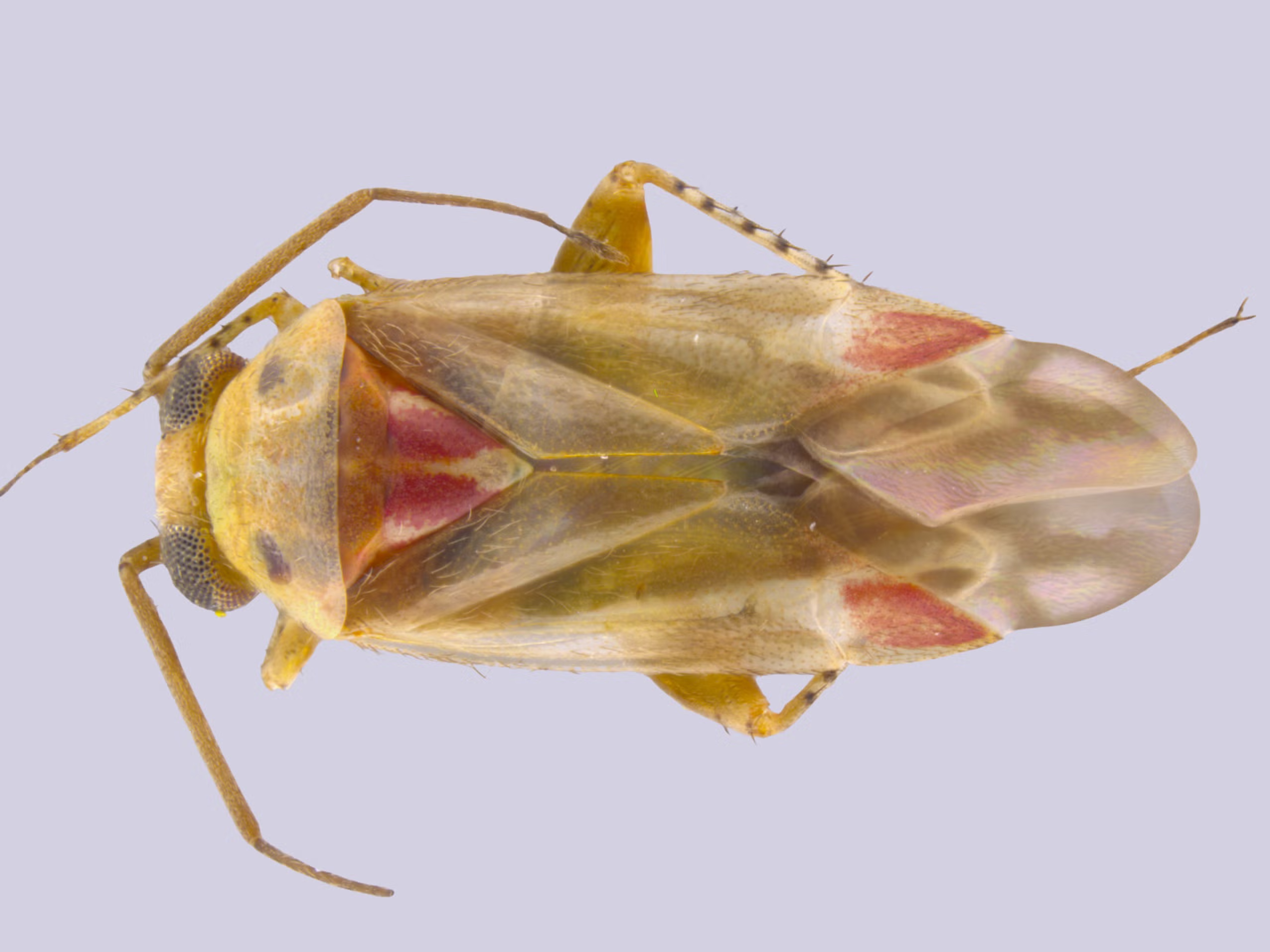
In addition to delivering painful stings, some species of wasps are parasites. Fortunately, their hosts are insects rather than humans, since the outcome is eventually death for the host. Parasitic wasps inject their eggs into insects’ bodies, where the eggs hatch into larvae, which grow and eat their way out. Gruesome.
Since their larvae are dependent on the host’s body for their first phase of life, it behooves the wasp to improve conditions in the body in whatever way it can. For example, some parasitic wasps are known to inject viruses into the host, which may paralyze the host or protect the larvae from host defenses.
Similarly, when a “braconid” wasp (in the huge family Braconidae) puts eggs in its host, it injects “bracoviruses,” so named because they’ve been hanging out with these wasps for so long that they’ve integrated into the wasps’ genomes. Once a bracovirus gets its hands (or rather buds) on its host, it activates genes that will later help its baby wasps survive. It typically shuts off its host's reproduction to divert resources to wasp babies. But the molecular mechanism for this parasitic “castration” hasn’t been clear, until the results of a paper published today in PNAS.
Read more: “The Incredible Fig”
Researchers from Zhejiang University and Hunan Agricultural University in China analyzed how the parasitic wasp Cotesia vestalis causes castration in its diamondback moth (Plutella xylostella) host. They found that a protein released by the bracovirus attacked a host protein that regulated the progression of its cell cycles, such that cells stopped multiplying and died. This bravovirus protein (dubbed CvBV_22-9) targeted the reproductive system, causing the host’s testes to shrink and sperm production to decline.
Bummer for the host!
Equivalent proteins produced by bracoviruses in fall armyworms (Spodoptera frugiperda) and fruit flies (Drosophila melanogaster) are known to play similar roles in causing castration. And so, it seems that “parasitoids likely exploit an [evolutionarily] conserved pathway to induce testicular castration,” wrote the study authors. While a cruel adaptation, it’s apparently not a new one in the relationships of parasitic wasps to insects.
The uncovering of the mechanism may help humans develop biocontrol methods for insect crop pests by getting wasps to shut down reproduction. Nifty implications: Homo sapiens coopted braconid wasps, who’ve coopted viruses to limit the spread of moths. 
Enjoying Nautilus? Subscribe to our free newsletter.
Lead image: RECEP_OZTURK / Shutterstock