Everyone poops, but not everyone poops in the same direction. Take lugworms, for example. These beach-dwelling annelids live in U-shaped burrows dug with their head in one tunnel and their tail in the other. When nature calls, the lugworm excretes a thick stream of wet, sandy excrement upward, right on to the beach (“no dumping” signs be damned). Now this humble worm’s gravity-fighting method of doing its business is shedding light on the physics of feces in a new study published in Nature Communications.
“Anyone who has observed animal excreta has likely wondered about the characteristic coiled morphologies that appear across diverse species,” reads the first line of the study. While “anyone” is probably painting with too broad a brush, it was a particular fascination of a certain someone: Charles Darwin. In his later years, the 19th-century scientist became spellbound by earthworms and marveled at their spiral-shaped castings.
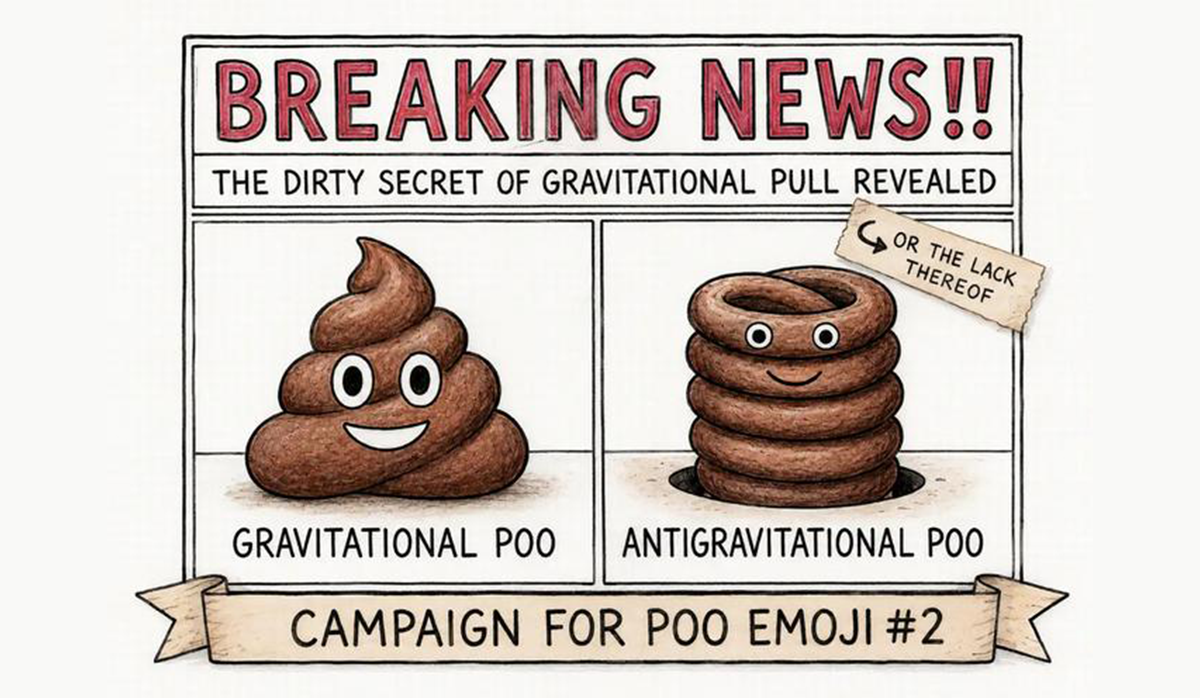
This coiled shape, which pops up (or heaps up?) in excrement across the animal kingdom, has its roots in some very real physics, the researchers say. Unlike the lugworm, most animals defecate downward, with gravity. As the feces pile up, the height between the landing site and, um, “extrusion site” decreases, reducing the size of each subsequent coil and resulting in a familiar shape: 💩. Lugworms, like the earthworms Darwin observed, produce a different kind of pile. Their coil sizes are independent of height, yielding a cylindrical fecal tower.
Read more: “Beaches Are Blankets of Fish Poop”
According to the international team of physicists, both mounds of poop are obeying the same laws of physics—elastic rope-coiling theory, which describes how ropes and other materials coil. The only difference in which shape forms, they found, is the stiffness of the material and the direction of the stuff relative to gravity. They even tested it out on fecal simulacra, like pasta and pea dough (made from chickpeas and water).
It’s another reminder that, while Darwin’s natural selection may be able to shape many living forms to different ends, some things are outside of its control. Everyone poops, but everyone also follows the laws of physics. 
Enjoying Nautilus? Subscribe to our free newsletter.
Lead image: Lukas Kernell