A faded, cracked storage container dated to the 1970s. A bleached out hard hat from 1989. A well-worn Nintendo Gameboy cover from 1995. These are a few items recently recovered from an island of plastic debris, roughly three times the size of France, that floats in the middle of the Pacific Ocean, between Hawaii and California.
The Great Pacific Garbage Patch, first discovered in the late ’90s, continues to grow, as do four other smaller ocean garbage pileups. The plastic debris saturating our oceans has all kinds of well-documented toxic effects on ocean life—many of which, in turn, harm humans—but scientists and conservationists have struggled to find sustainable cost-effective ways to clean it up. We could fish out the plastic, return it to land, and place it in landfills—but this is expensive, cumbersome, and not scalable. There is simply too much of it. We could burn it or use it as a fuel—but these options are also expensive as well as energy-intensive and release toxins into the environment.
Now, scientists have engineered some fast-growing plastic-eating super bugs that may be able to help, according to findings published in the journal Global Home of Chemical Engineers. What makes plastic debris so problematic is what makes it useful in the first place: It doesn’t decompose easily. This is particularly true in the ocean: Saltwater organisms and bacteria can’t break it down, explains Nathan Crook, co-author of the paper whose research at North Carolina State University focuses on microbial ecology and synthetic biology.
A fleet of massive boats would suck the plastic debris into their hermetically sealed bellies.
But on land, scientists have identified some specialty bacteria that can consume certain types of plastic, such as polyethylene terephthalate, or PET, a form of polyester widely used in bottles, cans, food packaging, and clothing, and often found in microplastics. One of these types of bacteria, called Ideonella sakaiensis, produces a specific enzyme, a protein that breaks the long PET molecules into smaller, simpler compounds. Essentially, I. sakaiensis oozes this enzyme into its surroundings, and—once the enzymes break down the plastic—the bacteria consumes the leftovers: ethylene glycol and terephthalic acid. Unfortunately, these bacteria don’t do well in marine environments.
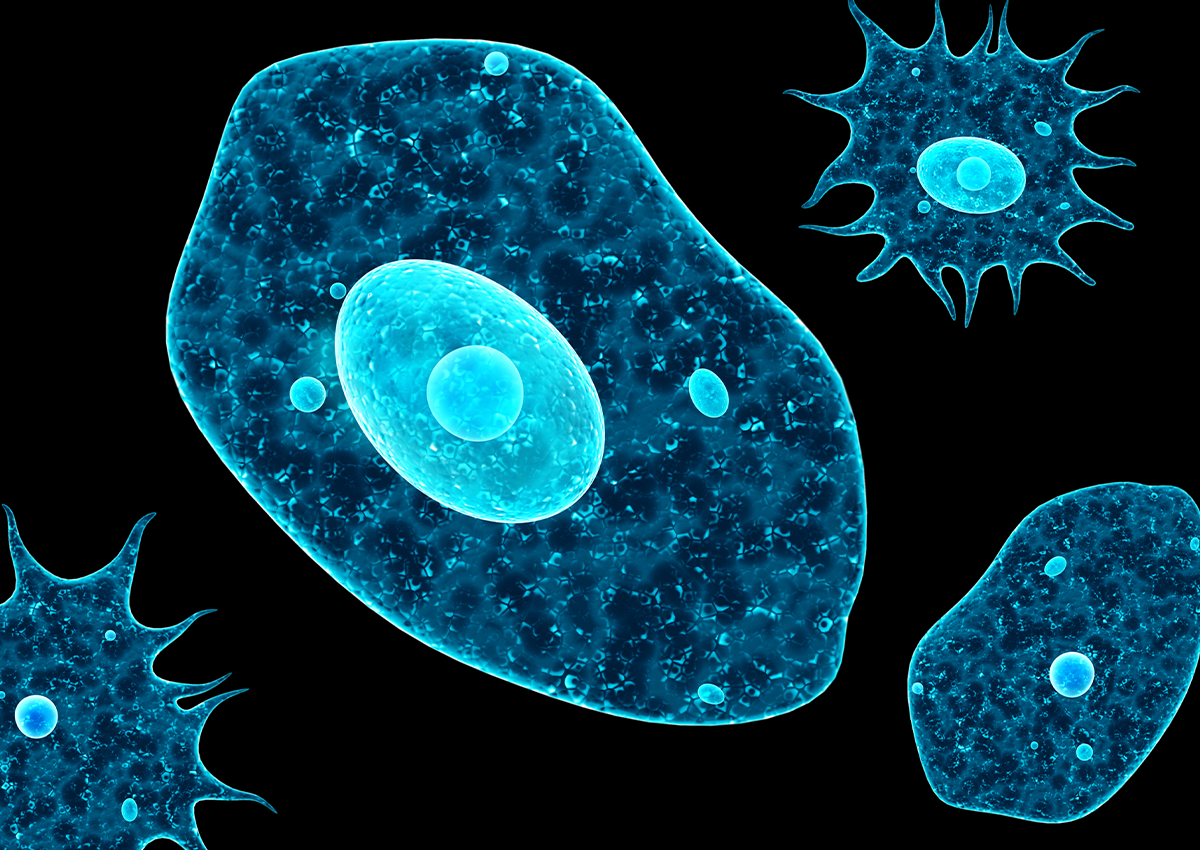
Crook and Tianyu Li, a Ph.D. candidate in his lab, decided to engineer a fix: They extracted the genes for PET-breaking enzymes from the land-dwelling I. sakaiensis and inserted them into another bacteria, Vibrio natriegens, which thrives in saltwater. It also multiplies quickly, which could, eventually, make it efficient at consuming large quantities of plastic. The researchers transferred the relevant genes into V. natriegens on a plasmid—essentially a tiny snippet of genetic code. Once floating inside the bacterial cell, the plasmid served as genetic instructions for the V. natriegens to make the needed plastic-pulverizing enzyme.
Just like I. sakaiensis, the genetically modified V. natriegens pops the PET-degrading enzymes into its environment, breaking down PET at room temperature. Unfortunately, the scientists haven’t yet modified the V. natriegens to incorporate the enzyme-coding genes into its genome, so when the bacteria multiply, the new generations of cells won’t have the plastic-degrading ability. Also, unlike I. sakaiensis, the genetically modified V. natriegens can’t yet consume the molecules left over after the enzyme does its work. But Crook says with a few more tweaks, it could work as well in the sea as its cousin does on land, and faster to boot.
Crook raises another issue: Sprinkling GMO bacteria into the ocean would be risky for the ocean ecosystem. His team envisions the ocean cleanup operation as a fleet of massive boats that will suck the plastic debris into their bellies, and then feed it to PET-hungry V. natriegens housed inside hermetically sealed reactors.
If it all works out, our colossal marine trash heaps could serve as breakfast, lunch, and dinner for some ravenous superbugs. 
Lead image: chaiyapruek youprasert / Shutterstock.