Millions of years ago, an Ice Age began that altered the course of life on Earth forever. Changing ocean currents made the climate in the Horn of Africa drier. There, dense forests grew sparse, becoming isolated amidst the savannas. The arboreal primates that lived there were then forced to traverse the tall grass, putting them at risk of predation.
For one primate species, this changing landscape represented a crisis—and an opportunity. Over millions of years of evolution, they adapted to their new habitat by evolving the ability to walk upright, freeing their hands to take care of newborns, and eventually, use tools. They were our ancestors. Were it not for this Ice Age, we might not exist. And were it not for Mars, this Ice Age might not exist, according to new research published in Publications of the Astronomical Society of the Pacific.
Ice Ages are caused by periodic changes in Earth’s orbit, the tilt of its axis, and its wobble as it rotates. Called Milankovitch cycles, these changes are governed by the gravitational tug of other planets and affect how much of the sun’s energy reaches Earth.
Stephen Kane, a planetary scientist from the University of California, Riverside, was initially skeptical that Mars played a large role in the Milankovitch cycles. “I knew Mars had some effect on Earth, but I assumed it was tiny,” Kane said in a statement. “I’d thought its gravitational influence would be too small to easily observe within Earth’s geologic history. I kind of set out to check my own assumptions.”
Read more: “Wild Orbits Prime Planets for Life”
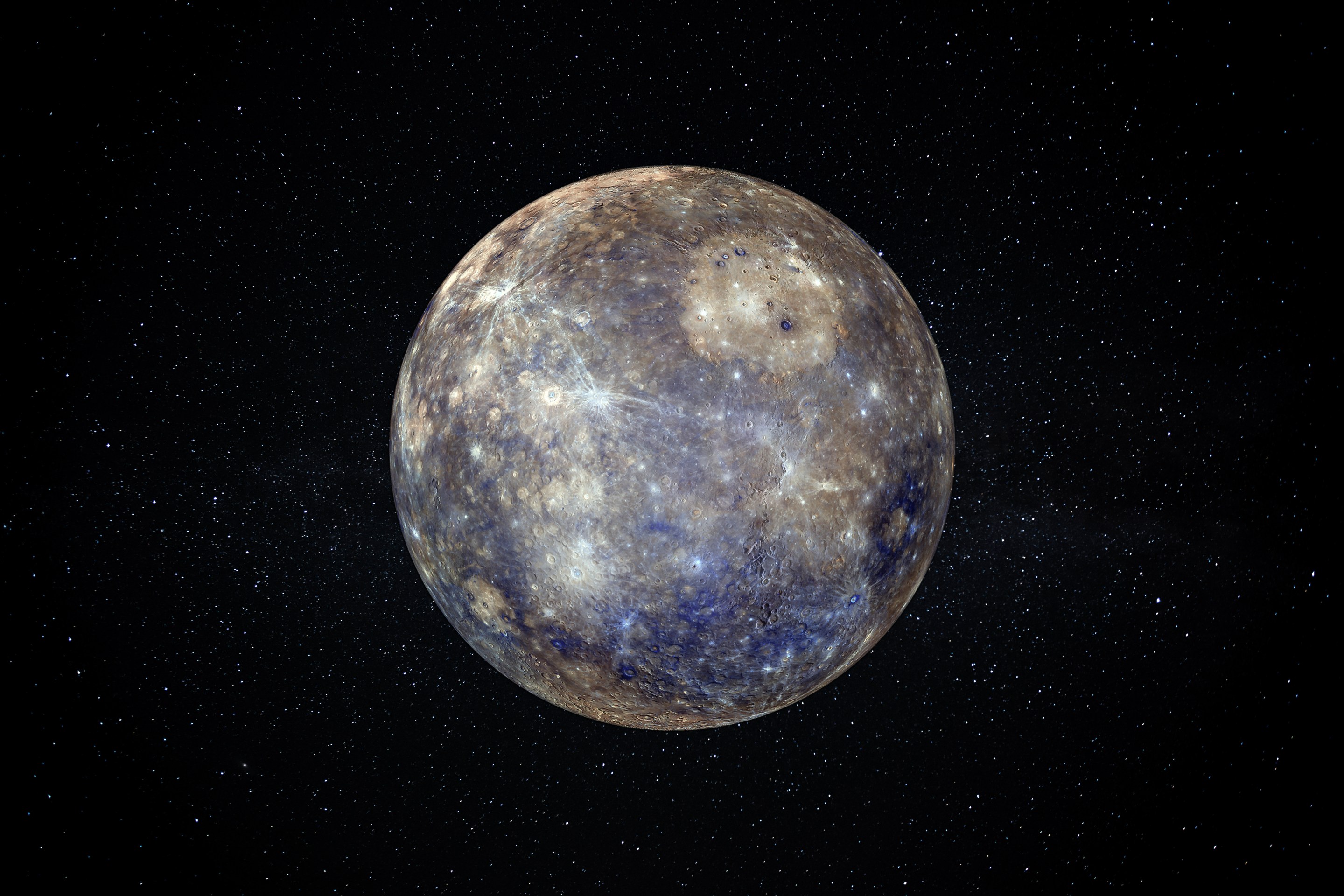
To better understand Mars’ role, Kane turned to computer simulations, modeling Earth’s orbit over tens of millions of years. When Mars was removed from the simulation, the longest Milankovitch cycle wasn’t changed. But somewhat surprisingly, two other cycles vanished completely. In other words, Mars, a tenth of the mass of the Earth, was playing an outsized role in Earth’s climate.
“The closer it is to the sun, the more a planet becomes dominated by the sun’s gravity,” Kane said. “Because Mars is farther from the sun, it has a larger gravitational effect on Earth than it would if it was closer. It punches above its weight.”
Kane’s research has important implications outside our solar system as well. Planets with periodically eccentric orbits could be more conducive to the evolution of life, due in part to differential temperature gradients in oceans promoting the exchange of organic materials like a “biological pump.”
“When I look at other planetary systems and find an Earth-sized planet in the habitable zone, the planets farther out in the system could have an effect on that Earth-like planet’s climate,” Kane explained.
Still, Kane can’t help but look at a planet like Mars—which could be humanity’s future—and imagine its impact on humanity’s past.
“Without Mars, Earth’s orbit would be missing major climate cycles,” Kane added. “What would humans and other animals even look like if Mars weren’t there?” 
Enjoying Nautilus? Subscribe to our free newsletter.
Lead image: NASA, ESA, and STScI