Sometimes you catch yourself in the mirror making a facial expression you don’t expect, whether it’s a giddy smile for your secret crush or a stink eye for the competition. We think of facial expressions as reflexive, as a manifestation of our internal thoughts showing themselves on the surface. But according to a study published yesterday in Science, primate facial expressions are under voluntary control, suggesting that we do intend to make that giddy smile.
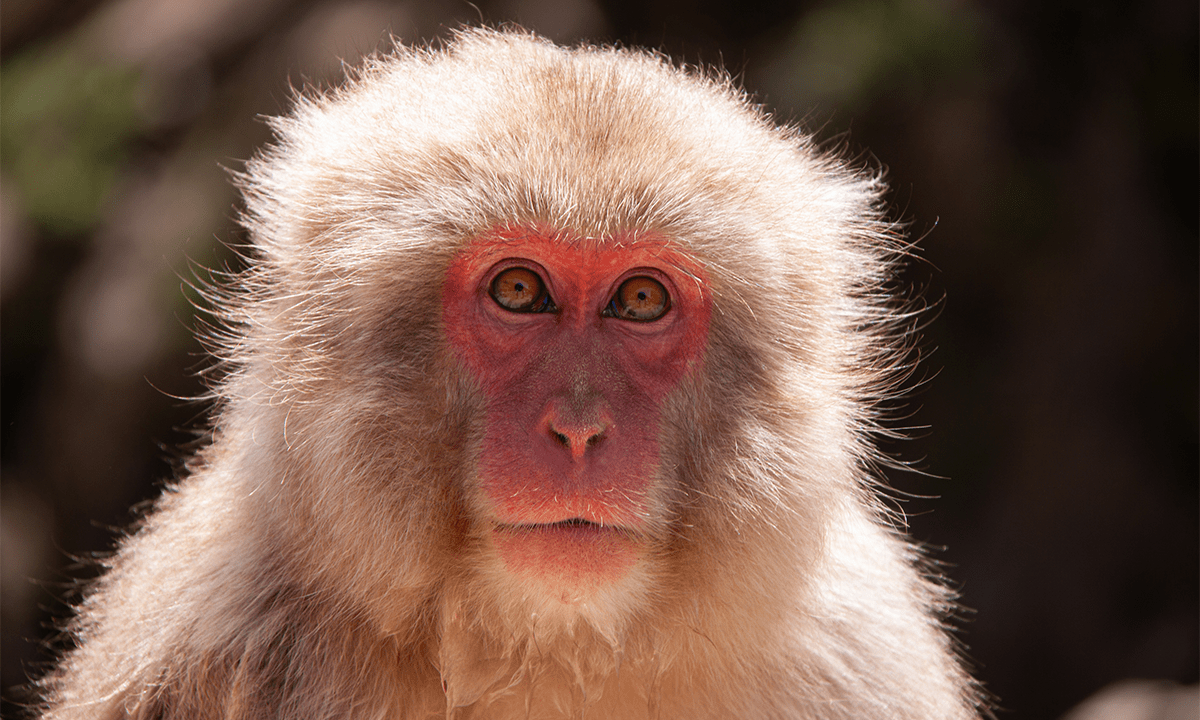
Researchers from the University of Pennsylvania, the University of Jerusalem, and Nottingham Trent studied facial expressions in macaque monkeys, which have expressive faces comparable to those of humans. It was known that multiple regions of the cerebral cortex interfaced directly with the facial nerves, but not how the system was organized to generate facial expressions. The team used functional magnetic resonance imaging (fMRI) and single-neuron recordings to detect system-wide patterns.
They found that control over the myriad small muscles that create facial expressions comes from neural circuits used to produce voluntary movements. The neural activation when macaques were making faces at each other looked like neural activation during voluntary movements, like chewing. In both cases, motor regions across the cerebral cortex controlled facial expressions. Every region had broadly tuned nerve cells that fired up as macaques made faces, as well as nerve cells that were specific to each facial expression. Furthermore, the signals rolled out in a sequence before the facial expression appeared, in a lead-up culminating in the actions of the facial muscles.
Read more: “The Natural Harmony of Faces”
“Muscle kinematics are the end product of a larger sensory motor process wherein cognitive variables, such as visual information, internal states, and somatosensory feedback, each play a role,” wrote the study authors. The neural patterns unfolding prior to the facial expression itself suggest that “facial gestures are intentionally prepared to forecast upcoming social interactions,” they added.
So facial expressions are coordinated results of our brains integrating sensory information and context across a distributed network. When you catch your giddy smile or stink eye in the mirror, be assured that they’re the product of voluntary decisions about what social cues you chose to project at that moment. 
Enjoying Nautilus? Subscribe to our free newsletter.
Lead image: Alexander Julius Jensen / Shutterstock