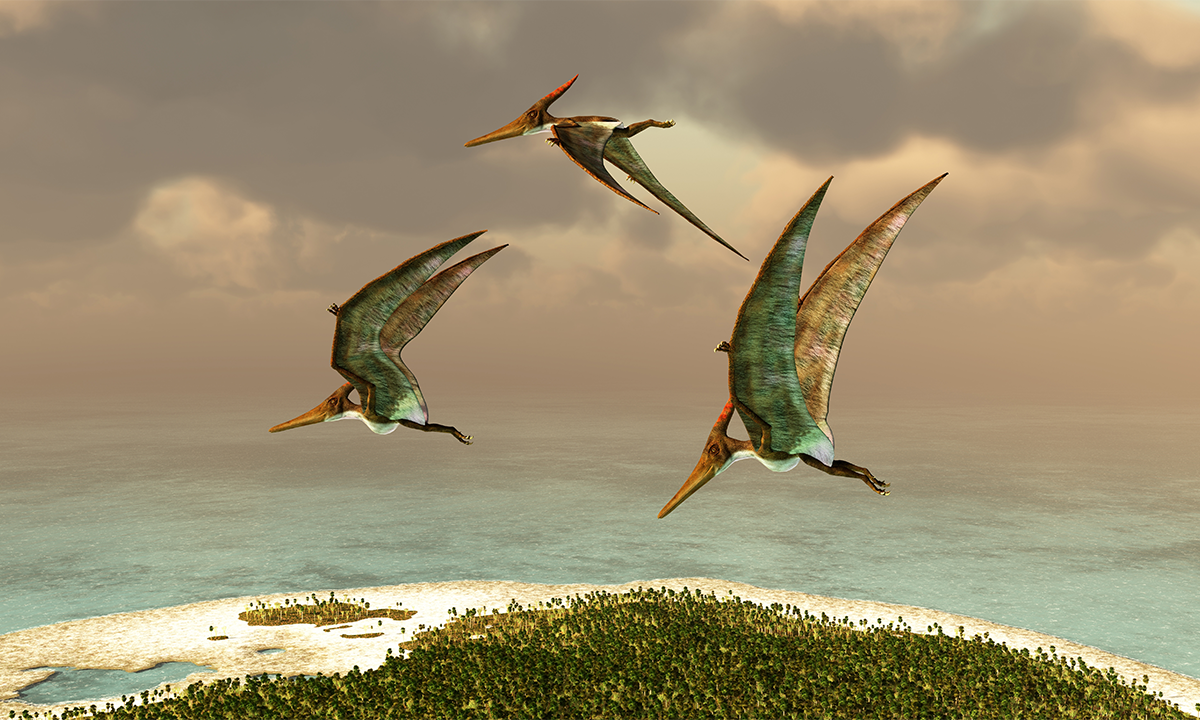
For terrestrial organisms, the ability to fly opens up a skyful of possibilities. Increased access to mates and food, for two things. And yet, it’s only evolved three times in the history of vertebrates—once in bats, once in birds, and once in pterosaurs. That’s likely because flight is a more complex form of locomotion than merely ambling along the ground or swinging through the trees.
After all, flight doesn’t just require specialized limbs; it also takes a specialized brain to control them and navigate the skies. Scientists suspect that pterosaurs, flying reptiles that darkened skies above dinosaurs, were the first vertebrates to master this incredible power around 200 million years ago. Now, new research is shedding light on the neurological adaptations that allowed these pioneers to slip the surly bonds of gravity.
Read more: “Why Birds Can Fly Over Mount Everest”
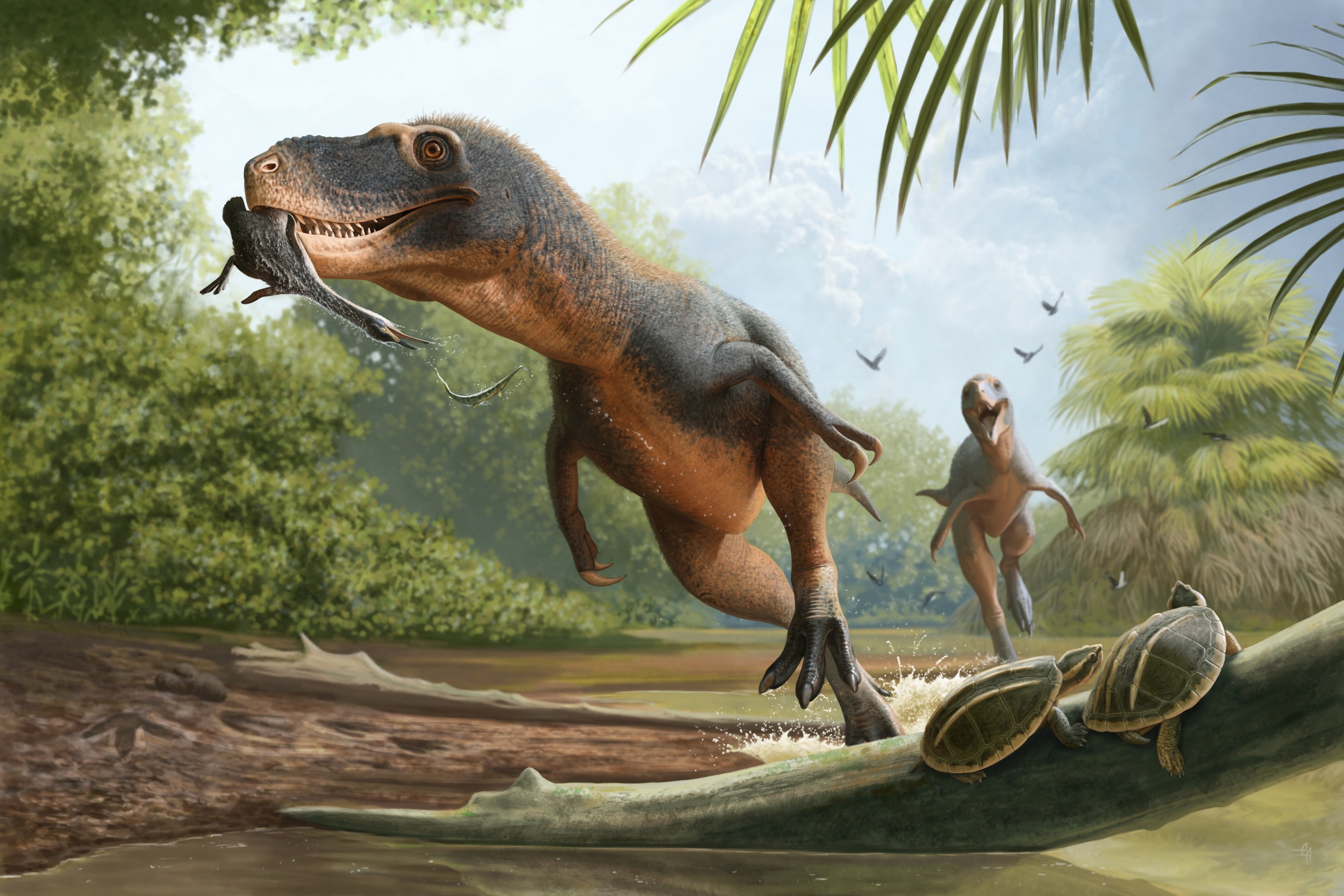
Michelle Stocker and Sterling Nesbitt of Virginia Tech led a team of scientists that used CT scanners to take a peek inside the skulls of a flightless ancestor of pterosaurs, lagerpetids, comparing them to modern reptiles and birds. They published their findings in Current Biology.
“Technology like CT scanning gives us ways to ask and address questions that just weren’t possible for so long,” said Stocker in a statement. Using the scans to create 3-D maps of the skull cavities of lagerpetids, pterosaurs, and dinosaurs, in addition to modern crocodiles and birds, the scientists were able to track the changes in the brain before and after the evolution of flight. They found that, similar to birds, lagerpetid brains had enlarged optic lobes, and presumably improved eyesight, which may have helped their evolutionary descendants finally take to the skies.
In other words, more acute vision may have been one of the first steps down the evolutionary flight path.
The team also noted one key difference between birds and pterosaurs. Birds have relatively large and complex brains for their body size, something that was thought to be a prerequisite for flight. Pterosaurs, according to this new study, do not. “Interestingly, we found that pterosaurs had relatively small brains, comparable in size to those of non-flying dinosaurs and much smaller than that of birds,” Nesbitt said.
So when it comes to flying, it looks as though (brain) size doesn’t matter. 
Enjoying Nautilus? Subscribe to our free newsletter.
Lead image: Catmando / Shutterstock