The same bacterium behind the Black Death that devastated Europe in the 14th century also ripped through the ancient Mediterranean.
This epidemic was known as Plague of Justinian—it occurred between 541 and 750 A.D., and is one of the earliest known widespread infectious disease outbreaks in the region. Historical texts claim that the disease caused significant damage to cities throughout the eastern swath of the Roman Empire at the time.
Beyond these accounts, it’s unclear what life was like during this outbreak. It’s been tricky to verify suspected mass graves from the epidemic and find out who they belonged to.
DNA analysis, however, can clear up this ancient ambiguity. Researchers only recently unearthed evidence of the plague bacterium Yersinia pestis in the Eastern Mediterranean that aligns with the timing of the Plague of Justinian. It was found at a mass burial in the former Roman city of Jerash in modern-day Jordan. In a new study, the same team sought to learn more about the hundreds of individuals laid to rest at the site, which seems to be the oldest known mass grave constructed during a catastrophic plague.
“We wanted to move beyond identifying the pathogen and focus on the people it affected, who they were, how they lived, and what pandemic death looked like inside a real city,” said Rays Jiang, a genomicist and public health researcher at the University of South Florida, in a statement.
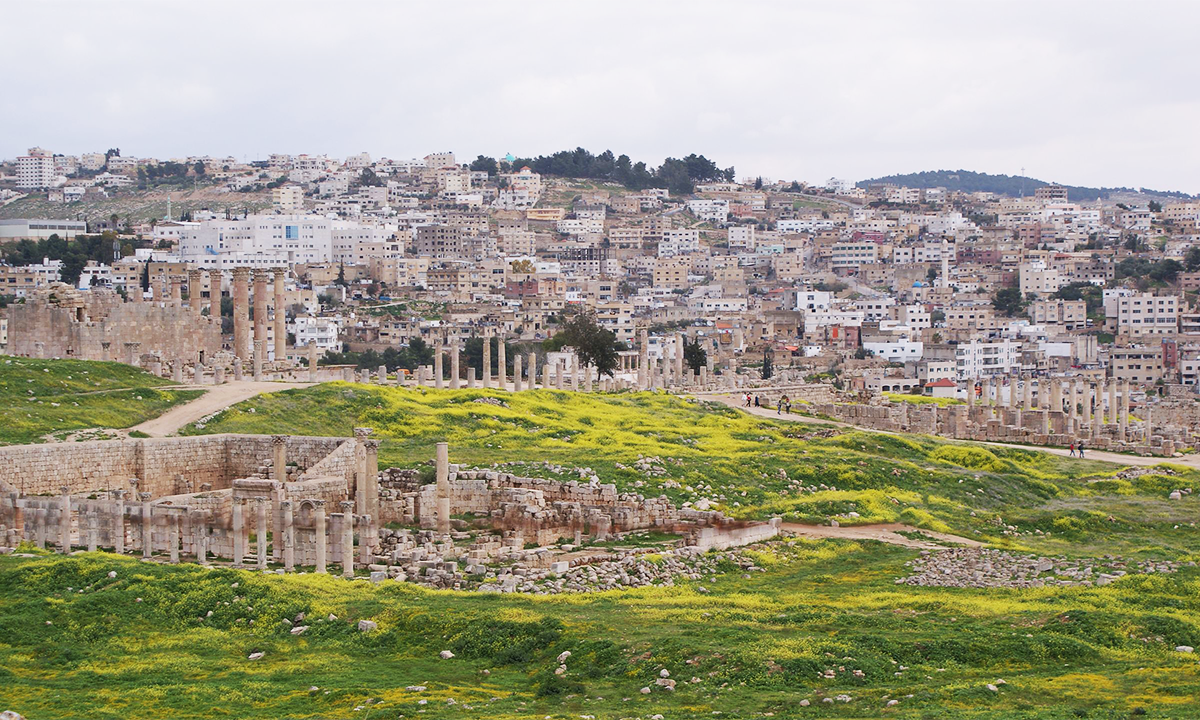
Jerash sat at a major trade crossroads and was recognized for its impressive architecture, including temples, theaters, and a stadium called a hippodrome. Its central location and links to other bustling cities would have made Jerash’s population highly susceptible to the Plague of Justinian—this area isn’t brought up in surviving accounts of the plague, but such texts record outbreaks in nearby urban centers, including Jerusalem and Alexandria. Archaeological evidence also suggests that Jerash’s economy and population dipped in the late sixth and early seventh centuries.
Read more: “Why Medieval Cats Approved of the Plague”
Jiang and her colleagues analyzed skeletal remains from this mass grave to piece together the stories of these individuals’ lives, findings reported in the Journal of Archaeological Science. These bodies seem to have been deposited there within days or weeks, a haphazard process similar to pits later created during the Black Death.
They studied oxygen isotopes in tooth enamel, which revealed that the people buried at Jerash consumed water from a diversity of geographic areas, suggesting they hailed from far and wide. And DNA extracted from people’s teeth pointed to ancestral origins in what’s now Mozambique or Sudan, for one individual, and central and eastern Europe for another—these lineages are common among people who lived in the Levant region around that time.
Ultimately, people from a wide swath of places were “brought together in a single mass grave by crisis,” according to the statement. This offers a rare look at migration patterns that occurred over generations, which are usually hard to detect in regular cemeteries.
“By linking biological evidence from the bodies to the archaeological setting, we can see how disease affected real people within their social and environmental context,’’ Jiang explained in the statement. “This helps us understand pandemics in history as lived human health events, not just outbreaks recorded in text.’’ 
Enjoying Nautilus? Subscribe to our free newsletter.
Lead image: Freedom's Falcon / Wikimedia Commons