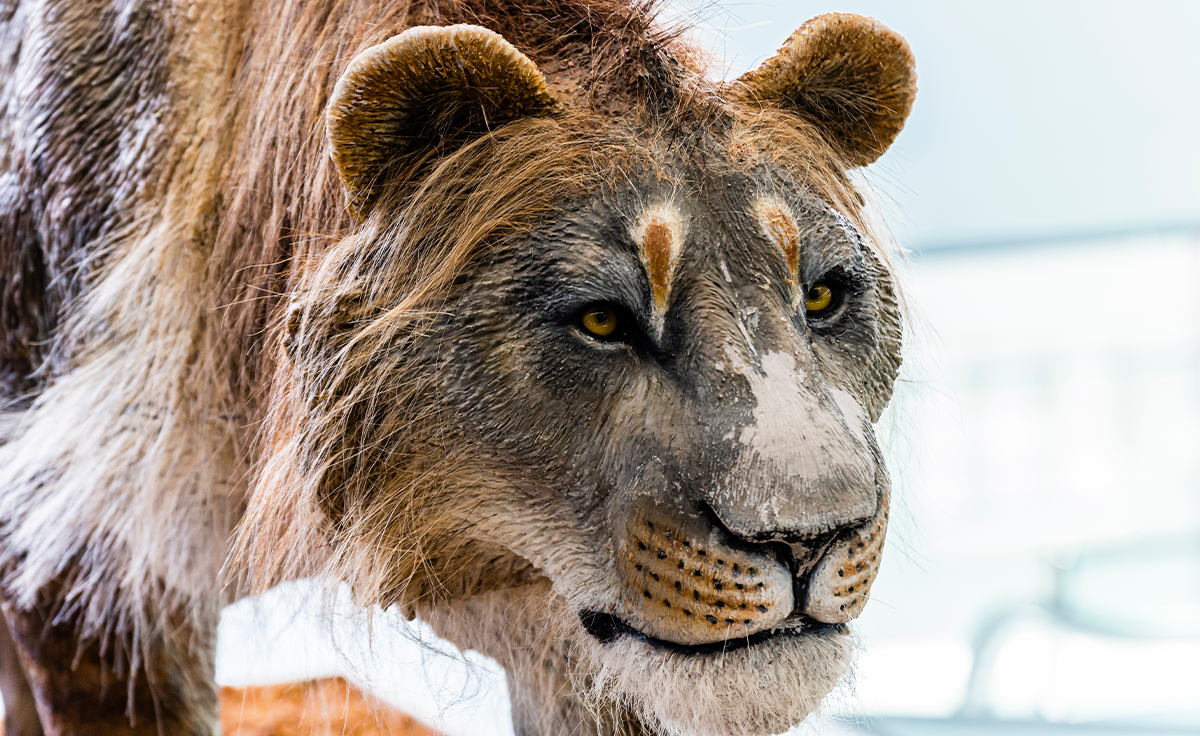
Toward the end of the Pleistocene, 11,700 years ago, temperatures surged, ice melted, sea levels rose, and many large mammals became extinct. One of those was the Eurasian cave lion, which had been abundant across the Northern Hemisphere, including Africa, Europe, Asia, and the Americas.
Paleolithic cave art combined with fossil bones has shown cave lions to be larger, lighter-colored, and lacking the massive manes sported by modern males. Researchers knew from molecular work that cave lions (Panthera spelaea) were a distinct species from modern lions (Panthera leo) but not how long ago they had set their own genetic course. A study published today in Cell, however, reported that cave lions branched from modern lions more than a million years ago.
Researchers from universities in Sweden, the United Kingdom, Germany, Denmark, Austria, Russia, Hungary, and the United States conducted genomic studies of 10 cave-lion specimens stored in museum collections, along with analyzing existing data from two specimens. Through radiocarbon dating, they established the specimens into a time series spanning about 148,000 to 17,000 years ago. Then, by comparing cave lions with 20 genomes from modern lions in Africa and India, they mapped their relatedness.
Read more: “Early Humans Made Animated Art”
“Cave lions have often been portrayed as just a larger, more rugged version of modern lions,” said lead author and paleogeneticist David Stanton in a press release. “But what we see in their genomes is something much more remarkable—a lineage that’s been evolving independently for over a million years, accumulating its own unique biological features.”
The genetic results indicated that, over time, the cave lions and modern lions increasingly interbred, with the highest intermixing of genes in the three most recent cave lion genomes from individuals that lived not long before the End-Pleistocene extinction event, which means lion populations were connected geographically from Siberia to Central East Asia into Europe.
The genetic data also revealed a trend of more interbreeding when temperatures fell, locking up water into ice sheets. The study authors hypothesized that these cold climate intervals drove cave lions southward, where they came into more contact with modern lions. “Our results suggest that past climate change did more than reshape habitats,” said senior author Love Dalén of the Centre for Palaeogenetics, in a press release. “It actively brought species together, creating brief opportunities for interbreeding that wouldn’t have existed otherwise.”
So, even though they’re no longer around today, there’s still a little cave lion in each and every modern lion. 
Enjoying Nautilus? Subscribe to our free newsletter.
Lead image: Jesús de Fuensanta / Adobe Stock