Kānhopātrā, a 15th-century saint-poet who lived in what’s now western India, is said to have died while trying to escape a forced marriage to a king. She was buried at the Viṭhṭhala temple in the exact spot where, according to a text from 1762, a sacred taraṭī tree with bright yellow flowers later emerged.
This and other centuries-old stories have illuminated the diversity of wild flora found in western India’s tropical savanna ecosystems, which have long been overlooked as human-wrought wastelands. And these literary revelations could bolster future conservation efforts.
Scientists previously considered tropical savannas the remnants of forests destroyed by human activities, such as timber extraction by British colonists in India during the 19th and 20th centuries. Similar explanations have been applied to savannas in African and South American countries, including Madagascar and Brazil. This line of thinking still influences politicians and the public. Now, a diverse patchwork of traditional literature from western India adds to growing evidence against this narrative, according to a new paper published in People and Nature.
To piece together the ecological history of tropical savannas in western India, an international team of researchers pored through a collection of texts written in Sanskrit and Marathi, a language that’s spoken by millions of people in western and central India. This literature, which was written in a period spanning the 13th to 20th centuries, includes folk songs, myths, and poems. The researchers encountered mentions of 44 species of wild plants, almost two-thirds of which are associated with savannas. These include the taraṭī tree, or Capparis divaricata, and the beloved hivara tree, or Vachellia leucophloea.
“The take-home for me is how little things have changed,” said study co-author Ashish Nerlekar, a grassland ecologist at Michigan State University, in a statement. “It’s fascinating that something hundreds of years old could so closely match what is around today and contrast so much with what people romanticize the past landscape to be.”
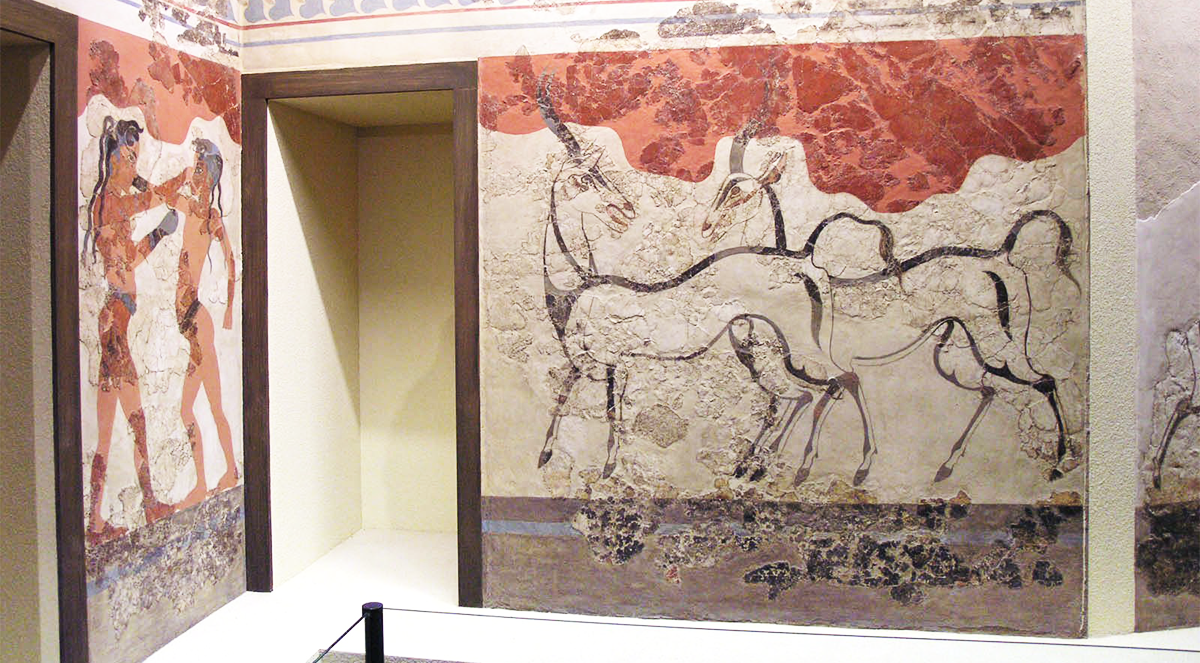
Along with the findings from these texts, the paper pointed to evidence of savannas in the region dating back up to roughly 10 million years ago. This included hunting records, paintings, pollen fossils, and motifs of animals on ancient pottery. Similar findings from Africa, South America, and South Asia also attest to the evolution of savanna ecosystems long before human-driven deforestation.
Read more: “This Cloud Forest Should Not Exist”
Despite all of this evidence, the forest myth still surrounds tropical savannas, the authors wrote, “leading to grave consequences for biodiversity and people.” For example, tropical savannas have been eyed for tree-planting projects, a tactic to sequester carbon and combat climate change. But this could harm the diversity of native plants, the paper noted, and these ecosystems already act as natural carbon sinks. Such projects could also impact the livelihoods of some 20 percent of the world’s population, who rely on grasslands and savannas for income from grazing, medicinal plants, and fuel wood, among other sources.
And, as evident in the texts analyzed in the paper, savannas have long been considered sacred sites. Ultimately, the authors wrote, “explicitly valuing traditional literature as archives of biocultural histories could catalyze the conservation of both nature and culture.” 
Enjoying Nautilus? Subscribe to our free newsletter.
Lead image: Paulmathi Vinod / Wikimedia Commons